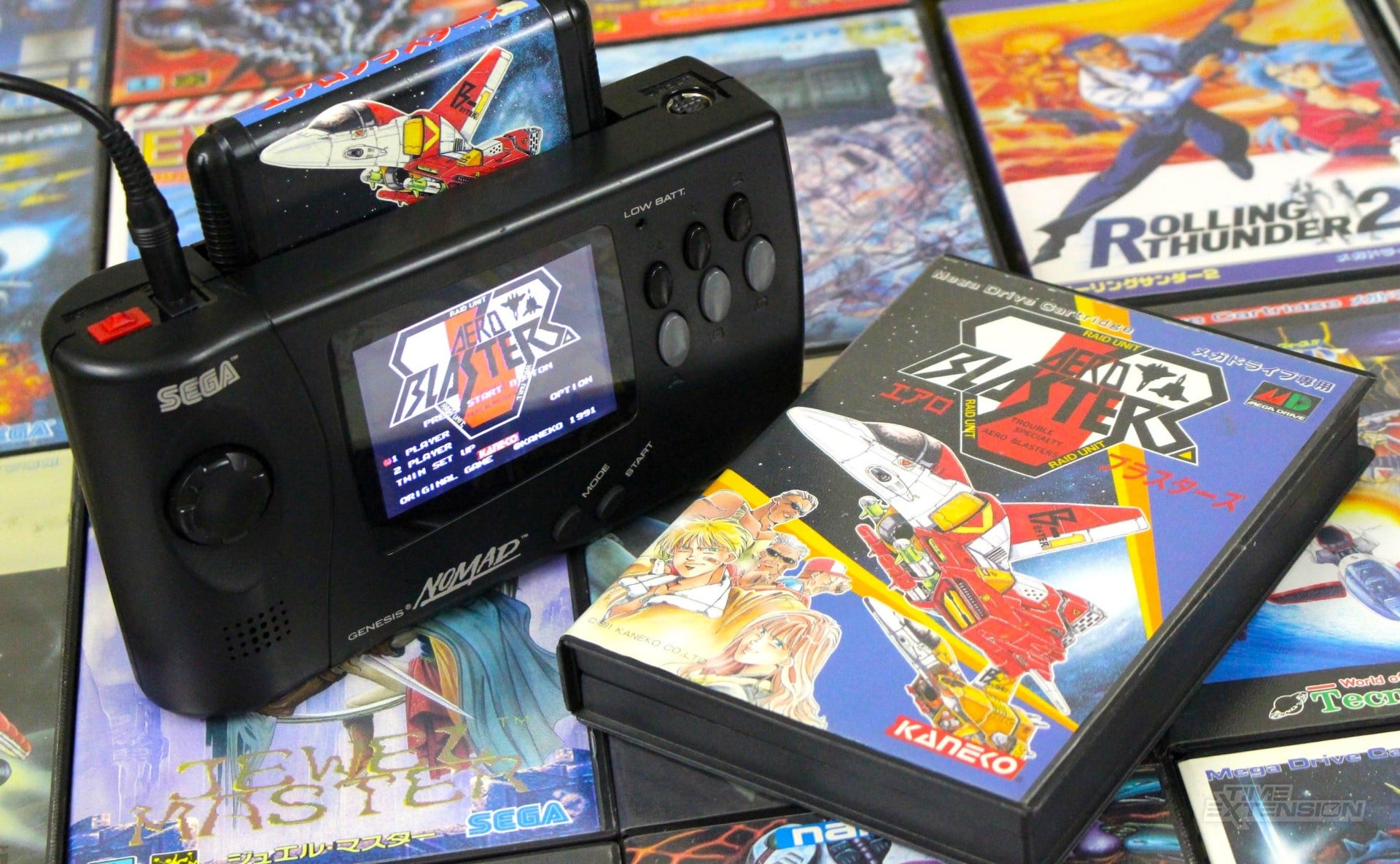
Aero Blasters (also known as Air Buster) remains one of Kaneko's most recognisable shoot-'em-ups thanks to its bright, anime-influenced visuals and arcade-style action.
First released in arcades in 1990, the game was ported to the Sega Mega Drive/Genesis in 1991.
The console conversion is widely praised for faithfully reproducing the original coin-op experience on cartridge-based hardware, despite the platform's technical limits.
A recent social-media exchange revived a small but persistent question among retro players: why does the Mega Drive version show an intermission-style loading screen at the start of a play session, when cartridge systems are typically instant?
The post drew commentary from a developer who worked on the port and has shed factual light on the issue.
Izu, who identifies himself as an independent developer at Pastel Orbit and says the Aero Blasters port was one of his early industry projects, explained that the so-called intermission screen is essentially a loading mechanism necessitated by production constraints.
He said the team originally targeted an 8M cartridge configuration, but commercial decisions required the final release to fit a 4M cartridge.
To meet that reduced size, the development team compressed ROM data aggressively and implemented runtime decompression, which produced a short loading pause when a new game was started.
This explanation aligns with known cartridge-era practices: developers frequently balanced content fidelity against manufacturing costs by choosing smaller, cheaper ROM sizes and applying compression techniques.
The result could be additional CPU time spent decompressing assets when a game boots or loads a level—something modern console owners may not expect in the era of digital storefronts such as the Nintendo eShop or platform announcements through channels like Nintendo Direct.
For collectors and retro enthusiasts, the clarification from a member of the original team provides concrete context rather than myth.
Aero Blasters' Mega Drive/Genesis release remains notable for preserving much of the arcade experience on a 1991 cartridge, and this loading-screen backstory underscores the trade-offs developers faced in that generation of game production.
First released in arcades in 1990, the game was ported to the Sega Mega Drive/Genesis in 1991.
The console conversion is widely praised for faithfully reproducing the original coin-op experience on cartridge-based hardware, despite the platform's technical limits.
A recent social-media exchange revived a small but persistent question among retro players: why does the Mega Drive version show an intermission-style loading screen at the start of a play session, when cartridge systems are typically instant?
The post drew commentary from a developer who worked on the port and has shed factual light on the issue.
Izu, who identifies himself as an independent developer at Pastel Orbit and says the Aero Blasters port was one of his early industry projects, explained that the so-called intermission screen is essentially a loading mechanism necessitated by production constraints.
He said the team originally targeted an 8M cartridge configuration, but commercial decisions required the final release to fit a 4M cartridge.
To meet that reduced size, the development team compressed ROM data aggressively and implemented runtime decompression, which produced a short loading pause when a new game was started.
This explanation aligns with known cartridge-era practices: developers frequently balanced content fidelity against manufacturing costs by choosing smaller, cheaper ROM sizes and applying compression techniques.
The result could be additional CPU time spent decompressing assets when a game boots or loads a level—something modern console owners may not expect in the era of digital storefronts such as the Nintendo eShop or platform announcements through channels like Nintendo Direct.
For collectors and retro enthusiasts, the clarification from a member of the original team provides concrete context rather than myth.
Aero Blasters' Mega Drive/Genesis release remains notable for preserving much of the arcade experience on a 1991 cartridge, and this loading-screen backstory underscores the trade-offs developers faced in that generation of game production.