Developer update: a modern take on Sega Rally achieved on 16-bit hardware
French animator and developer Anaël Seghezzi has shared a significant technical update on an off-road racing prototype he is building for the Sega Mega Drive/Genesis.
The project—evocative of the arcade and console racing lineage that began with Sega Rally Championship in 1995—is drawing attention for what it achieves on 16-bit hardware.
Seghezzi is known in the independent tools and demo scene as the author of the open-source 3D engine Maratis and for work as an art and technical director in games and animation.
In a recent progress report he said he had implemented track undulation and roadside objects and moved on to adding sprites and performance optimizations.
Paraphrasing his update for clarity: Seghezzi reported that, after adding sprites and optimization work, CPU usage sits around 70 percent while the demo maintains a stable 60 frames per second.
He also noted limits imposed by the Mega Drive’s sprite-width constraints per scanline, which prevent denser vegetation rendered with sprites, and that he plans to explore alternative rendering methods to work around that hardware limitation.
That constraint is consistent with the Mega Drive/Genesis’s 16-bit hardware era design.
The console was released as the Mega Drive in Japan in 1988 and as the Genesis in North America in 1989; it remains a popular platform for homebrew development due to its fixed-function graphics pipeline and well-documented limitations.
Seghezzi’s work follows earlier technical demonstrations on the same platform: he previously produced a 3D demo with a WipEout-style aesthetic running on Mega Drive hardware.
Those demos have reinforced interest in what modern developers can coax from retro systems.
Why this matters
Projects like Seghezzi’s underscore how retro consoles remain fertile ground for technical creativity.
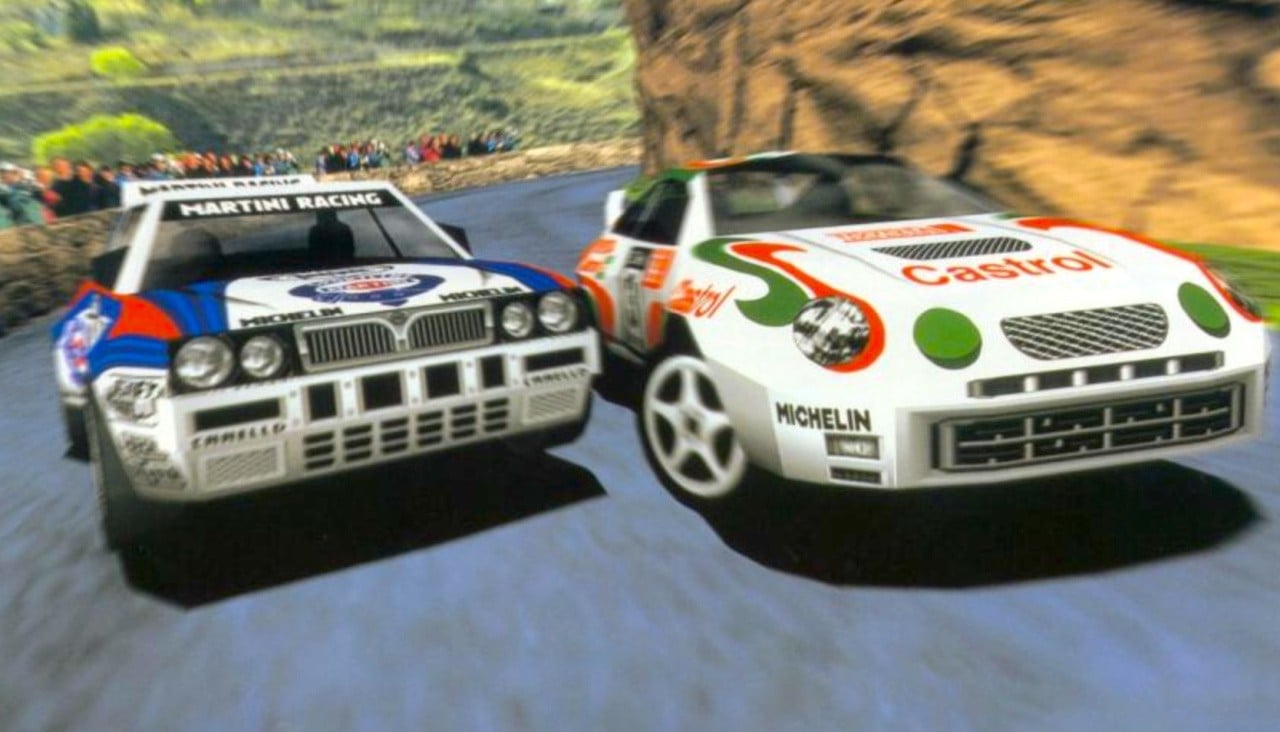
Sega Rally Championship, first released in arcades in 1995 on Sega’s Model 2 hardware and ported to home systems the same year, set player expectations for polygonal rally racing; recreating similar experiences on the Mega Drive requires inventive use of sprites, raster effects and CPU cycles.
Seghezzi’s public updates provide concrete performance metrics—stable 60 fps and roughly 70 percent CPU utilization—that give the retro-development community useful benchmarks.
His acknowledgement of hardware limits and intent to pursue alternative rendering solutions is a pragmatic example of modern retro development workflow.
As he continues to iterate, Seghezzi’s prototype will be one to watch for fans of Sega, retro homebrew, and technical demos on classic consoles.
French animator and developer Anaël Seghezzi has shared a significant technical update on an off-road racing prototype he is building for the Sega Mega Drive/Genesis.
The project—evocative of the arcade and console racing lineage that began with Sega Rally Championship in 1995—is drawing attention for what it achieves on 16-bit hardware.
Seghezzi is known in the independent tools and demo scene as the author of the open-source 3D engine Maratis and for work as an art and technical director in games and animation.
In a recent progress report he said he had implemented track undulation and roadside objects and moved on to adding sprites and performance optimizations.
Paraphrasing his update for clarity: Seghezzi reported that, after adding sprites and optimization work, CPU usage sits around 70 percent while the demo maintains a stable 60 frames per second.
He also noted limits imposed by the Mega Drive’s sprite-width constraints per scanline, which prevent denser vegetation rendered with sprites, and that he plans to explore alternative rendering methods to work around that hardware limitation.
That constraint is consistent with the Mega Drive/Genesis’s 16-bit hardware era design.
The console was released as the Mega Drive in Japan in 1988 and as the Genesis in North America in 1989; it remains a popular platform for homebrew development due to its fixed-function graphics pipeline and well-documented limitations.
Seghezzi’s work follows earlier technical demonstrations on the same platform: he previously produced a 3D demo with a WipEout-style aesthetic running on Mega Drive hardware.
Those demos have reinforced interest in what modern developers can coax from retro systems.
Why this matters
Projects like Seghezzi’s underscore how retro consoles remain fertile ground for technical creativity.
Sega Rally Championship, first released in arcades in 1995 on Sega’s Model 2 hardware and ported to home systems the same year, set player expectations for polygonal rally racing; recreating similar experiences on the Mega Drive requires inventive use of sprites, raster effects and CPU cycles.
Seghezzi’s public updates provide concrete performance metrics—stable 60 fps and roughly 70 percent CPU utilization—that give the retro-development community useful benchmarks.
His acknowledgement of hardware limits and intent to pursue alternative rendering solutions is a pragmatic example of modern retro development workflow.
As he continues to iterate, Seghezzi’s prototype will be one to watch for fans of Sega, retro homebrew, and technical demos on classic consoles.