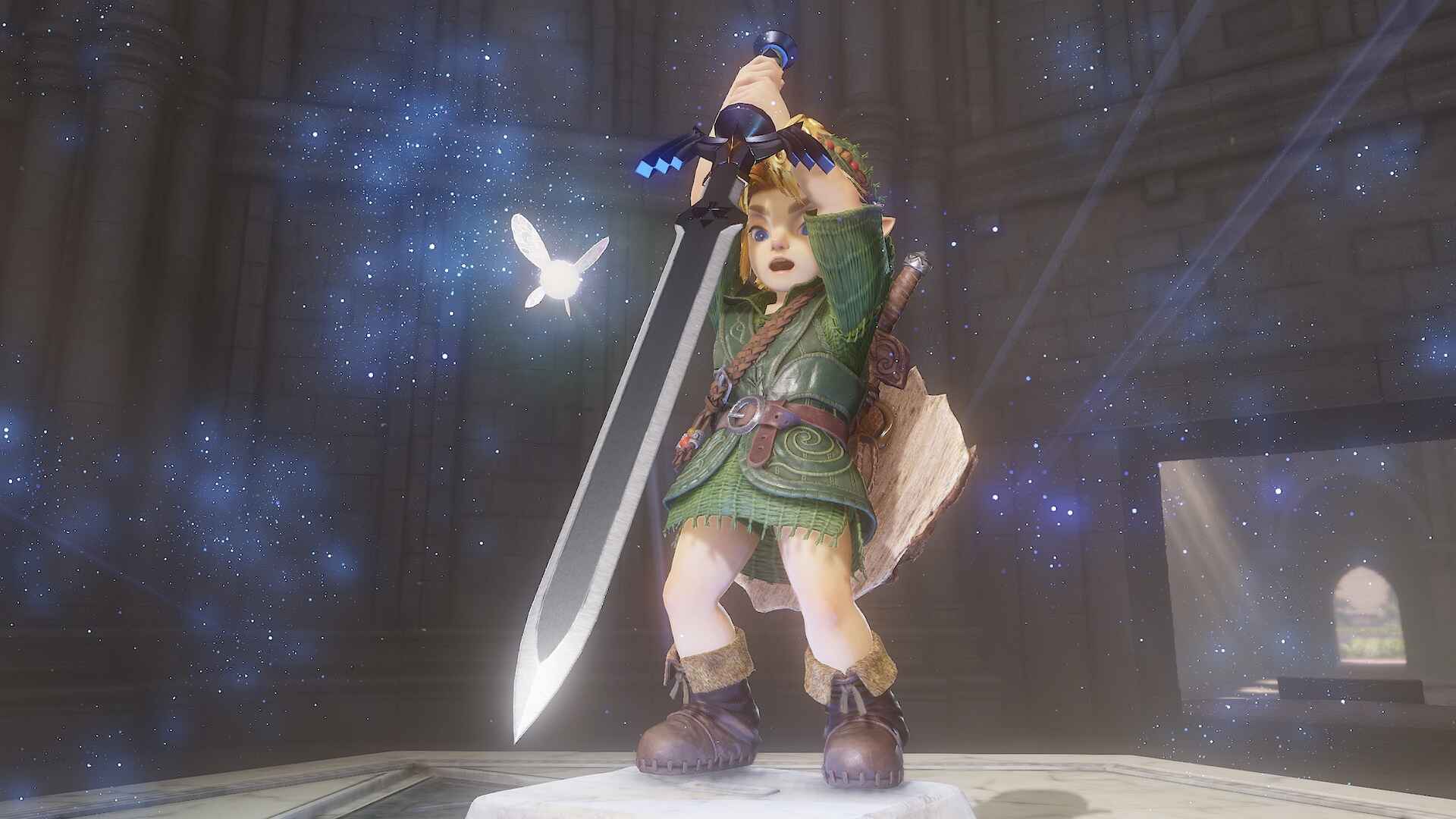



The Legend of Zelda: Ocarina of Time remake is taking a hybrid approach to its soundtrack, blending newly composed orchestral music with faithful references to the original Nintendo 64 source material.
In part four of Nintendo’s “Ask the Developer” series, sound director Masato Ohashi and producer Hidemaro Fujibayashi detailed how the team balanced nostalgia with modern audio production.
Background and context
The original Ocarina of Time launched on Nintendo 64 in 1998 and has since been remade—most notably for Nintendo 3DS in 2011.
For this latest remake, Nintendo’s audio team confronted the challenge of preserving the game’s iconic motifs while expanding the score to suit new cutscenes and modern presentation.
Nintendo frequently showcases projects and updates during Nintendo Direct events and distributes titles through platforms such as the Nintendo eShop for systems including the Nintendo Switch.
Music direction and process
Ohashi explained that the team composed original tracks for the game’s additional cutscenes but deliberately integrated familiar themes so long-time players would recognize key motifs.
He said the remake’s new pieces borrow melodic elements from classic tracks—such as those associated with Kokiri Forest—and rearrange them to fit the scene’s pacing and emotional tone.
Rather than simply amplifying or modernizing every cue, Ohashi described a more nuanced approach: the team revisited the N64’s original sound sources as reference material to recreate specific timbres and arrangement choices.
He noted that many of the original compositions achieved variety not by volume alone but through shifts in pacing and instrumentation; in the remake, larger environments receive fuller orchestral arrangements while simpler moments use more restrained instrumentation.
Fujibayashi contrasted this direction with the more ambient soundscapes of The Legend of Zelda: Breath of the Wild (2017) and The Legend of Zelda: Tears of the Kingdom (2023), saying that Ocarina of Time’s score has a stronger, scene-guiding emotional presence.
He described the decision to mix era-specific sounds with new orchestration as a way to make the remake feel “more than just a modern remake,” preserving the emotional impact of many of the series’ most stirring pieces.
Technical fidelity
Ohashi was explicit that the team did not simply reuse N64 audio outputs.
Instead, they used the original N64 sound source files as a touchstone to faithfully recreate characteristic sounds, combining those references with full orchestral recordings where appropriate—an approach similar to the team’s work on The Legend of Zelda: Link’s Awakening remake.
Conclusion
By combining archival N64 references with contemporary orchestration, Nintendo aims to honor the original Ocarina of Time score while adapting it for new narrative and cinematic moments.
For fans tracking the remake, the developer notes provide the clearest picture yet of how familiar themes will be preserved and expanded in the updated soundscape.