
Newly translated interviews published on Shmupulations have shed fresh light on the development of Super Mario Sunshine's FLUDD mechanic and how the Nintendo GameCube controller influenced its creation.
The translations cover two Japanese interviews from 2002 featuring Nintendo veterans Shigeru Miyamoto, Takashi Tezuka, and director Yoshiaki Koizumi; the original conversations appeared in Nintendo Dream and the GSLA archive.
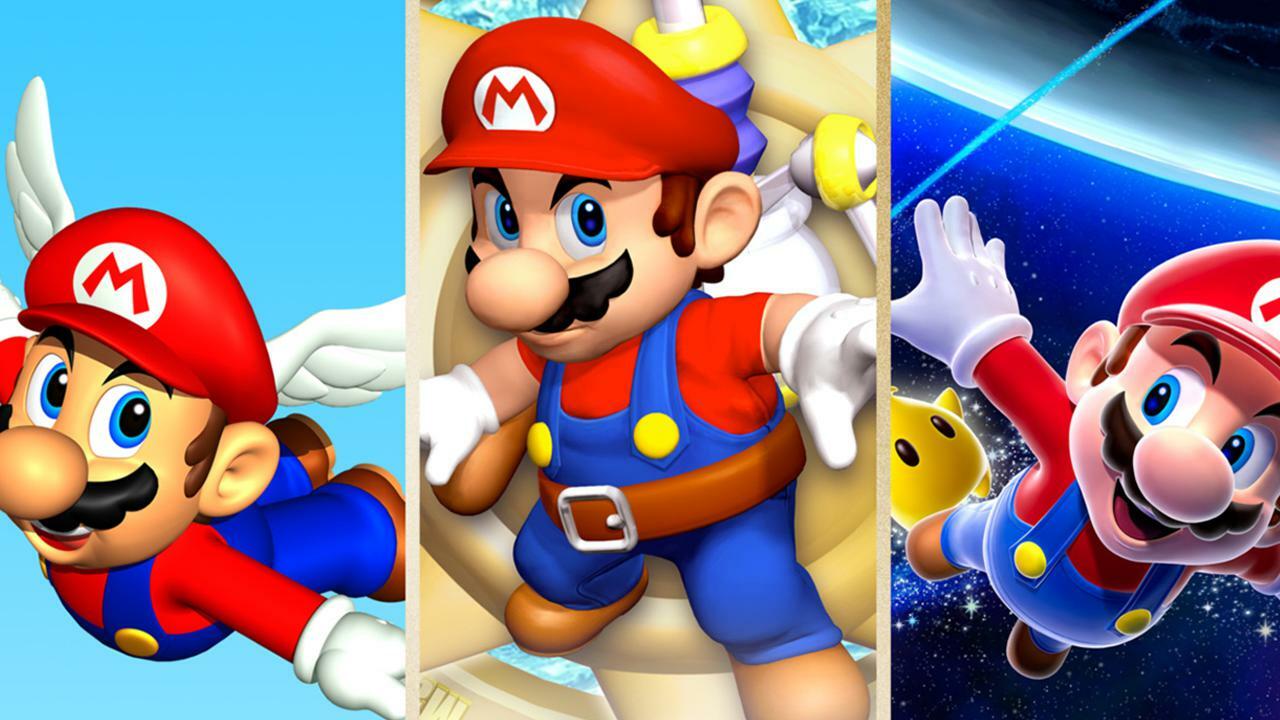
Super Mario Sunshine, developed by Nintendo EAD and released for the GameCube in 2002, later saw a digital re-release on Nintendo Switch as part of Super Mario 3D All-Stars in 2020.
The recent translations provide verified, first‑hand detail about FLUDD’s conceptual origins and design decisions from the team that built the game.
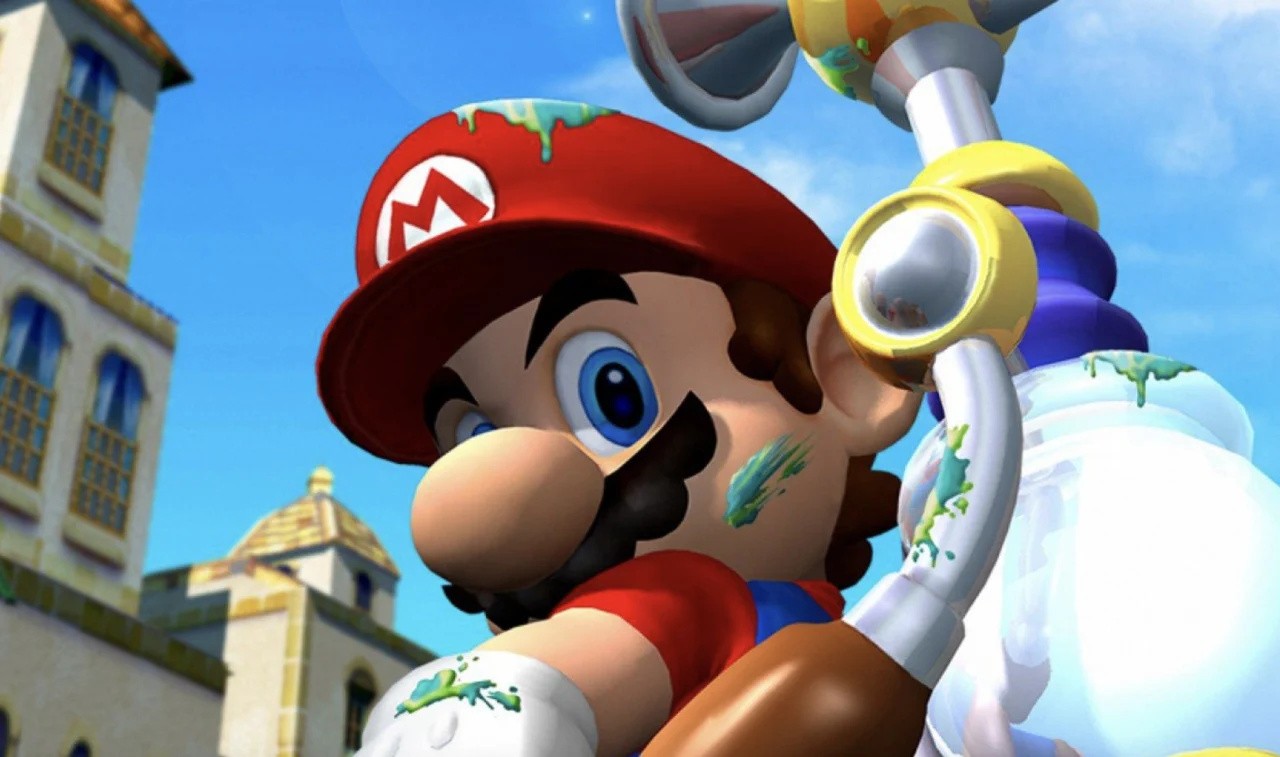
According to Koizumi’s account, handling the GameCube controller and its rear analogue triggers immediately suggested a water‑spraying interaction, evoking childhood memories of water pistols and inspiring the team to build a mechanic around that tactile idea.
Miyamoto recalled that the inclusion of a tool like FLUDD sparked internal debate at Nintendo about whether Mario should be equipped with an external device, noting that some staff were concerned about changing Mario’s core identity by giving him a tool-based capability.
Tezuka explained that the team deliberately avoided weapon-like visual cues for FLUDD; designers chose a backpack form to prevent associations with pistols or guns and to keep the device consistent with Mario’s tone and family-friendly image.
Those aesthetic choices were central to how FLUDD was presented in-game and in promotional material.
The GSLA interview translation also reveals the evolution of FLUDD’s nozzle designs.
Koizumi says the team experimented with as many as ten nozzle variants early in development but reduced the final set to three — hover, rocket, and turbo — because a larger assortment of situational tools felt more appropriate to an adventure series like Zelda than to a Mario platformer.
Documentation cataloged on TCRF lists several unused nozzle concepts referenced in development material, including a sniper nozzle, a dummy nozzle, a Yoshi nozzle, and prototypes described as firework and sprinkler nozzles; those references trace back to Koizumi’s Japanese interviews archived on Nintendo.co.jp.
For developers, historians, and Nintendo fans, the Shmupulations translations offer a concise, verified window into the design tradeoffs behind one of Mario’s most distinctive mechanics.
The full translated interviews are available on Shmupulations for readers who want to explore the primary sources in more depth.
The translations cover two Japanese interviews from 2002 featuring Nintendo veterans Shigeru Miyamoto, Takashi Tezuka, and director Yoshiaki Koizumi; the original conversations appeared in Nintendo Dream and the GSLA archive.
Super Mario Sunshine, developed by Nintendo EAD and released for the GameCube in 2002, later saw a digital re-release on Nintendo Switch as part of Super Mario 3D All-Stars in 2020.
The recent translations provide verified, first‑hand detail about FLUDD’s conceptual origins and design decisions from the team that built the game.
According to Koizumi’s account, handling the GameCube controller and its rear analogue triggers immediately suggested a water‑spraying interaction, evoking childhood memories of water pistols and inspiring the team to build a mechanic around that tactile idea.
Miyamoto recalled that the inclusion of a tool like FLUDD sparked internal debate at Nintendo about whether Mario should be equipped with an external device, noting that some staff were concerned about changing Mario’s core identity by giving him a tool-based capability.
Tezuka explained that the team deliberately avoided weapon-like visual cues for FLUDD; designers chose a backpack form to prevent associations with pistols or guns and to keep the device consistent with Mario’s tone and family-friendly image.
Those aesthetic choices were central to how FLUDD was presented in-game and in promotional material.
The GSLA interview translation also reveals the evolution of FLUDD’s nozzle designs.
Koizumi says the team experimented with as many as ten nozzle variants early in development but reduced the final set to three — hover, rocket, and turbo — because a larger assortment of situational tools felt more appropriate to an adventure series like Zelda than to a Mario platformer.
Documentation cataloged on TCRF lists several unused nozzle concepts referenced in development material, including a sniper nozzle, a dummy nozzle, a Yoshi nozzle, and prototypes described as firework and sprinkler nozzles; those references trace back to Koizumi’s Japanese interviews archived on Nintendo.co.jp.
For developers, historians, and Nintendo fans, the Shmupulations translations offer a concise, verified window into the design tradeoffs behind one of Mario’s most distinctive mechanics.
The full translated interviews are available on Shmupulations for readers who want to explore the primary sources in more depth.


