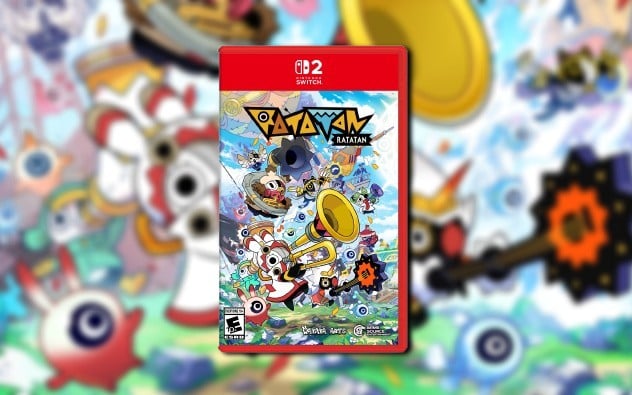
Ratatan arrives on Nintendo Switch 2 on October 15, 2026, developed by Ratata Arts and published by Game Source Entertainment.
The title is positioned as a spiritual successor to Japan Studio’s Patapon series and is led by Patapon series producer Hiroyuki Kotani.
Following Japan Studio’s 2021 closure, Ratatan inherits many of the rhythm-action hallmarks that made Patapon distinctive while adapting them into a modern roguelike structure.
In clear, journalistic terms: Ratatan is presented by its creators as a spiritual successor to Patapon, taking the original rhythm-command mechanics and grafting them onto procedural runs and incremental progression.
The core loop retains the Patapon-style beat-based commands: players directly control one of eight Ratatan characters and issue command strings to an army of small units called Cobun.
Input sequences—such as pressing Y three times to gather Cobun or A three times to attack—must be timed to the music for maximum effect.
Perfect timing boosts attack power, while mistimed inputs leave your Cobun vulnerable.
Ratatan splits each run into five stages en route to a destination called Everafter.
The roguelike elements manifest through branching powerup choices between sections: ability upgrade cards with elemental effects, permanent hub unlocks at Rataport, consumables, and a token shop.
On death, players return to Rataport to spend collected candy, donuts, crafting materials, and tokens on permanent upgrades, weapon crafting, and new Cobun equipment.
A typical run feeds back into meta-progression, with additional difficulty tiers and episodes unlocked after completing the game once.
Gameplay design is competent but conservative.
Ratatan’s upgrade cards and shop structure echo current roguelike conventions, but they rarely produce the kind of emergent, run-breaking synergies fans expect from the best titles in the genre.
Difficulty and accessibility options—such as a Welcome Mode that grants buffs after failed runs and simplified rhythm inputs—are included to ease progression.
Visually and aurally, Ratatan wears its Japan Studio inspiration on its sleeve.
The game’s vibrant, energetic art style and character animation recall the studio’s more eccentric work, while chants and percussion drive the rhythm mechanics.
On Nintendo Switch 2 the title performs well in docked mode; handheld play can experience frame rate drops in late stages where on-screen activity is dense, which in turn complicates timing-sensitive inputs.
Ratatan is a respectful, often charming attempt to revive Patapon-style gameplay on the Nintendo Switch 2.
While its roguelike conversion yields substantial replayability and a robust meta layer, the core mechanics feel repetitive over extended sessions.
For players seeking a rhythm-driven experience with progression hooks and retro inspirations, Ratatan offers plenty to explore, even if it stops short of reinventing the formula.
Note: A review copy of Ratatan was provided by the publisher for evaluation.
The title is positioned as a spiritual successor to Japan Studio’s Patapon series and is led by Patapon series producer Hiroyuki Kotani.
Following Japan Studio’s 2021 closure, Ratatan inherits many of the rhythm-action hallmarks that made Patapon distinctive while adapting them into a modern roguelike structure.
In clear, journalistic terms: Ratatan is presented by its creators as a spiritual successor to Patapon, taking the original rhythm-command mechanics and grafting them onto procedural runs and incremental progression.
The core loop retains the Patapon-style beat-based commands: players directly control one of eight Ratatan characters and issue command strings to an army of small units called Cobun.
Input sequences—such as pressing Y three times to gather Cobun or A three times to attack—must be timed to the music for maximum effect.
Perfect timing boosts attack power, while mistimed inputs leave your Cobun vulnerable.
Ratatan splits each run into five stages en route to a destination called Everafter.
The roguelike elements manifest through branching powerup choices between sections: ability upgrade cards with elemental effects, permanent hub unlocks at Rataport, consumables, and a token shop.
On death, players return to Rataport to spend collected candy, donuts, crafting materials, and tokens on permanent upgrades, weapon crafting, and new Cobun equipment.
A typical run feeds back into meta-progression, with additional difficulty tiers and episodes unlocked after completing the game once.
Gameplay design is competent but conservative.
Ratatan’s upgrade cards and shop structure echo current roguelike conventions, but they rarely produce the kind of emergent, run-breaking synergies fans expect from the best titles in the genre.
Difficulty and accessibility options—such as a Welcome Mode that grants buffs after failed runs and simplified rhythm inputs—are included to ease progression.
Visually and aurally, Ratatan wears its Japan Studio inspiration on its sleeve.
The game’s vibrant, energetic art style and character animation recall the studio’s more eccentric work, while chants and percussion drive the rhythm mechanics.
On Nintendo Switch 2 the title performs well in docked mode; handheld play can experience frame rate drops in late stages where on-screen activity is dense, which in turn complicates timing-sensitive inputs.
Ratatan is a respectful, often charming attempt to revive Patapon-style gameplay on the Nintendo Switch 2.
While its roguelike conversion yields substantial replayability and a robust meta layer, the core mechanics feel repetitive over extended sessions.
For players seeking a rhythm-driven experience with progression hooks and retro inspirations, Ratatan offers plenty to explore, even if it stops short of reinventing the formula.
Note: A review copy of Ratatan was provided by the publisher for evaluation.