

At a press conference marking his receipt of Japan’s Order of Culture, Nintendo veteran Shigeru Miyamoto offered a concise look at one of Super Mario Bros.’ most famous design decisions: why players don’t engage Bowser in a conventional boss fight.
Super Mario Bros., released for Nintendo’s Famicom/NES in 1985, established many of the side-scrolling platform conventions that define Nintendo’s legacy, and Miyamoto’s remarks illuminate how technical limits and design intent shaped its boss encounters.
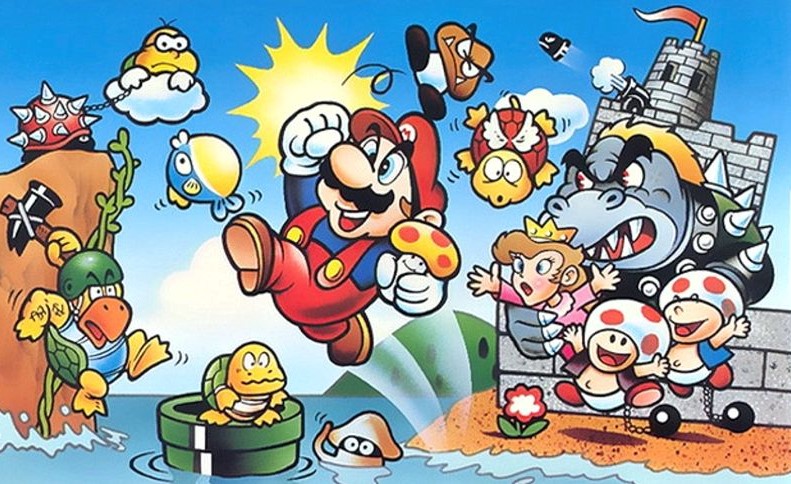
Super Mario Bros. presents Bowser at the end of many worlds, but the confrontation is not a traditional duel.
On the NES, most players defeat Bowser by running to the end of the bridge and striking the axe, which severs the bridge and sends Bowser plunging into the lava below.
If the player has the Fire Flower power-up (Fire Mario), they can also defeat him directly by striking with fireballs.
These mechanics are both simple and tightly integrated with the platforming flow of the game.
Miyamoto explained that the development team struggled to design a conventional boss battle on the limited NES hardware.
Rather than force a complicated combat system, he leaned into Super Mario Bros.’ fundamental motion: running to the right.
In his words, the team realized that victory could be achieved by reaching the far right of the screen, and that jumping over the opponent rather than designing an intricate fight offered a satisfying and surprising gameplay moment.
He framed that decision within a broader design philosophy.
Miyamoto referenced earlier arcade and puzzle titles such as Pac-Man and Tetris, and contrasted them with his own work on Donkey Kong, which needed a clearer goal to communicate the player’s objective.
For Super Mario Bros. he envisioned a system of “land, sea and air” actions—running, swimming and flying—that allowed players to explore a coherent world through movement.
Miyamoto also noted that the approach to Bowser evolved across subsequent Mario games.
As the series advanced, sequels introduced more direct confrontations and varied boss mechanics, but the original game’s elegant solution—make the player’s movement the core of the challenge—remains a foundational moment in game design.
The decision to convert a potential battle into a platforming puzzle exemplifies how technical limits and creative intent combined to shape a franchise that continues to influence titles on Nintendo platforms, from the NES to the Nintendo Switch and the eShop catalog.