
Eyepatch Entertainment, the independent developer behind recent community ports of Super Mario 64, has published early footage showing builds running on Sega Saturn hardware and reiterated that AI-assisted techniques are part of their workflow.
The developer's updates on July 29, 2026 follow earlier demonstrations of a 3DO build and an ongoing PlayStation (PS1) port work-in-progress.
Background and current builds
Super Mario 64 originally debuted on the Nintendo 64 in 1996 and has long been the subject of community projects, including the Super Mario 64 decompilation project that has enabled source-level ports and modifications.
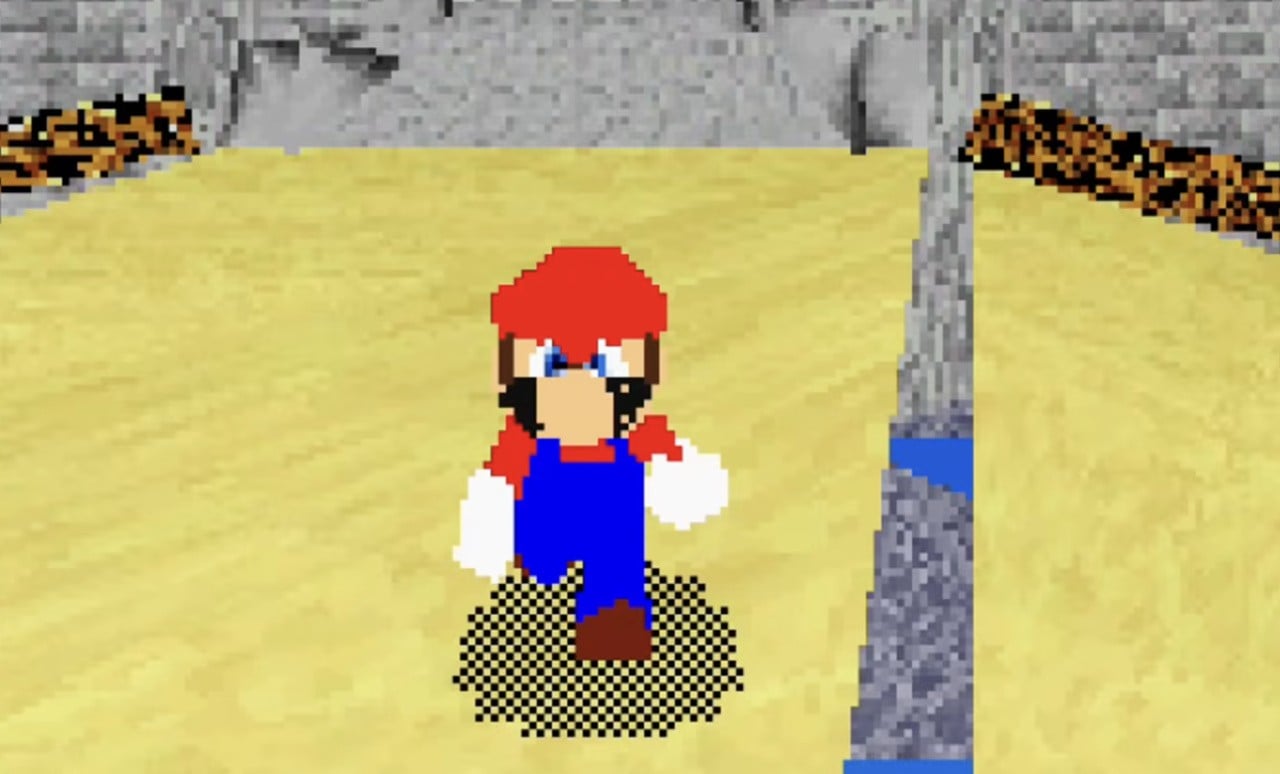
Eyepatch Entertainment’s recent efforts reuse assets from a 3DO build and integrate them into a Saturn port using the PowerSlave Saturn engine; the Mario model in the Saturn footage is taken from the Super Mario 64 decompilation.
The developer says the PlayStation build has gone through roughly 3,000 internal builds and that earlier attempts involved efforts to make the engine run within PS1 resource constraints.
Paraphrased developer statements
Eyepatch Entertainment told reporters that they are using artificial intelligence to assist parts of the development process, especially where low-level Assembly work is difficult to automate.
The developer said they still rely on extensive manual testing and handcrafted harnesses because current tools cannot fully automate those steps.
They also described long-running experience with AI-assisted upscaling for video and a recent multi-year project that involved collecting thousands of photos to train a vintage camera emulator.
The developer further framed the Mario ports as part of a larger technical effort: they described building a toolset that can deconstruct 2D web apps or source assets and produce builds suitable for legacy hardware (citing systems such as PS1, 3DO, Genesis and Game Boy families) using offline models.
Eyepatch emphasized the work is a hobbyist effort shared on platforms like YouTube without paid promotion and expressed respect for professional homebrew coders.
Community reaction and attribution
Key figures in the PS1 homebrew scene have weighed in: developer Elias Daler noted that Eyepatch’s PS1 work appears to build on earlier contributions by Malucard, and Daler has suggested AI played a role in recent ports.
Eyepatch acknowledged reliance on others’ work in some cases and said they spent weeks getting certain ports running on real hardware, including PS1 builds constrained by the PlayStation’s 2MB main RAM.
Next steps
Eyepatch plans to continue development on the PS1 port and other experiments, including a promised demonstration of a Duke Nukem 3D build running on 3DO hardware.
The work remains in early stages, with the developer noting that while some moments look promising, builds are still unstable and performance varies across platforms.
This coverage will be updated with further statements or footage as Eyepatch publishes new material or replies to follow-up requests.
The developer's updates on July 29, 2026 follow earlier demonstrations of a 3DO build and an ongoing PlayStation (PS1) port work-in-progress.
Background and current builds
Super Mario 64 originally debuted on the Nintendo 64 in 1996 and has long been the subject of community projects, including the Super Mario 64 decompilation project that has enabled source-level ports and modifications.
Eyepatch Entertainment’s recent efforts reuse assets from a 3DO build and integrate them into a Saturn port using the PowerSlave Saturn engine; the Mario model in the Saturn footage is taken from the Super Mario 64 decompilation.
The developer says the PlayStation build has gone through roughly 3,000 internal builds and that earlier attempts involved efforts to make the engine run within PS1 resource constraints.
Paraphrased developer statements
Eyepatch Entertainment told reporters that they are using artificial intelligence to assist parts of the development process, especially where low-level Assembly work is difficult to automate.
The developer said they still rely on extensive manual testing and handcrafted harnesses because current tools cannot fully automate those steps.
They also described long-running experience with AI-assisted upscaling for video and a recent multi-year project that involved collecting thousands of photos to train a vintage camera emulator.
The developer further framed the Mario ports as part of a larger technical effort: they described building a toolset that can deconstruct 2D web apps or source assets and produce builds suitable for legacy hardware (citing systems such as PS1, 3DO, Genesis and Game Boy families) using offline models.
Eyepatch emphasized the work is a hobbyist effort shared on platforms like YouTube without paid promotion and expressed respect for professional homebrew coders.
Community reaction and attribution
Key figures in the PS1 homebrew scene have weighed in: developer Elias Daler noted that Eyepatch’s PS1 work appears to build on earlier contributions by Malucard, and Daler has suggested AI played a role in recent ports.
Eyepatch acknowledged reliance on others’ work in some cases and said they spent weeks getting certain ports running on real hardware, including PS1 builds constrained by the PlayStation’s 2MB main RAM.
Next steps
Eyepatch plans to continue development on the PS1 port and other experiments, including a promised demonstration of a Duke Nukem 3D build running on 3DO hardware.
The work remains in early stages, with the developer noting that while some moments look promising, builds are still unstable and performance varies across platforms.
This coverage will be updated with further statements or footage as Eyepatch publishes new material or replies to follow-up requests.