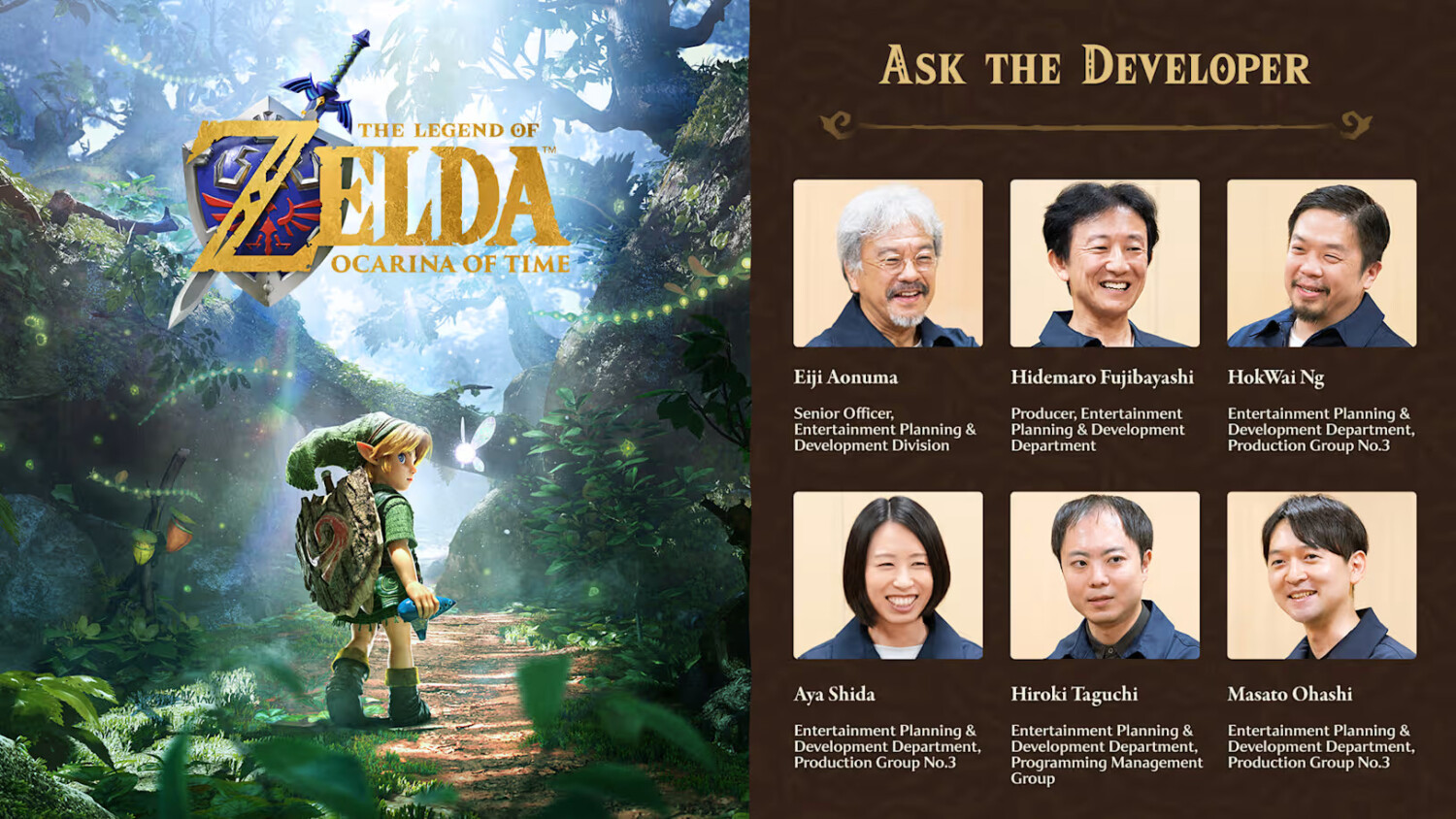

This article is translated from the original Japanese interview; images used in the conversation were created during development.
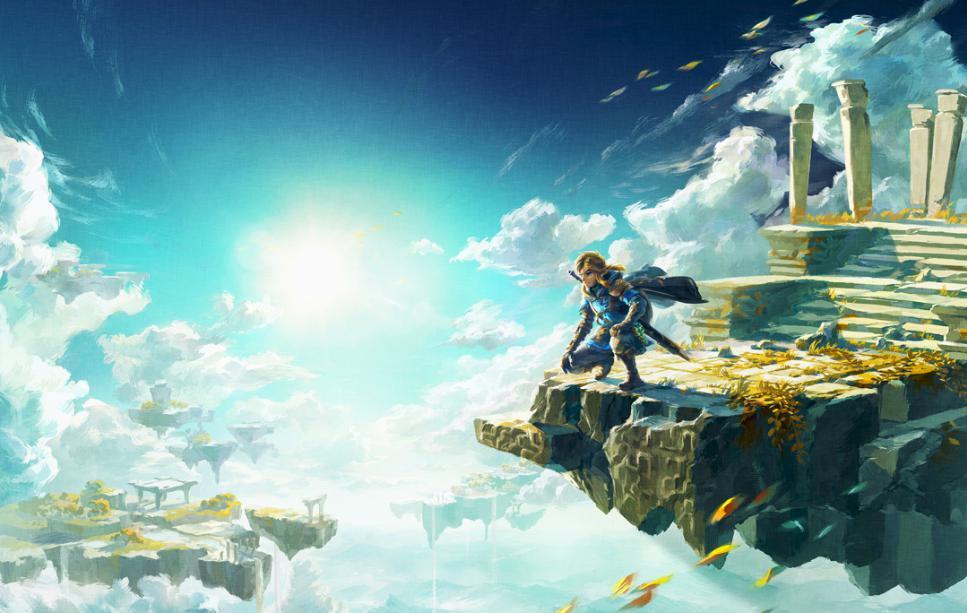
The following summarizes key points from volume nine of Nintendo's Ask the Developer interview series, featuring the team behind The Legend of Zelda: Tears of the Kingdom for Nintendo Switch, which launched on May 12, 2023.
Background and launch
The Legend of Zelda: Tears of the Kingdom is a direct sequel to The Legend of Zelda: Breath of the Wild (released March 2017 for Nintendo Switch and Wii U).
Developed by Nintendo’s Zelda team and released for the Nintendo Switch on May 12, 2023, the title continues Link’s story in the kingdom of Hyrule and is available digitally via the Nintendo eShop in addition to physical retail copies.
Who led development
Producer Eiji Aonuma, best known for his long-term stewardship of the Zelda franchise and previous roles including dungeon design on The Legend of Zelda: Ocarina of Time (November 1998,Nintendo 64) and direction/production on The Legend of Zelda: Twilight Princess (2006,Wii/GameCube), framed the series’ core premise around Hyrule and the sacred powers of the goddesses.
Director Hidemaro Fujibayashi, who proposed the game's central concept and led production after work on Skyward Sword (2011,Wii) and Breath of the Wild, steered the project’s overall design.
Technical director Takuhiro Dohta, art director Satoru Takizawa, and sound director Hajime Wakai also contributed to the game's systems, visuals, and audio.
Design priorities and team perspective (paraphrased)
Aonuma explained that Tears of the Kingdom intentionally continues in the same Hyrule as Breath of the Wild because the team wanted to expand on a familiar world rather than build an entirely new one.
Fujibayashi said the development team agreed early on to keep the setting unchanged, believing that a known environment would enable new gameplay discoveries.
Dohta described how the team added major gameplay changes—such as seamless sky-to-surface diving and rideable flying vehicles—to increase player freedom while leveraging players’ prior knowledge of the map.
Takizawa noted that adding fresh visual layers on top of an existing world was more difficult than starting from scratch, requiring new design perspectives without erasing familiarity.
Wakai summarized the audio work by saying that the team followed the previous game's tonal approach while implementing a new sound system to improve environmental realism and distance perception.
Accessibility and continuity
The developers emphasized that although Tears of the Kingdom builds on Breath of the Wild, the game includes systems to welcome new players.
Fujibayashi highlighted a Character Profile feature intended to help players understand characters and relationships without prior knowledge of the series.
Conclusion
Tears of the Kingdom represents a deliberate fusion of continuity and innovation: Nintendo's team kept the familiar Hyrule as a foundation while introducing technical and gameplay systems designed to expand exploration on Nintendo Switch.
For players seeking the title digitally, it remains available on the Nintendo eShop.