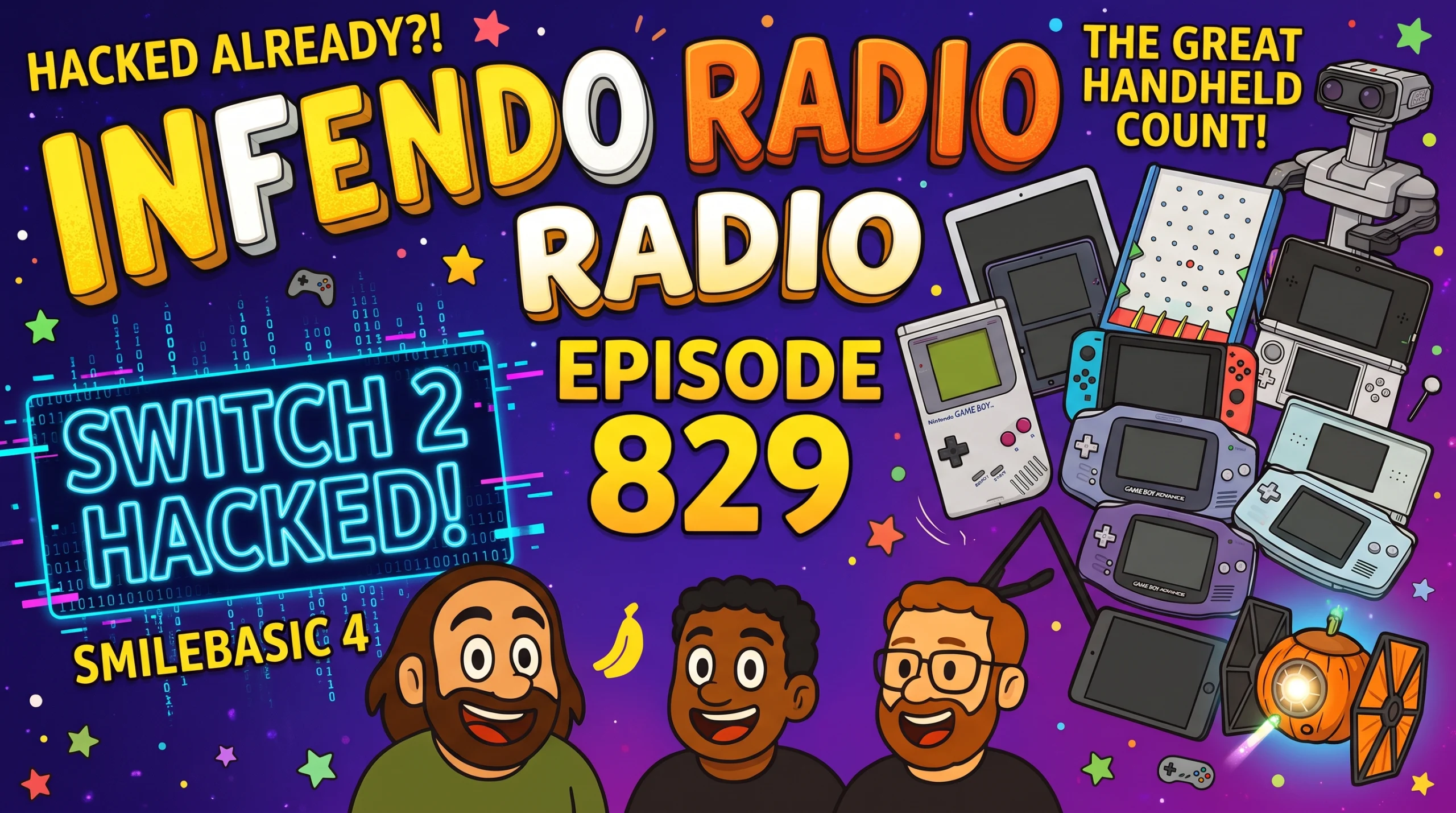




Infendo Radio’s episode 829 reopened a discussion that will be familiar to anyone who follows Nintendo security: a programming tool, SmileBASIC 4, was reportedly pulled from the Nintendo eShop after a hardware-exploit proof-of-concept was demonstrated.
The podcast framed the development as a possible early sign of security issues related to Nintendo’s next-generation hardware, commonly referred to in industry coverage as “Switch 2.”
In journalistic terms, Infendo’s hosts said that Nintendo removed SmileBASIC 4 from the eShop following a public proof-of-concept that illustrated a hardware-level exploit tied to the newer console hardware.
The episode asked what such an event could mean for the platform’s future security while also covering routine community topics like handheld collections and recent game playthroughs.
Context and verified history
- Nintendo: The Kyoto-based company operates the Nintendo eShop, its digital storefront for Nintendo Switch and other platforms, and has repeatedly issued firmware updates and software removals as part of its platform-security processes.
- Nintendo Switch: Nintendo’s current hybrid console launched on March 3, 2017.
The platform’s early hardware was targeted by well-documented exploits: notably, a 2018 low-level vulnerability (often referred to as Fusée Gelée) affected early Switch units and led to persistent homebrew and custom firmware activity on that hardware revision.
- SmileBASIC and SmileBoom: SmileBASIC is a BASIC-like programming environment developed commercially for Nintendo platforms by SmileBoom.
It has been used by hobbyists and hobbyist-developers as a tool for creating games and prototypes on Nintendo hardware.
Why this matters
Hardware-level proofs of concept are particularly sensitive because they can enable persistent code execution or circumvent platform protections.
When a third-party title or developer tool is implicated—whether intentionally or accidentally—platform holders sometimes remove the affected title from storefronts while investigating and coordinating mitigations.
Historically, Nintendo has responded to security incidents with firmware patches and, in some cases, storefront actions designed to limit the distribution vectors for exploits.
What developers and players should watch for
- Official announcements: Look for statements from Nintendo or the developer/publisher (SmileBoom) about the removal, investigation status, or planned fixes.
- Firmware updates: Platform security issues are commonly addressed via system software updates; keeping devices current remains the primary user-side defense.
- Developer guidance: Tool and middleware creators often publish patches or updated versions after an exploit vector is confirmed.
Infendo Radio’s coverage highlights how quickly the community scrutinizes any sign of a hardware exploit.
For developers and publishers working on Nintendo platforms, the episode is a reminder of the importance of secure development practices and timely responses to vulnerability reports.
For players, it underscores why platform updates and official communication matter for long-term device security and access to digital content.
The podcast framed the development as a possible early sign of security issues related to Nintendo’s next-generation hardware, commonly referred to in industry coverage as “Switch 2.”
In journalistic terms, Infendo’s hosts said that Nintendo removed SmileBASIC 4 from the eShop following a public proof-of-concept that illustrated a hardware-level exploit tied to the newer console hardware.
The episode asked what such an event could mean for the platform’s future security while also covering routine community topics like handheld collections and recent game playthroughs.
Context and verified history
- Nintendo: The Kyoto-based company operates the Nintendo eShop, its digital storefront for Nintendo Switch and other platforms, and has repeatedly issued firmware updates and software removals as part of its platform-security processes.
- Nintendo Switch: Nintendo’s current hybrid console launched on March 3, 2017.
The platform’s early hardware was targeted by well-documented exploits: notably, a 2018 low-level vulnerability (often referred to as Fusée Gelée) affected early Switch units and led to persistent homebrew and custom firmware activity on that hardware revision.
- SmileBASIC and SmileBoom: SmileBASIC is a BASIC-like programming environment developed commercially for Nintendo platforms by SmileBoom.
It has been used by hobbyists and hobbyist-developers as a tool for creating games and prototypes on Nintendo hardware.
Why this matters
Hardware-level proofs of concept are particularly sensitive because they can enable persistent code execution or circumvent platform protections.
When a third-party title or developer tool is implicated—whether intentionally or accidentally—platform holders sometimes remove the affected title from storefronts while investigating and coordinating mitigations.
Historically, Nintendo has responded to security incidents with firmware patches and, in some cases, storefront actions designed to limit the distribution vectors for exploits.
What developers and players should watch for
- Official announcements: Look for statements from Nintendo or the developer/publisher (SmileBoom) about the removal, investigation status, or planned fixes.
- Firmware updates: Platform security issues are commonly addressed via system software updates; keeping devices current remains the primary user-side defense.
- Developer guidance: Tool and middleware creators often publish patches or updated versions after an exploit vector is confirmed.
Infendo Radio’s coverage highlights how quickly the community scrutinizes any sign of a hardware exploit.
For developers and publishers working on Nintendo platforms, the episode is a reminder of the importance of secure development practices and timely responses to vulnerability reports.
For players, it underscores why platform updates and official communication matter for long-term device security and access to digital content.