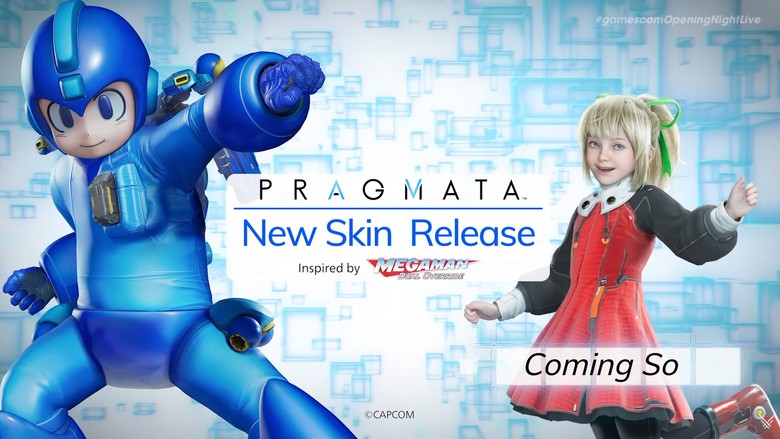
At CEDEC 2026, Capcom animation leads Kenji Irie and Serina Ohara presented a technical case study that revealed a surprising development choice behind Pragmata’s character work: Diana’s signature long hair nearly didn’t make the final cut.
The presentation, reported by Automaton-Media and citing Famitsu, focused on facial expressions and the studio’s approach to hair simulation for the science-fiction adventure released on Nintendo Switch 2.
In journalistic terms, the team said animating Diana’s flowing hair was a deliberate artistic decision that carried substantial technical cost.
Capcom originally evaluated a shorter bob hairstyle during early concepting to reduce production complexity.
The studio even built a prototype model to quantify the savings and inform the final design choice.
The technical contrast was stark.
Many games rely on hair cards—flat polygons textured to look like hair—requiring comparatively few animation joints.
Capcom explained that using hair cards for Diana would have needed roughly 22 animation joints.
By contrast, the studio implemented individually rendered strands for Diana’s hairstyle, which amounted to about 430,000 animation points in total.
To balance performance and realism, the final model includes fewer than 20,000 individually simulated strands, a number the presenters said was tuned to achieve natural motion while matching Diana’s outgoing, occasionally eccentric personality.
Irie and Ohara framed the decision in narrative and experiential terms: Diana’s long blonde hair was retained because it helps convey "a sense of life on the Moon" and reinforces her role as a young girl thrust into an adventure she is not prepared for.
They also noted that since players frequently view the character from behind, dynamic hair movement keeps background moments visually engaging.
Capcom’s Pragmata is available now on Nintendo Switch 2.
The game has received a positive response from critics and players, and Capcom has indicated that the title’s commercial performance could justify a sequel.
The CEDEC talk offered a clear window into the trade-offs between artistic intent and engineering cost, illustrating how a single design element can shape both production pipelines and player experience.
The presentation, reported by Automaton-Media and citing Famitsu, focused on facial expressions and the studio’s approach to hair simulation for the science-fiction adventure released on Nintendo Switch 2.
In journalistic terms, the team said animating Diana’s flowing hair was a deliberate artistic decision that carried substantial technical cost.
Capcom originally evaluated a shorter bob hairstyle during early concepting to reduce production complexity.
The studio even built a prototype model to quantify the savings and inform the final design choice.
The technical contrast was stark.
Many games rely on hair cards—flat polygons textured to look like hair—requiring comparatively few animation joints.
Capcom explained that using hair cards for Diana would have needed roughly 22 animation joints.
By contrast, the studio implemented individually rendered strands for Diana’s hairstyle, which amounted to about 430,000 animation points in total.
To balance performance and realism, the final model includes fewer than 20,000 individually simulated strands, a number the presenters said was tuned to achieve natural motion while matching Diana’s outgoing, occasionally eccentric personality.
Irie and Ohara framed the decision in narrative and experiential terms: Diana’s long blonde hair was retained because it helps convey "a sense of life on the Moon" and reinforces her role as a young girl thrust into an adventure she is not prepared for.
They also noted that since players frequently view the character from behind, dynamic hair movement keeps background moments visually engaging.
Capcom’s Pragmata is available now on Nintendo Switch 2.
The game has received a positive response from critics and players, and Capcom has indicated that the title’s commercial performance could justify a sequel.
The CEDEC talk offered a clear window into the trade-offs between artistic intent and engineering cost, illustrating how a single design element can shape both production pipelines and player experience.