

Introduction
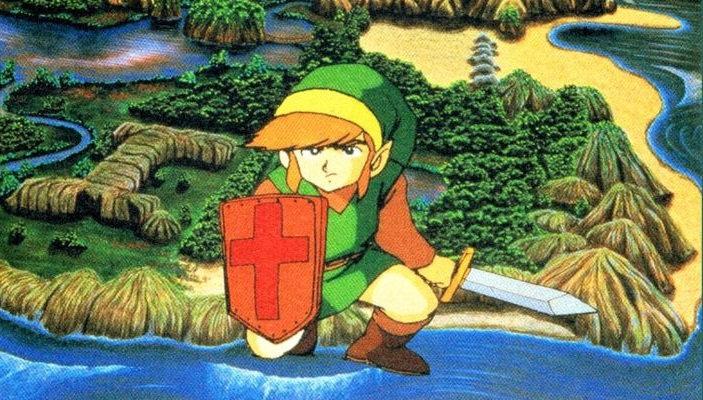
The Legend of Zelda: Ocarina of Time is one of Nintendo’s most influential franchises, originally released for the Nintendo 64 in 1998 and later remade for the Nintendo 3DS in 2011.
Nintendo’s internal development teams, now organized under Nintendo EPD, have a long history of revisiting flagship properties.
The Nintendo Switch, launched on March 3, 2017, and its digital storefront, the eShop, remain the company’s primary platforms for distributing both first- and third-party titles.
In recent coverage, a report has circulated claiming technical details about a proposed Ocarina of Time remake for a rumored Nintendo successor device often referred to in discussions as the “Switch 2.”
Report summary (rewritten)
According to the report, the Ocarina of Time remake allegedly targets a hardware successor to the Switch and would use AMD’s FSR 1.0 combined with SMAA for upscaling and anti-aliasing.
The report characterizes FSR 1.0 as an earlier-generation spatial upscaling solution and notes the combination of FSR 1.0 with SMAA as the project’s reported image-quality pipeline.
The report does not explain why NVIDIA’s DLSS would not be used, and it suggests that engine compatibility or tooling could be a contributing factor.
Context and verified facts
- The original The Legend of Zelda: Ocarina of Time launched in 1998 on the Nintendo 64; a prominent remake was released for the Nintendo 3DS in 2011. - Nintendo EPD is the primary internal development group responsible for many of Nintendo’s first-party titles. - The Nintendo Switch platform was released on March 3, 2017, and Nintendo publishes hardware and game announcements through channels including Nintendo Direct. - AMD’s FidelityFX Super Resolution (FSR) and NVIDIA’s Deep Learning Super Sampling (DLSS) are commercially available image upscaling solutions provided by AMD and NVIDIA respectively.
SMAA (Subpixel Morphological Anti-Aliasing) is a widely used anti-aliasing technique.
What this means for players and developers
If the technical details in the report are accurate, they would describe a specific approach to image quality rather than gameplay or design decisions.
Developers choose upscaling and anti-aliasing solutions based on engine support, licensing, performance targets, and platform relationships.
Until Nintendo issues an official announcement via its established channels such as a Nintendo Direct or an eShop listing, these technical claims should be treated as unverified.
Conclusion
The circulated report provides a technical angle on a rumored Ocarina of Time remake for a successor device, but it remains unconfirmed.
For verified developments—release dates, official trailers, and platform availability—readers should watch for announcements from Nintendo and official product pages on the eShop.


