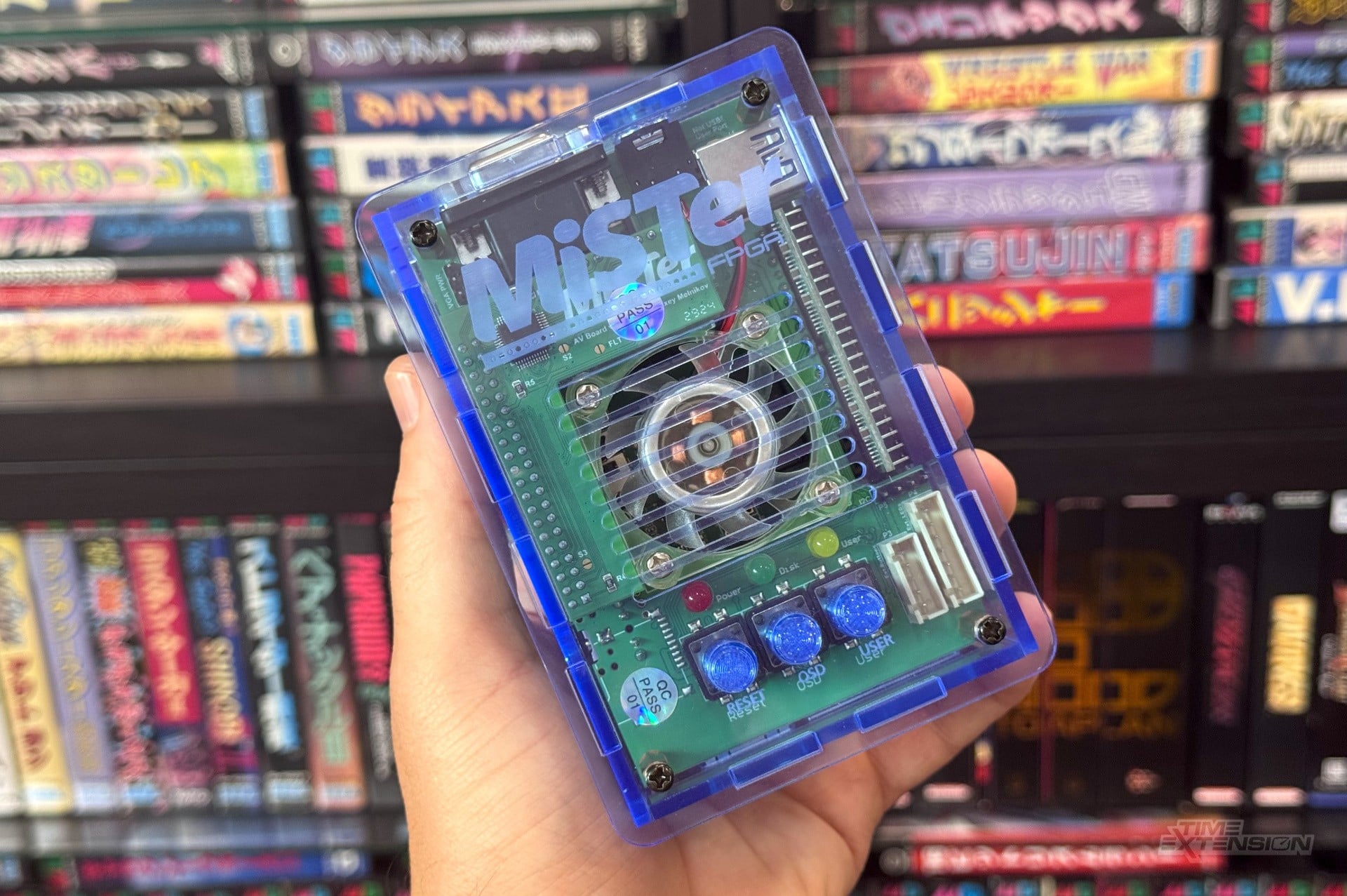

The MiSTer FPGA scene is in the middle of a heated debate as a wave of AI-assisted, MAME-based cores appears across community repositories.
MiSTer FPGA — a popular platform built around FPGA hardware (commonly the Terasic DE10‑Nano) — is prized for its ability to recreate original arcade and console hardware behavior at the logic level.
Long-standing preservation projects such as MAME (Multiple Arcade Machine Emulator), which debuted in the late 1990s, remain a central source of arcade documentation and ROM support, but their role in the MiSTer workflow is now under scrutiny.
Recently, several new MiSTer cores have been produced that rely heavily on MAME-derived data and automated tooling rather than the traditional route of manual reverse-engineering.
Developers and users report that such AI-assisted cores can be quicker to produce but may contain functional inaccuracies when compared to FPGA cores painstakingly derived from original circuit-level schematics.
There is particular concern that these cores are being added to commonly used update scripts — including community 'update_all' utilities — without explicit labelling or rigorous review, making it harder for users to avoid less-accurate builds.
Prominent MiSTer developer Jotego has publicly pushed back on the trend.
In straightforward terms, he explains that his standard process for creating an FPGA core involves hands-on analysis of the original arcade hardware to produce accurate schematics.
Those schematics form the basis for a core that simulates the board’s hardware behavior at the logic level, and that workflow is resource- and time-intensive.
Because of the labor involved, many FPGA developers rely on direct community support such as Patreon to fund ongoing research and hardware access.
Jotego’s comments have drawn significant backing from parts of the community that value cycle-accurate and hardware-faithful implementations.
At the same time, other contributors argue that using AI and MAME as accelerants could broaden access to more games and speed up development.
Both positions reflect wider tensions in retro preservation between speed and fidelity.
The debate touches on technical, ethical, and practical questions about how MiSTer development should evolve.
For users of the platform and repository maintainers, the current consensus recommendation is to verify core provenance and changelogs before updating, and to support developers who carry out deep hardware research if accurate emulation is a priority.
Readers within the MiSTer community are encouraged to follow developer announcements and repository notes closely and to participate in community polls and discussions where available.
MiSTer FPGA — a popular platform built around FPGA hardware (commonly the Terasic DE10‑Nano) — is prized for its ability to recreate original arcade and console hardware behavior at the logic level.
Long-standing preservation projects such as MAME (Multiple Arcade Machine Emulator), which debuted in the late 1990s, remain a central source of arcade documentation and ROM support, but their role in the MiSTer workflow is now under scrutiny.
Recently, several new MiSTer cores have been produced that rely heavily on MAME-derived data and automated tooling rather than the traditional route of manual reverse-engineering.
Developers and users report that such AI-assisted cores can be quicker to produce but may contain functional inaccuracies when compared to FPGA cores painstakingly derived from original circuit-level schematics.
There is particular concern that these cores are being added to commonly used update scripts — including community 'update_all' utilities — without explicit labelling or rigorous review, making it harder for users to avoid less-accurate builds.
Prominent MiSTer developer Jotego has publicly pushed back on the trend.
In straightforward terms, he explains that his standard process for creating an FPGA core involves hands-on analysis of the original arcade hardware to produce accurate schematics.
Those schematics form the basis for a core that simulates the board’s hardware behavior at the logic level, and that workflow is resource- and time-intensive.
Because of the labor involved, many FPGA developers rely on direct community support such as Patreon to fund ongoing research and hardware access.
Jotego’s comments have drawn significant backing from parts of the community that value cycle-accurate and hardware-faithful implementations.
At the same time, other contributors argue that using AI and MAME as accelerants could broaden access to more games and speed up development.
Both positions reflect wider tensions in retro preservation between speed and fidelity.
The debate touches on technical, ethical, and practical questions about how MiSTer development should evolve.
For users of the platform and repository maintainers, the current consensus recommendation is to verify core provenance and changelogs before updating, and to support developers who carry out deep hardware research if accurate emulation is a priority.
Readers within the MiSTer community are encouraged to follow developer announcements and repository notes closely and to participate in community polls and discussions where available.