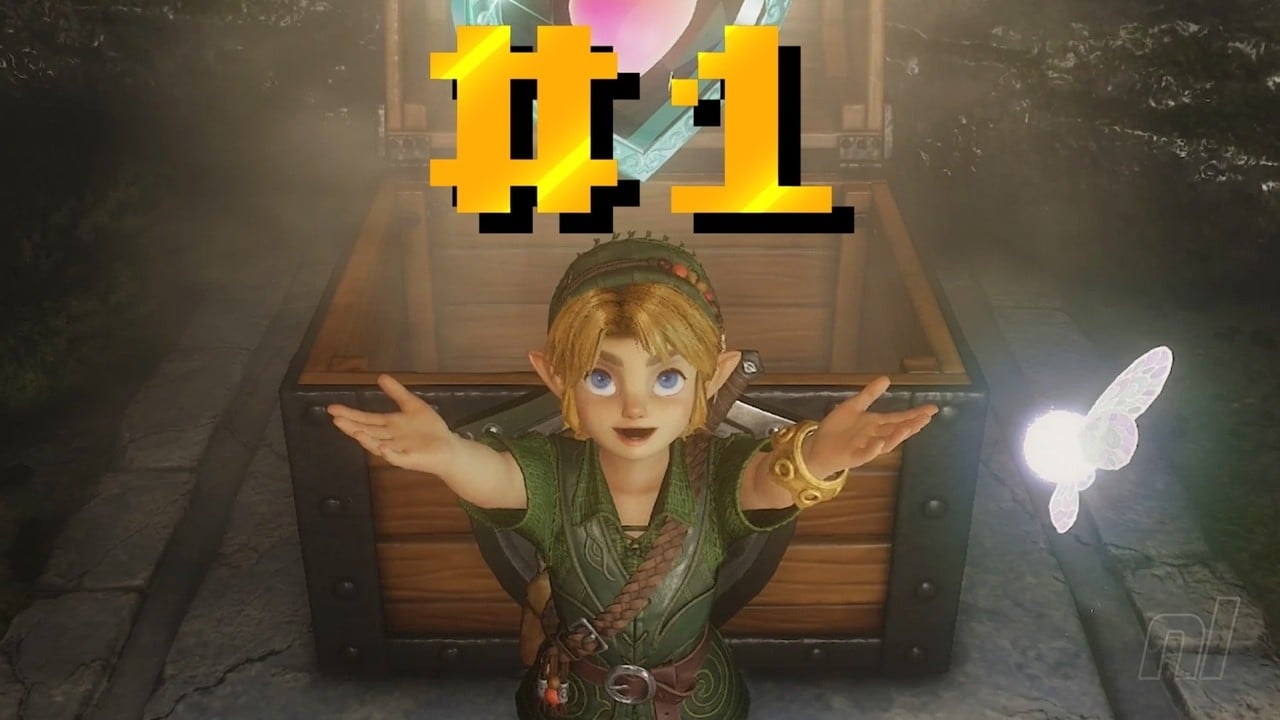


The Legend of Zelda: Ocarina of Time has opened at number one on the latest UK physical sales charts, as reported by Nintendo Life.
The release outperformed competing retail launches this week, including Modern Warfare 4 and FC 27, signaling a strong consumer appetite for boxed copies in the current market.
Nintendo, the franchise owner and developer, secured the top position on the physical charts with Ocarina of Time.
Industry tracker The Game Business provided further context: analyst Chris Dring described the release as the second-largest UK physical launch in the Zelda franchise’s history.
Dring said the launch surpassed Breath of the Wild’s initial UK physical debut by roughly 35% while reaching about half the physical volume of Tears of the Kingdom’s launch.
He added that differences in console install base offer plausible explanations for those performance gaps and noted that this is the biggest physical launch of 2026 so far.
Nintendo Life also flagged interest in the split between physical and digital sales for the title, and highlighted factors commonly associated with strong boxed-sales weeks — such as pre-order incentives and midnight retail events — as possible contributors to elevated physical demand.
Those observations were presented as context reported around the chart result rather than as verified sales breakdowns.
Beyond Ocarina of Time, the UK charts showed other notable debuts.
Godzilla: Destroy All Monsters Melee Remastered entered the weekly rankings at number nine, demonstrating lingering retail interest for remastered properties on Nintendo platforms.
Meanwhile, Stellar Blade Complete Edition landed at number 12, an encouraging sign that major third-party physical releases can find an audience on Switch 2 against PlayStation 5 competition.
The latest chart snapshot reinforces a broader industry trend: despite the growth of digital marketplaces such as the Nintendo eShop, physical retail remains a meaningful channel for high-profile launches, particularly when supported by collector editions, retailer promotions, or franchise legacy.
For publishers and developers tracking 2026 performance, Ocarina of Time’s UK debut will be a key data point in assessing consumer demand across physical and digital storefronts.