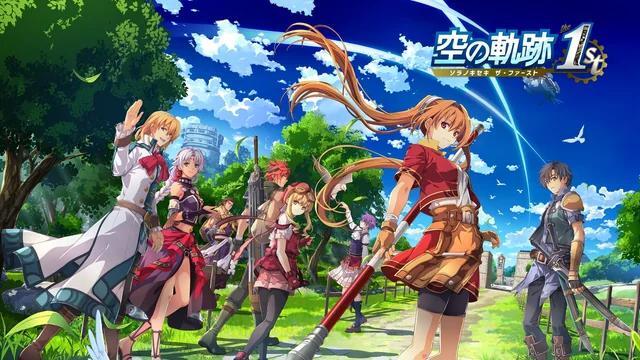

The Legend of Heroes: Trails in the Sky — 1st Chapter remake returns to Liberl with a comprehensive technical and presentation overhaul from developer Nihon Falcom.
As the opening entry in the Liberl arc of the broader Trails series, this remake modernizes the original game's presentation, reworks combat systems introduced in later entries, and expands cutscene production values while maintaining the narrative structure that launched many western fans’ long-term interest in Falcom’s world-building.
Background and context
Trails in the Sky established the Liberl setting and introduced protagonists Estelle and Joshua, whose early-career ambitions as Junior Bracers drive much of the game’s chapter-based exploration and side-quest structure.
The remake aims to preserve that foundational story while updating visuals, animations, and combat to sit alongside Falcom’s more recent 3D releases.
Rewritten notable statements
- On legacy feel: The original reviewer observed that the game “felt at home in that lineage,” meaning the remake preserves the narrative rhythms and cozy rural tone that characterized early PSP-era JRPG ports while benefiting from modern production values.
- On the remake’s role: The remake is described as a faithful re-creation that keeps the original’s scope and pacing largely intact, intentionally serving as a setup entry for the narrative payoffs that arrive in Trails in the Sky 2nd Chapter.
Visuals, audio, and presentation
Falcom’s move to full 3D cutscenes with dynamic camera work and expanded English voice acting is one of the remake’s most visible changes.
Character models and lighting have been upgraded to align with the studio’s newer titles, and many existing voice actors returned to re-record lines as part of a post-launch localization update from publisher GungHo Online Entertainment.
Those localization changes also addressed terminology consistency to better match later games in the series.
Combat and systems
The remake replaces the original’s slower, grid-like turn-based battles with a hybrid Action/Tactics approach similar to mechanics Falcom experimented with in recent entries.
Players engage in real-time Action Mode to stun foes and transition into more tactical, turn-based moments.
Orbment customization returns to its role as the series’ core magic and buff system, preserving one of the franchise’s signature strategic layers.
Design strengths and criticisms
The remake excels at open-area exploration within chapter zones and brings Liberl’s pastoral environments into a livable, navigable 3D space.
Side quests reinforce the Bracer-for-hire framing but, in some cases, retain lighter scripting than later Trails titles.
Combat has been modernized visually and mechanically but may feel uneven to players who prefer the more consistently evolving systems of Falcom’s newest arcs.
Verdict
For newcomers, the remake is a strong, accessible entry point into the Trails saga thanks to improved presentation and a localization patch that tightened terminology and voice direction.
For returning fans, its fidelity to the original story is both a selling point and a limitation: it recreates the classic experience faithfully while leaving some opportunities for pacing and quest-writing improvements unaddressed.
Overall, Falcom’s remake delivers a detailed, lovingly rebuilt Liberl that sets the stage for the acclaimed second chapter.
As the opening entry in the Liberl arc of the broader Trails series, this remake modernizes the original game's presentation, reworks combat systems introduced in later entries, and expands cutscene production values while maintaining the narrative structure that launched many western fans’ long-term interest in Falcom’s world-building.
Background and context
Trails in the Sky established the Liberl setting and introduced protagonists Estelle and Joshua, whose early-career ambitions as Junior Bracers drive much of the game’s chapter-based exploration and side-quest structure.
The remake aims to preserve that foundational story while updating visuals, animations, and combat to sit alongside Falcom’s more recent 3D releases.
Rewritten notable statements
- On legacy feel: The original reviewer observed that the game “felt at home in that lineage,” meaning the remake preserves the narrative rhythms and cozy rural tone that characterized early PSP-era JRPG ports while benefiting from modern production values.
- On the remake’s role: The remake is described as a faithful re-creation that keeps the original’s scope and pacing largely intact, intentionally serving as a setup entry for the narrative payoffs that arrive in Trails in the Sky 2nd Chapter.
Visuals, audio, and presentation
Falcom’s move to full 3D cutscenes with dynamic camera work and expanded English voice acting is one of the remake’s most visible changes.
Character models and lighting have been upgraded to align with the studio’s newer titles, and many existing voice actors returned to re-record lines as part of a post-launch localization update from publisher GungHo Online Entertainment.
Those localization changes also addressed terminology consistency to better match later games in the series.
Combat and systems
The remake replaces the original’s slower, grid-like turn-based battles with a hybrid Action/Tactics approach similar to mechanics Falcom experimented with in recent entries.
Players engage in real-time Action Mode to stun foes and transition into more tactical, turn-based moments.
Orbment customization returns to its role as the series’ core magic and buff system, preserving one of the franchise’s signature strategic layers.
Design strengths and criticisms
The remake excels at open-area exploration within chapter zones and brings Liberl’s pastoral environments into a livable, navigable 3D space.
Side quests reinforce the Bracer-for-hire framing but, in some cases, retain lighter scripting than later Trails titles.
Combat has been modernized visually and mechanically but may feel uneven to players who prefer the more consistently evolving systems of Falcom’s newest arcs.
Verdict
For newcomers, the remake is a strong, accessible entry point into the Trails saga thanks to improved presentation and a localization patch that tightened terminology and voice direction.
For returning fans, its fidelity to the original story is both a selling point and a limitation: it recreates the classic experience faithfully while leaving some opportunities for pacing and quest-writing improvements unaddressed.
Overall, Falcom’s remake delivers a detailed, lovingly rebuilt Liberl that sets the stage for the acclaimed second chapter.