Todd Gill, a hardware modder active in the retro console community, has unveiled a new Dreamcast USB controller adapter that lets players use modern USB devices while retaining classic Visual Memory Unit functionality.
The adapter runs JoypadOS, an open-source firmware for controllers and adapters, and connects directly to the Dreamcast controller port.
The Dreamcast launched in Japan on November 27, 1998, and in North America and Europe in 1999.
One of the system's defining accessories was the VMU, or Visual Memory Unit, which acted as both a memory card and a small LCD companion device.
Gill's adapter is purpose-built to preserve that legacy feature while adding contemporary input support.
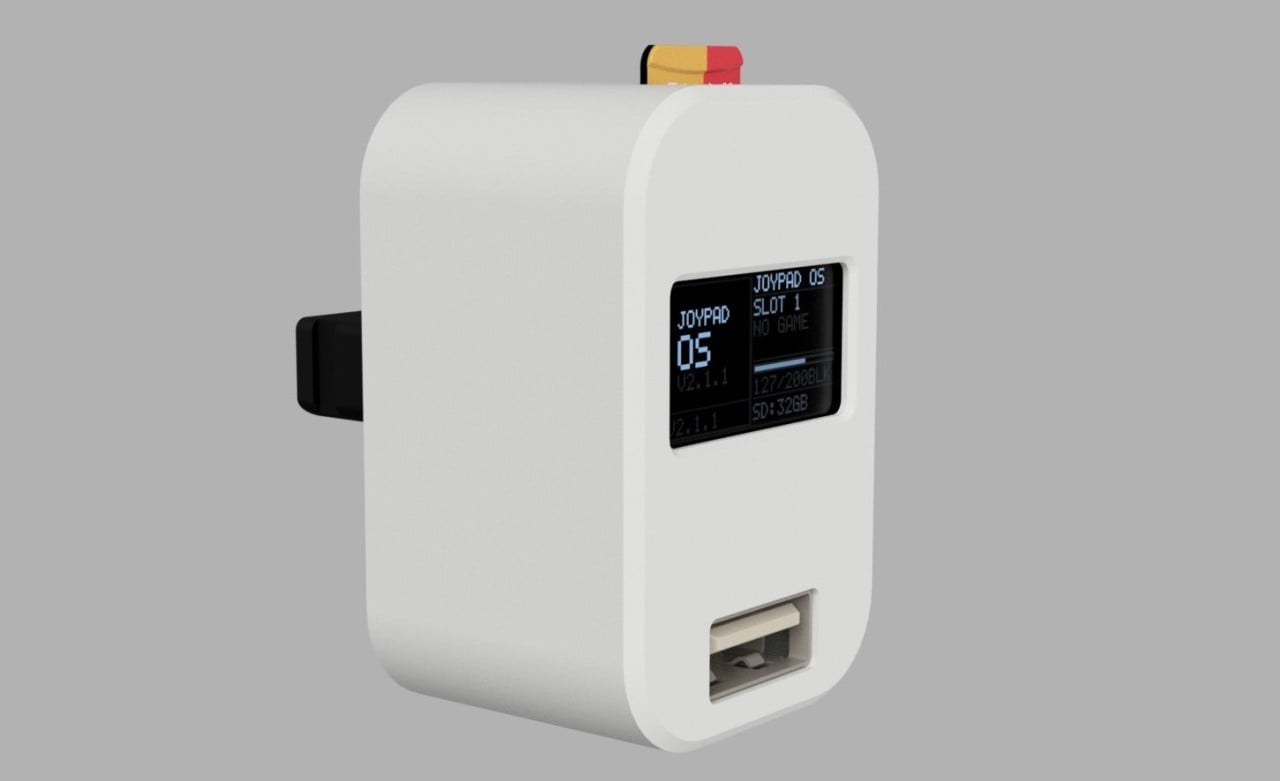
According to Gill's announcement, the hardware includes an LCD display and a USB-A port on the front to accept a wide range of USB devices, including gamepads, keyboards, mice, and arcade sticks.
The adapter stores VMU save data on a MicroSD card that slots into the top of the unit, maintaining save compatibility without sacrificing the Dreamcast's memory features.
Gill teased the project with a concise message intended to draw attention, posting a minimal caption alongside imagery of the prototype.
That brief teaser served to highlight the finished hardware rather than offer technical exposition.
The adapter differs from existing solutions such as the USB4Maple cable by explicitly preserving VMU functionality.
While USB4Maple provides USB controller support for Dreamcast hardware, Gill's design integrates VMU storage on MicroSD and exposes an LCD so users retain both saved data and the small-screen companion experience that many Dreamcast titles use.
JoypadOS is identified on the device as the firmware layer managing input translation and device enumeration.
As an open-source project, JoypadOS is used by various controller adapter developers to enable USB peripherals to work with legacy controller ports and custom interfaces.
No commercial release date or pricing information has been announced by Gill at this time.
For developers and retro enthusiasts tracking Dreamcast homebrew hardware, the adapter represents a practical bridge between modern controllers and the system's original VMU-driven feature set.
Further updates and availability details are expected to come from Gill or project pages associated with the hardware and JoypadOS.
The adapter runs JoypadOS, an open-source firmware for controllers and adapters, and connects directly to the Dreamcast controller port.
The Dreamcast launched in Japan on November 27, 1998, and in North America and Europe in 1999.
One of the system's defining accessories was the VMU, or Visual Memory Unit, which acted as both a memory card and a small LCD companion device.
Gill's adapter is purpose-built to preserve that legacy feature while adding contemporary input support.
According to Gill's announcement, the hardware includes an LCD display and a USB-A port on the front to accept a wide range of USB devices, including gamepads, keyboards, mice, and arcade sticks.
The adapter stores VMU save data on a MicroSD card that slots into the top of the unit, maintaining save compatibility without sacrificing the Dreamcast's memory features.
Gill teased the project with a concise message intended to draw attention, posting a minimal caption alongside imagery of the prototype.
That brief teaser served to highlight the finished hardware rather than offer technical exposition.
The adapter differs from existing solutions such as the USB4Maple cable by explicitly preserving VMU functionality.
While USB4Maple provides USB controller support for Dreamcast hardware, Gill's design integrates VMU storage on MicroSD and exposes an LCD so users retain both saved data and the small-screen companion experience that many Dreamcast titles use.
JoypadOS is identified on the device as the firmware layer managing input translation and device enumeration.
As an open-source project, JoypadOS is used by various controller adapter developers to enable USB peripherals to work with legacy controller ports and custom interfaces.
No commercial release date or pricing information has been announced by Gill at this time.
For developers and retro enthusiasts tracking Dreamcast homebrew hardware, the adapter represents a practical bridge between modern controllers and the system's original VMU-driven feature set.
Further updates and availability details are expected to come from Gill or project pages associated with the hardware and JoypadOS.