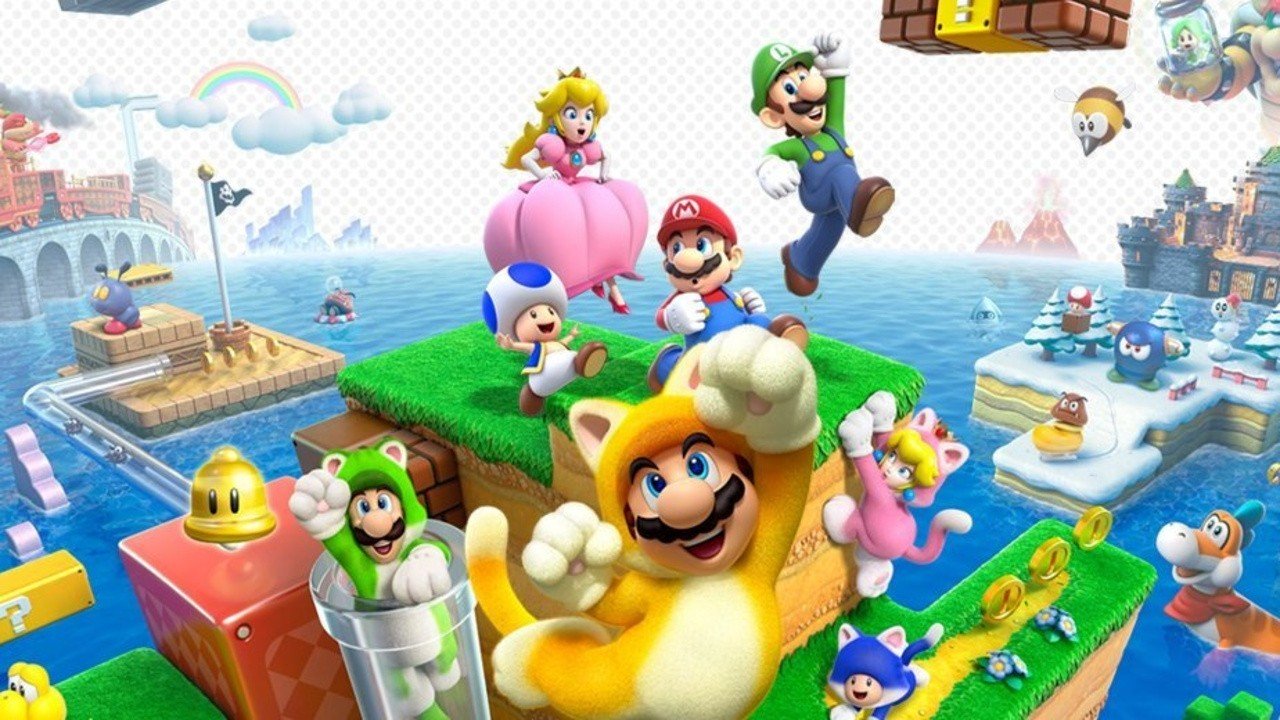

A modder has adapted Super Mario 3D World for virtual reality, enabling players to experience the Wii U platformer in both first- and third-person through OpenXR-compatible headsets.
The conversion, created by modder Destroyjevski and published on GitHub, runs on the Cemu Wii U emulator and requires an original Wii U copy of the game rather than the Nintendo Switch port.
Background and context
Super Mario 3D World originally launched on the Wii U in 2013 and later received an enhanced port for Nintendo Switch titled Super Mario 3D World + Bowser's Fury, released on February 12, 2021.
The Switch release included the Bowser’s Fury expansion and has been distributed via retail and Nintendo eShop.
The VR project repurposes the original Wii U files inside Cemu and leverages OpenXR to support headsets such as Meta Quest, HTC Vive, and Valve Index.
What the mod offers
According to the project page on GitHub and demonstration footage captured by YouTuber JShodanVR, the mod supports two primary viewing modes: a Mario-centered first-person perspective and a diorama-style third-person view that resembles the stage-by-stage presentation seen in VR platformers.
Video walkthroughs on YouTube show the mod running from early menus through level completion, and JShodanVR provides setup guidance alongside the demonstration footage.
Stability and limitations
Destroyjevski characterizes the project as an alpha build with known imperfections, but it is already playable from start to finish in virtual reality.
The author’s GitHub release notes and the accompanying demo footage make clear that this is an early-stage conversion intended for enthusiasts comfortable with emulation and manual setup.
As with most community-made emulator mods, use requires technical setup: installing Cemu, loading a legally owned Wii U image of Super Mario 3D World, and configuring OpenXR runtime support for the target headset.
How to try it
The mod is available for download from Destroyjevski’s GitHub repository.
Players interested in testing the conversion should follow the repository’s instructions, confirm compatibility with their OpenXR runtime and headset, and ensure they are using a legally obtained copy of the Wii U game.
For step-by-step impressions and an in-motion look at the conversion, JShodanVR’s YouTube footage provides a practical visual guide.
This VR adaptation highlights how community projects continue to explore new ways to experience classic platformers while relying on established emulator tools and OpenXR standards.
The conversion, created by modder Destroyjevski and published on GitHub, runs on the Cemu Wii U emulator and requires an original Wii U copy of the game rather than the Nintendo Switch port.
Background and context
Super Mario 3D World originally launched on the Wii U in 2013 and later received an enhanced port for Nintendo Switch titled Super Mario 3D World + Bowser's Fury, released on February 12, 2021.
The Switch release included the Bowser’s Fury expansion and has been distributed via retail and Nintendo eShop.
The VR project repurposes the original Wii U files inside Cemu and leverages OpenXR to support headsets such as Meta Quest, HTC Vive, and Valve Index.
What the mod offers
According to the project page on GitHub and demonstration footage captured by YouTuber JShodanVR, the mod supports two primary viewing modes: a Mario-centered first-person perspective and a diorama-style third-person view that resembles the stage-by-stage presentation seen in VR platformers.
Video walkthroughs on YouTube show the mod running from early menus through level completion, and JShodanVR provides setup guidance alongside the demonstration footage.
Stability and limitations
Destroyjevski characterizes the project as an alpha build with known imperfections, but it is already playable from start to finish in virtual reality.
The author’s GitHub release notes and the accompanying demo footage make clear that this is an early-stage conversion intended for enthusiasts comfortable with emulation and manual setup.
As with most community-made emulator mods, use requires technical setup: installing Cemu, loading a legally owned Wii U image of Super Mario 3D World, and configuring OpenXR runtime support for the target headset.
How to try it
The mod is available for download from Destroyjevski’s GitHub repository.
Players interested in testing the conversion should follow the repository’s instructions, confirm compatibility with their OpenXR runtime and headset, and ensure they are using a legally obtained copy of the Wii U game.
For step-by-step impressions and an in-motion look at the conversion, JShodanVR’s YouTube footage provides a practical visual guide.
This VR adaptation highlights how community projects continue to explore new ways to experience classic platformers while relying on established emulator tools and OpenXR standards.