In a new interview with IGN, Square veteran Takashi Tokita — credited as a lead designer on Final Fantasy IV and director on Chrono Trigger — outlined the technical and design challenges behind one of the franchise’s most influential entries and reflected on unfinished ideas that later informed other projects.
Designing the Active Time Battle
Tokita said the Active Time Battle (ATB) system emerged through extensive iteration.
He explained that the team initially could not reliably predict which character would act next under the early speed-and-wait calculations, so they simplified the mechanics: removing wait time for direct attacks and increasing delays for powerful magic to make turn order more intuitive.
Tokita also noted hardware constraints on the Super Famicom (SNES) era ROM — he recalled an 8 Mbit cartridge size — which forced compromises in color usage and prompted the team to prioritize visuals for main characters and the airship.
Those restrictions also led to a dramatic reduction in scenario scope; Tokita said the original story was cut to roughly a quarter of its planned length, which in turn focused the team on pacing and tempo across non-peak moments.
Cut scenarios and character concepts
Tokita revealed several cut ideas for Final Fantasy IV.
He said Yang was originally conceived as a blind martial artist who senses energy, designed to play a unique role in darkness-heavy dungeons.
Another concept would have temporarily turned Kain into a boss controlled against his will, setting up a confrontation before the final encounter; elements of that idea later influenced other character arcs, including material connected to Edge’s family.
Tokita added that he’s grateful Kain ultimately fought alongside the party and remained burdened by his sins, a choice that preserved the game’s final emotional beats.
Chrono Trigger canon and legacy
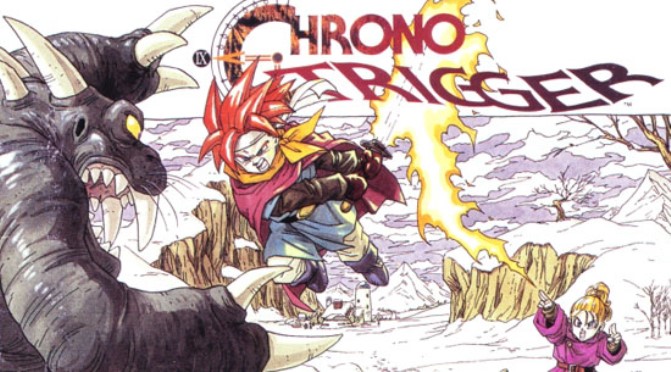
On Chrono Trigger, Tokita stated that he regards the ending in which the party loses the Epoch — leaving characters unable to see one another again — as the canonical conclusion.
He said the aligned sense of finality and farewell in that ending best captures the emotional resonance he intended.
Tokita also confirmed a shelved follow-up, Chrono Break, whose concepts were never completed but influenced his later mobile title Final Fantasy Dimensions II; he encouraged players to try the latter.
Tokita’s interview underscores how technical limits, iterative gameplay design, and truncated scenarios shaped classic Square titles.
As publishers continue to bring legacy games to modern platforms such as Nintendo Switch and digital storefronts like the eShop, these development stories offer new insight into why those games endure.
Designing the Active Time Battle
Tokita said the Active Time Battle (ATB) system emerged through extensive iteration.
He explained that the team initially could not reliably predict which character would act next under the early speed-and-wait calculations, so they simplified the mechanics: removing wait time for direct attacks and increasing delays for powerful magic to make turn order more intuitive.
Tokita also noted hardware constraints on the Super Famicom (SNES) era ROM — he recalled an 8 Mbit cartridge size — which forced compromises in color usage and prompted the team to prioritize visuals for main characters and the airship.
Those restrictions also led to a dramatic reduction in scenario scope; Tokita said the original story was cut to roughly a quarter of its planned length, which in turn focused the team on pacing and tempo across non-peak moments.
Cut scenarios and character concepts
Tokita revealed several cut ideas for Final Fantasy IV.
He said Yang was originally conceived as a blind martial artist who senses energy, designed to play a unique role in darkness-heavy dungeons.
Another concept would have temporarily turned Kain into a boss controlled against his will, setting up a confrontation before the final encounter; elements of that idea later influenced other character arcs, including material connected to Edge’s family.
Tokita added that he’s grateful Kain ultimately fought alongside the party and remained burdened by his sins, a choice that preserved the game’s final emotional beats.
Chrono Trigger canon and legacy
On Chrono Trigger, Tokita stated that he regards the ending in which the party loses the Epoch — leaving characters unable to see one another again — as the canonical conclusion.
He said the aligned sense of finality and farewell in that ending best captures the emotional resonance he intended.
Tokita also confirmed a shelved follow-up, Chrono Break, whose concepts were never completed but influenced his later mobile title Final Fantasy Dimensions II; he encouraged players to try the latter.
Tokita’s interview underscores how technical limits, iterative gameplay design, and truncated scenarios shaped classic Square titles.
As publishers continue to bring legacy games to modern platforms such as Nintendo Switch and digital storefronts like the eShop, these development stories offer new insight into why those games endure.


