
Introduction
Split Fiction is Hazelight Studios' latest cooperative adventure, tested on Nintendo Switch 2 with a review copy provided by Electronic Arts.
Hazelight, the developer behind A Way Out (2018) and It Takes Two (2021), has continued to build its reputation for two-player-only experiences that force partners to collaborate.
This review examines Split Fiction's narrative, core co-op mechanics, and technical performance on Nintendo's latest hardware.
Narrative and characters
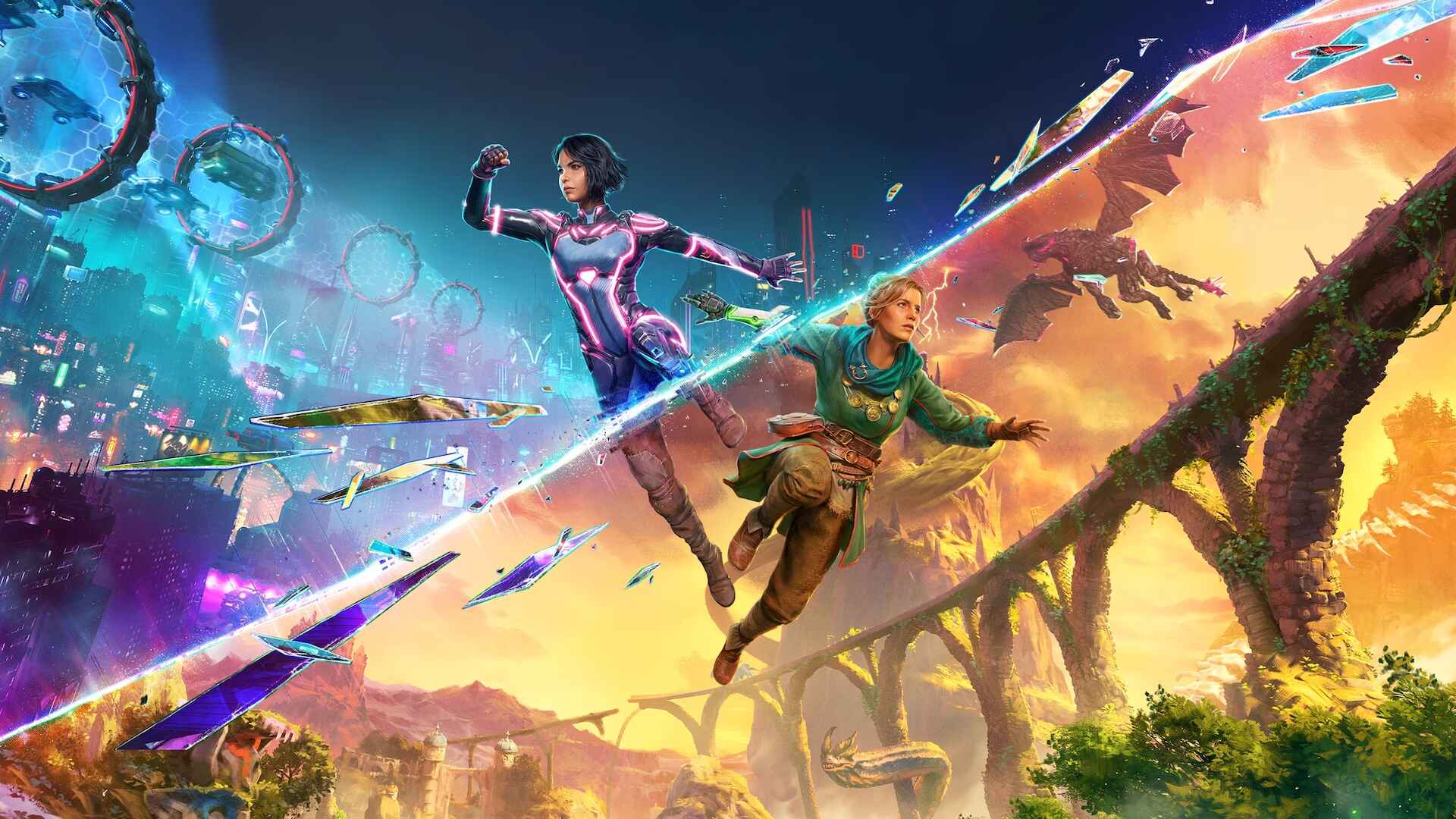
Split Fiction places players in the roles of Mio and Zoe, two aspiring writers swept into a digital reality after an encounter at Radar Publishing.
The game's premise examines the merging of two creative minds inside distinct fantasy and sci-fi dreamscapes.
The reviewer noted that Hazelight's storytelling this time leans on familiar tropes: the optimistic-versus-critical dynamic between Zoe and Mio eventually softens into mutual understanding, and character backstories check predictable narrative boxes.
In journalistic terms, the reviewer acknowledged that while the concept is timely—touching on concerns around AI and creative labor—the plot and characters often remain conventional and occasionally grating.
Gameplay and co-op design
Where the story falters, Split Fiction delivers.
The game alternates between Zoe's magic-infused stages and Mio's edgy sci-fi environments, packing roughly a dozen hours of content into an energetic twelve-hour runtime.
Each chapter introduces fresh mechanics—examples include piloting spacecraft, futuristic bike sequences, and a dragon sequence that evolves over the chapter from egg to fully grown mount, changing player abilities as it matures.
Importantly, Split Fiction requires communication: players possess unique, complementary abilities and must cooperate to progress, rather than merely sharing the same space.
Pacing and variety
The reviewer called out some pacing issues, particularly when certain fantasy sections overstay their welcome in the early hours, but praised the game's overall momentum.
One-off scenarios and genre-bending minigames—ranging from arena-style shows to farm-based transformations—help maintain variety.
Checkpoints are frequent, which keeps frustration low when co-op timing fails and quick retries are needed.
Technical performance
On Nintendo Switch 2, Split Fiction maintains smooth frame rates and solid visual detail, even in split-screen co-op.
The adaptation to Nintendo hardware was described as a technical win, comparable in polish to recent high-profile third-party Nintendo releases.
Conclusion
Despite a clichéd narrative and occasionally unmemorable characters, Split Fiction stands as Hazelight's most enjoyable co-op experience to date, delivering inventive scenarios and demanding teamwork across an approximately twelve-hour campaign.
The game's technical performance on Nintendo Switch 2 and its steady pacing make it a strong recommendation for fans of cooperative design and players looking for a varied, partner-focused adventure.
Score: 8/10
Version Tested: Nintendo Switch 2
Review copy provided by Electronic Arts
Author: Ryan Janes, Nintendo Insider
Split Fiction is Hazelight Studios' latest cooperative adventure, tested on Nintendo Switch 2 with a review copy provided by Electronic Arts.
Hazelight, the developer behind A Way Out (2018) and It Takes Two (2021), has continued to build its reputation for two-player-only experiences that force partners to collaborate.
This review examines Split Fiction's narrative, core co-op mechanics, and technical performance on Nintendo's latest hardware.
Narrative and characters
Split Fiction places players in the roles of Mio and Zoe, two aspiring writers swept into a digital reality after an encounter at Radar Publishing.
The game's premise examines the merging of two creative minds inside distinct fantasy and sci-fi dreamscapes.
The reviewer noted that Hazelight's storytelling this time leans on familiar tropes: the optimistic-versus-critical dynamic between Zoe and Mio eventually softens into mutual understanding, and character backstories check predictable narrative boxes.
In journalistic terms, the reviewer acknowledged that while the concept is timely—touching on concerns around AI and creative labor—the plot and characters often remain conventional and occasionally grating.
Gameplay and co-op design
Where the story falters, Split Fiction delivers.
The game alternates between Zoe's magic-infused stages and Mio's edgy sci-fi environments, packing roughly a dozen hours of content into an energetic twelve-hour runtime.
Each chapter introduces fresh mechanics—examples include piloting spacecraft, futuristic bike sequences, and a dragon sequence that evolves over the chapter from egg to fully grown mount, changing player abilities as it matures.
Importantly, Split Fiction requires communication: players possess unique, complementary abilities and must cooperate to progress, rather than merely sharing the same space.
Pacing and variety
The reviewer called out some pacing issues, particularly when certain fantasy sections overstay their welcome in the early hours, but praised the game's overall momentum.
One-off scenarios and genre-bending minigames—ranging from arena-style shows to farm-based transformations—help maintain variety.
Checkpoints are frequent, which keeps frustration low when co-op timing fails and quick retries are needed.
Technical performance
On Nintendo Switch 2, Split Fiction maintains smooth frame rates and solid visual detail, even in split-screen co-op.
The adaptation to Nintendo hardware was described as a technical win, comparable in polish to recent high-profile third-party Nintendo releases.
Conclusion
Despite a clichéd narrative and occasionally unmemorable characters, Split Fiction stands as Hazelight's most enjoyable co-op experience to date, delivering inventive scenarios and demanding teamwork across an approximately twelve-hour campaign.
The game's technical performance on Nintendo Switch 2 and its steady pacing make it a strong recommendation for fans of cooperative design and players looking for a varied, partner-focused adventure.
Score: 8/10
Version Tested: Nintendo Switch 2
Review copy provided by Electronic Arts
Author: Ryan Janes, Nintendo Insider