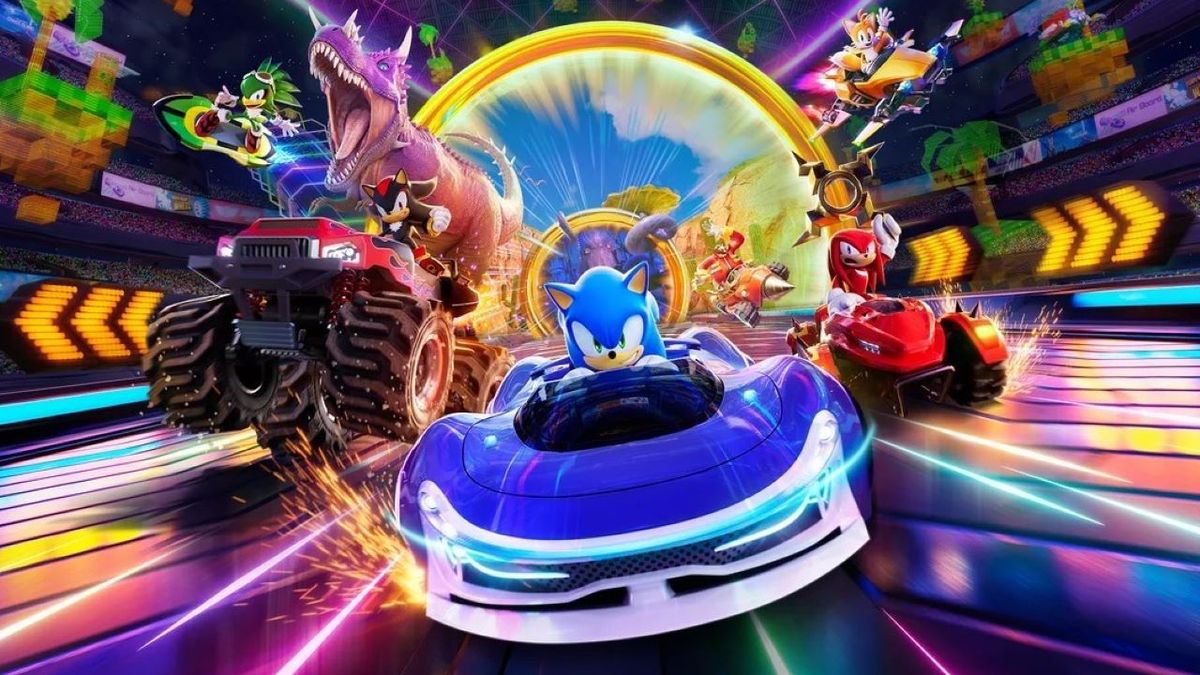

Sonic Racing: CrossWorlds has taken a live-service approach to extend player engagement, and Sonic Team’s head Takashi Iizuka has confirmed the studio leaned on a Season Pass model to fund that ongoing development.
The move highlights the growing tension between long-term content ambitions and the commercial realities of sustaining online titles.
Sonic Team is Sega’s internal developer best known for the Sonic franchise, and Iizuka has led the studio for many years.
In a recent interview, he described CrossWorlds as a title designed from the outset to keep players returning over months and years, rather than as a single-release experience.
According to Iizuka, that strategy required frequent content updates to maintain engagement — a commitment that carries continual development costs.
Iizuka explained that the Season Pass became a necessity after initial sales momentum slowed, providing a way to fund additional tracks, characters, and events.
He said the team prioritized creating a satisfying, long-term experience for fans and only later confronted the question of how to sustain that roadmap financially.
In his words, the studio started “from the perspective of the fans” and placed profit considerations secondary, a choice he now views as a lesson in finding a better balance going forward.
On the broader subject of games-as-a-service, Iizuka noted GaaS is widely used in mobile and live-service markets, but emphasized that Sonic Racing: CrossWorlds was conceived primarily to keep players engaged long term rather than explicitly to chase a GaaS label.
The practical outcome, he said, was that monetization through a Season Pass became the viable route to secure continued development funding.
The move echoes industry trends: many developers support online console and mobile titles with recurring content updates, and monetization via DLC, battle passes, or season passes is a common method to cover ongoing costs.
Sega’s Sonic racing history also includes Team Sonic Racing, released in 2019 on platforms including Nintendo Switch, demonstrating the franchise’s long-standing presence across modern console ecosystems.
Developers typically announce new content and pricing strategies via publisher channels and platform storefronts such as Nintendo Direct and the eShop when relevant.
With CrossWorlds, Sonic Team’s public takeaway is clear: designing for longevity requires both a plan for regular content and a sustainable revenue model.
Iizuka says the studio will aim to strike a more balanced approach between fan-first design and viable funding as the title continues to evolve.
The move highlights the growing tension between long-term content ambitions and the commercial realities of sustaining online titles.
Sonic Team is Sega’s internal developer best known for the Sonic franchise, and Iizuka has led the studio for many years.
In a recent interview, he described CrossWorlds as a title designed from the outset to keep players returning over months and years, rather than as a single-release experience.
According to Iizuka, that strategy required frequent content updates to maintain engagement — a commitment that carries continual development costs.
Iizuka explained that the Season Pass became a necessity after initial sales momentum slowed, providing a way to fund additional tracks, characters, and events.
He said the team prioritized creating a satisfying, long-term experience for fans and only later confronted the question of how to sustain that roadmap financially.
In his words, the studio started “from the perspective of the fans” and placed profit considerations secondary, a choice he now views as a lesson in finding a better balance going forward.
On the broader subject of games-as-a-service, Iizuka noted GaaS is widely used in mobile and live-service markets, but emphasized that Sonic Racing: CrossWorlds was conceived primarily to keep players engaged long term rather than explicitly to chase a GaaS label.
The practical outcome, he said, was that monetization through a Season Pass became the viable route to secure continued development funding.
The move echoes industry trends: many developers support online console and mobile titles with recurring content updates, and monetization via DLC, battle passes, or season passes is a common method to cover ongoing costs.
Sega’s Sonic racing history also includes Team Sonic Racing, released in 2019 on platforms including Nintendo Switch, demonstrating the franchise’s long-standing presence across modern console ecosystems.
Developers typically announce new content and pricing strategies via publisher channels and platform storefronts such as Nintendo Direct and the eShop when relevant.
With CrossWorlds, Sonic Team’s public takeaway is clear: designing for longevity requires both a plan for regular content and a sustainable revenue model.
Iizuka says the studio will aim to strike a more balanced approach between fan-first design and viable funding as the title continues to evolve.