


Resident Evil Village and Resident Evil 7 Bring Next-Gen Horror to Nintendo Switch 2 With Capcom’s Latest Ports
Capcom continues its legacy of revolutionizing survival horror by bringing two of the Resident Evil franchise’s standout titles—Resident Evil Village and Resident Evil 7—to the eagerly anticipated Nintendo Switch 2.
Announced alongside Resident Evil Requiem, these ports mark an ambitious leap for immersive horror experiences on hybrid hardware, giving Nintendo fans a fresh opportunity to explore Capcom’s critically acclaimed series.
Resident Evil Village, released in May 2021, ventured far beyond the confines of haunted mansions by thrusting players into a nightmarish European village.
Following in the footsteps of Resident Evil 7, which had already redefined the franchise with its brooding atmosphere and tense first-person perspective, Village presented a sprawling landscape, upgraded visuals, and genre-blending gameplay, pushing both narrative and technical boundaries.
Developed using Capcom’s proprietary RE Engine, both games previously set industry standards for storytelling and graphical fidelity on PlayStation 4 and PlayStation 5 before their transition to Nintendo’s platform.
On Nintendo Switch 2, both Resident Evil Village and Resident Evil 7 deliver a robust experience with Capcom’s ports meeting fans’ expectations for high performance and accessible features.
Both titles target 60 frames per second, achieve crisp docked resolutions, and introduce gyro aiming—a feature well suited to the console’s portable nature.
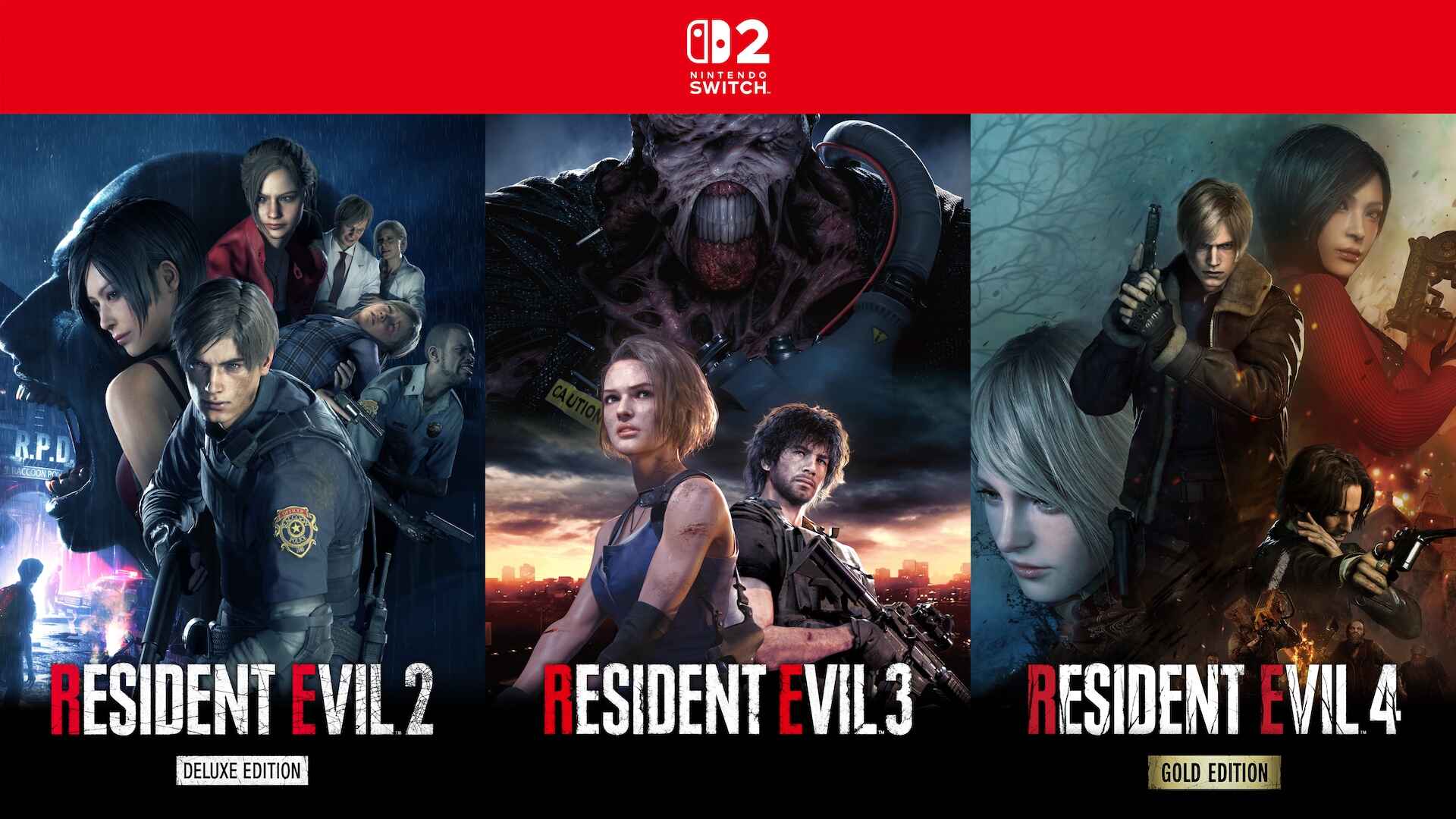
Importantly, the Gold Edition bundles ensure that all previously released downloadable content, including the praised third-person mode for Village reminiscent of the Resident Evil 2 and Resident Evil 3 remakes, is available to players at launch.
Resident Evil Village, known for its ambitious design and expansive environments, posed a greater porting challenge compared to its predecessor.
Despite this, the Switch 2 versions of both games perform comparably, with Village impressing especially given its original PlayStation 5-optimized design.
The title’s atmospheric village hub and highly detailed character models translate remarkably well to the Switch 2, with visual improvements over Resident Evil 7 particularly apparent in areas like facial and hair rendering.
According to user experiences, indoor segments maintain stable frame rates close to the 60fps target, while outdoor spaces, especially within Village, may see performance dips—generally fluctuating between 30 and 60 frames per second.
Capcom’s use of Variable Refresh Rate (VRR) in handheld mode further smooths these transitions.
The control scheme is intuitive, with analog stick aiming remaining reliable.
While gyro aiming can be less precise when panning horizontally, the option’s inclusion is a boon for portability-focused players.
The addition of the third-person mode from the DLC introduces welcome variety, though switching perspectives requires returning to the main menu rather than toggling in-game.
Core gameplay for both titles remains uncompromised.
Resident Evil Village refines combat, weapon upgrades, and exploration, encouraging replayability through its cleverly designed environments and multi-genre horror chapters.
Despite minor pacing issues in certain segments, the diversity serves to keep the adventure engaging throughout, cementing Village’s place as a series highlight.
The main critique for these ports lies in performance optimizations, particularly for Resident Evil Village’s large outdoor locations.
While visual fidelity remains impressively intact on the more ambitious Switch 2 hardware, targeted updates or performance modes could further smooth gameplay and maximize the experience.
In summary, Resident Evil Village and Resident Evil 7 on Nintendo Switch 2 reinforce Capcom’s reputation for industry-leading ports.
The thoughtful inclusion of all DLC, high-quality graphics, and innovative control options position these games as essential additions to the Switch 2 library, showcasing the RE Engine’s adaptability and hinting at a bright future with titles like Resident Evil Requiem on the horizon.
Capcom continues its legacy of revolutionizing survival horror by bringing two of the Resident Evil franchise’s standout titles—Resident Evil Village and Resident Evil 7—to the eagerly anticipated Nintendo Switch 2.
Announced alongside Resident Evil Requiem, these ports mark an ambitious leap for immersive horror experiences on hybrid hardware, giving Nintendo fans a fresh opportunity to explore Capcom’s critically acclaimed series.
Resident Evil Village, released in May 2021, ventured far beyond the confines of haunted mansions by thrusting players into a nightmarish European village.
Following in the footsteps of Resident Evil 7, which had already redefined the franchise with its brooding atmosphere and tense first-person perspective, Village presented a sprawling landscape, upgraded visuals, and genre-blending gameplay, pushing both narrative and technical boundaries.
Developed using Capcom’s proprietary RE Engine, both games previously set industry standards for storytelling and graphical fidelity on PlayStation 4 and PlayStation 5 before their transition to Nintendo’s platform.
On Nintendo Switch 2, both Resident Evil Village and Resident Evil 7 deliver a robust experience with Capcom’s ports meeting fans’ expectations for high performance and accessible features.
Both titles target 60 frames per second, achieve crisp docked resolutions, and introduce gyro aiming—a feature well suited to the console’s portable nature.
Importantly, the Gold Edition bundles ensure that all previously released downloadable content, including the praised third-person mode for Village reminiscent of the Resident Evil 2 and Resident Evil 3 remakes, is available to players at launch.
Resident Evil Village, known for its ambitious design and expansive environments, posed a greater porting challenge compared to its predecessor.
Despite this, the Switch 2 versions of both games perform comparably, with Village impressing especially given its original PlayStation 5-optimized design.
The title’s atmospheric village hub and highly detailed character models translate remarkably well to the Switch 2, with visual improvements over Resident Evil 7 particularly apparent in areas like facial and hair rendering.
According to user experiences, indoor segments maintain stable frame rates close to the 60fps target, while outdoor spaces, especially within Village, may see performance dips—generally fluctuating between 30 and 60 frames per second.
Capcom’s use of Variable Refresh Rate (VRR) in handheld mode further smooths these transitions.
The control scheme is intuitive, with analog stick aiming remaining reliable.
While gyro aiming can be less precise when panning horizontally, the option’s inclusion is a boon for portability-focused players.
The addition of the third-person mode from the DLC introduces welcome variety, though switching perspectives requires returning to the main menu rather than toggling in-game.
Core gameplay for both titles remains uncompromised.
Resident Evil Village refines combat, weapon upgrades, and exploration, encouraging replayability through its cleverly designed environments and multi-genre horror chapters.
Despite minor pacing issues in certain segments, the diversity serves to keep the adventure engaging throughout, cementing Village’s place as a series highlight.
The main critique for these ports lies in performance optimizations, particularly for Resident Evil Village’s large outdoor locations.
While visual fidelity remains impressively intact on the more ambitious Switch 2 hardware, targeted updates or performance modes could further smooth gameplay and maximize the experience.
In summary, Resident Evil Village and Resident Evil 7 on Nintendo Switch 2 reinforce Capcom’s reputation for industry-leading ports.
The thoughtful inclusion of all DLC, high-quality graphics, and innovative control options position these games as essential additions to the Switch 2 library, showcasing the RE Engine’s adaptability and hinting at a bright future with titles like Resident Evil Requiem on the horizon.