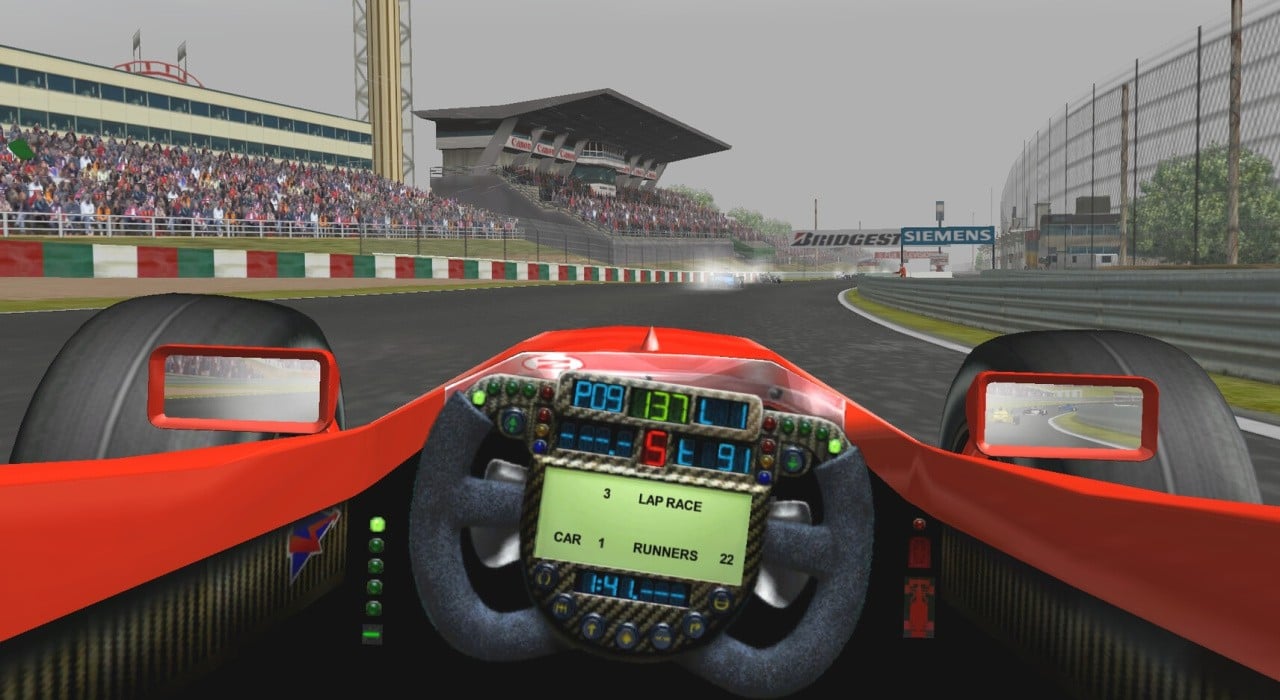
MicroProse has publicly detailed licensing hurdles for its Steam reissue of Geoff Crammond Racing 4 — the re-release of Geoff Crammond's Grand Prix 4, originally published in 2001.
In a devlog published on Steam, the company said it has had to strip or alter a large number of in-game assets because it could not resecure rights to certain motorsport brands, teams, drivers and sponsor logos.
According to MicroProse, the restoration effort has already required extensive asset work: the studio reports replacing 1,987 textures to remove unlicensed content from a title that originally included just under 300 distinct brands.
With some licenses unresolved, MicroProse has opened a public “Community Vote” asking fans to propose period-appropriate replacement names; the submission window runs through Wednesday, October 14, 2026, with a public vote and a second devlog scheduled to follow.
MicroProse described its outreach to rights holders as extensive but inefficient.
The company said its PR team sent thousands of emails and made hundreds of phone calls, but many requests never reached the right department or stalled within large organizations.
MicroProse added that while only a small number of companies explicitly refused permission, many potential partners simply did not respond in a way that allowed timely relicensing.
The publisher noted that several major rights holders have agreed to cooperate and expressed gratitude for those partnerships.
To guide submissions, MicroProse published simple rules: proposed names must be period-appropriate for 2001, original (not misspellings or letter-shuffled versions of real names), non-offensive, and must not itself be an existing team, driver, or sponsor.
Entries may be sent through Steam or a provided survey; all participants are eligible to win a free copy of MicroProse-published Throttle Trace, and chosen entries will receive credit in the game.
MicroProse also emphasized that it understands the frustrations of fans who remember the original teams, cars and liveries, saying the studio is being careful with changes and intends to keep game files as moddable as possible so players can restore original looks in their own installs.
The situation highlights the wider challenges of relicensing legacy PC properties for modern digital platforms such as Steam, and echoes broader industry issues developers face when navigating rights across multiple storefronts and platforms.
In a devlog published on Steam, the company said it has had to strip or alter a large number of in-game assets because it could not resecure rights to certain motorsport brands, teams, drivers and sponsor logos.
According to MicroProse, the restoration effort has already required extensive asset work: the studio reports replacing 1,987 textures to remove unlicensed content from a title that originally included just under 300 distinct brands.
With some licenses unresolved, MicroProse has opened a public “Community Vote” asking fans to propose period-appropriate replacement names; the submission window runs through Wednesday, October 14, 2026, with a public vote and a second devlog scheduled to follow.
MicroProse described its outreach to rights holders as extensive but inefficient.
The company said its PR team sent thousands of emails and made hundreds of phone calls, but many requests never reached the right department or stalled within large organizations.
MicroProse added that while only a small number of companies explicitly refused permission, many potential partners simply did not respond in a way that allowed timely relicensing.
The publisher noted that several major rights holders have agreed to cooperate and expressed gratitude for those partnerships.
To guide submissions, MicroProse published simple rules: proposed names must be period-appropriate for 2001, original (not misspellings or letter-shuffled versions of real names), non-offensive, and must not itself be an existing team, driver, or sponsor.
Entries may be sent through Steam or a provided survey; all participants are eligible to win a free copy of MicroProse-published Throttle Trace, and chosen entries will receive credit in the game.
MicroProse also emphasized that it understands the frustrations of fans who remember the original teams, cars and liveries, saying the studio is being careful with changes and intends to keep game files as moddable as possible so players can restore original looks in their own installs.
The situation highlights the wider challenges of relicensing legacy PC properties for modern digital platforms such as Steam, and echoes broader industry issues developers face when navigating rights across multiple storefronts and platforms.