
During the Dragon Quest 30th Anniversary Countdown Special, Level-5 CEO Akihiro Hino explained how he persuaded series creator Yuji Horii to make Dragon Quest IX for the Nintendo DS.
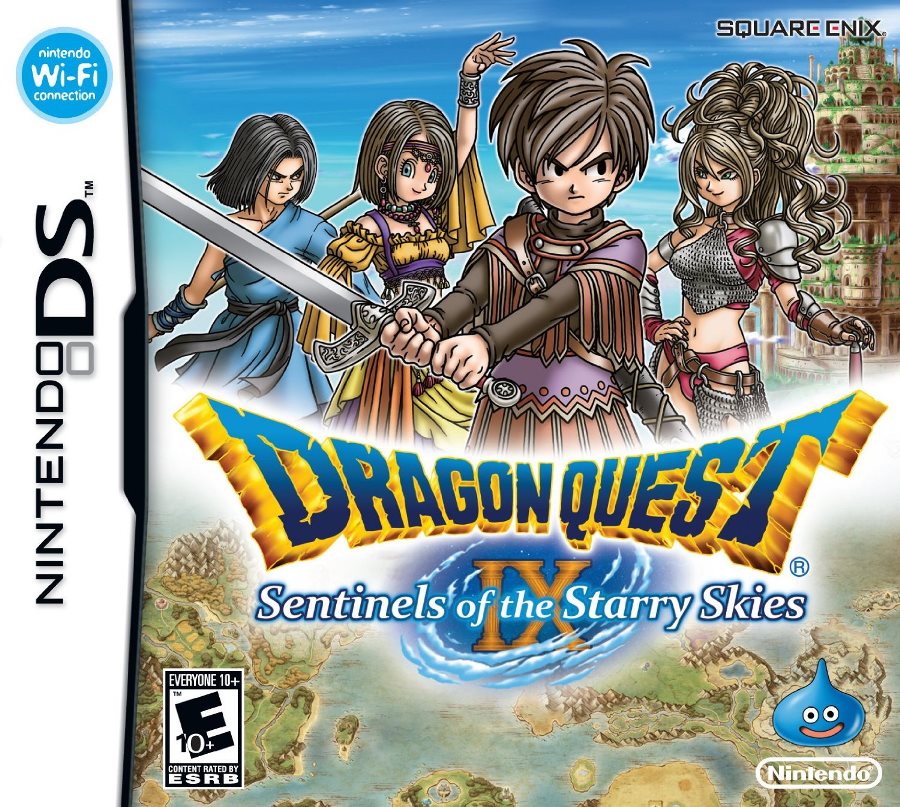
Dragon Quest IX: Sentinels of the Starry Skies is notable for being a mainline, numbered entry in the long-running Dragon Quest series that launched on Nintendo's DS hardware and shipped in Japan in 2009.
The game was developed with Level-5 and published by Square Enix.
Hino told viewers that the decision grew out of timing and momentum: Level-5 was in the middle of developing Professor Layton titles for the DS, and Nintendo’s portable platform was performing exceptionally well.
Horii initially hesitated about placing a core Dragon Quest entry on a handheld system, questioning whether a numbered mainline title belonged on a portable device.
Hino said he repeatedly urged Horii to embrace the DS platform, arguing that the system’s user base and hardware capabilities made it an opportunity rather than a limitation.
In journalistic terms, Hino recounted that he convinced Horii by pointing to the DS’s momentum and Level-5’s experience with handheld design—ultimately winning permission to proceed with a DS-exclusive Dragon Quest IX.
One of Dragon Quest IX’s most talked-about features at release was its tag mode, which allowed players to exchange data locally and encounter content tied to real-world interactions.
Horii later expressed that he admired the way tag mode connected in-game systems to players’ real-world interactions, and that aspect of Dragon Quest IX helped inspire some of the social features Nintendo later implemented in the Nintendo 3DS.
Nintendo’s 3DS launched in 2011 and introduced StreetPass as a system-level feature that shares small amounts of game data between systems when users pass one another; Horii cited the tag mode’s real-world linking as an influence on that kind of thinking.
Across the industry, Dragon Quest IX is remembered both for its unusual platform choice for a numbered installment and for its community-oriented systems.
The game’s DS exclusivity reflected a broader confidence in handheld gaming at the time, and the collaboration between Level-5 and Square Enix demonstrated how third-party developers could shape series strategy.
As Horii stated about the series’ mission, his fundamental wish has been for Dragon Quest to be enjoyed by as many people as possible—a guiding principle behind placing a flagship title on a popular portable platform.
Dragon Quest IX remains a key chapter in the Dragon Quest franchise and in the histories of Level-5 and Nintendo’s DS era, illustrating how platform strategy, developer relationships, and social features can influence the course of a major JRPG series.
Dragon Quest IX: Sentinels of the Starry Skies is notable for being a mainline, numbered entry in the long-running Dragon Quest series that launched on Nintendo's DS hardware and shipped in Japan in 2009.
The game was developed with Level-5 and published by Square Enix.
Hino told viewers that the decision grew out of timing and momentum: Level-5 was in the middle of developing Professor Layton titles for the DS, and Nintendo’s portable platform was performing exceptionally well.
Horii initially hesitated about placing a core Dragon Quest entry on a handheld system, questioning whether a numbered mainline title belonged on a portable device.
Hino said he repeatedly urged Horii to embrace the DS platform, arguing that the system’s user base and hardware capabilities made it an opportunity rather than a limitation.
In journalistic terms, Hino recounted that he convinced Horii by pointing to the DS’s momentum and Level-5’s experience with handheld design—ultimately winning permission to proceed with a DS-exclusive Dragon Quest IX.
One of Dragon Quest IX’s most talked-about features at release was its tag mode, which allowed players to exchange data locally and encounter content tied to real-world interactions.
Horii later expressed that he admired the way tag mode connected in-game systems to players’ real-world interactions, and that aspect of Dragon Quest IX helped inspire some of the social features Nintendo later implemented in the Nintendo 3DS.
Nintendo’s 3DS launched in 2011 and introduced StreetPass as a system-level feature that shares small amounts of game data between systems when users pass one another; Horii cited the tag mode’s real-world linking as an influence on that kind of thinking.
Across the industry, Dragon Quest IX is remembered both for its unusual platform choice for a numbered installment and for its community-oriented systems.
The game’s DS exclusivity reflected a broader confidence in handheld gaming at the time, and the collaboration between Level-5 and Square Enix demonstrated how third-party developers could shape series strategy.
As Horii stated about the series’ mission, his fundamental wish has been for Dragon Quest to be enjoyed by as many people as possible—a guiding principle behind placing a flagship title on a popular portable platform.
Dragon Quest IX remains a key chapter in the Dragon Quest franchise and in the histories of Level-5 and Nintendo’s DS era, illustrating how platform strategy, developer relationships, and social features can influence the course of a major JRPG series.