
Cyber Doll’s English Translation: AI Brings Classic Saturn JRPG to New Audiences
First released exclusively in Japan in 1996 for the Sega Saturn, Cyber Doll stands out among retro Japanese RPGs with its distinctive cyberpunk storyline and experimental mechanics.
Developed by Betop and published by I'Max, the game drops players into a dystopian future where humanity, afflicted by a degenerative muscle disease, turns to cybernetic augmentation to survive.
However, as narrated in the game's English-voiced introduction, a secondary illness emerges, threatening both humans and their cybernetic counterparts.
This crisis necessitates the formation of a specialized task force known as 'Debugger.'
Despite Betop's limited recognition within the industry, Cyber Doll’s development brought together notable talent.
The game was co-produced by Hiroyuki Kotani, whose credits include acclaimed titles like Ape Escape and Patapon.
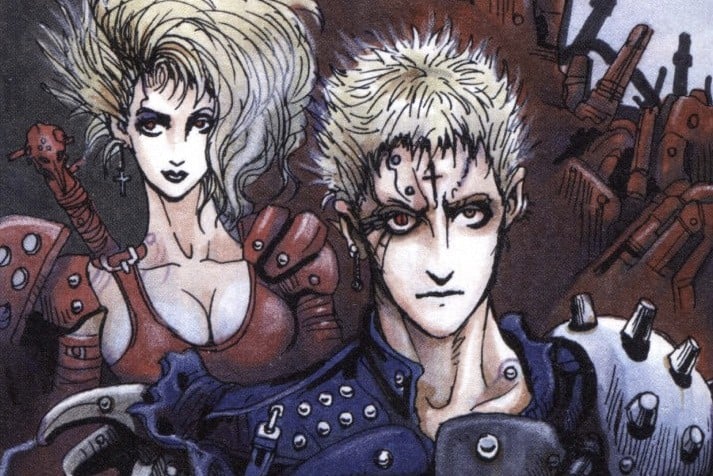
Character design was handled by Yasushi Nirasawa, known for his work on Shin Megami Tensei IV and Enemy Zero.
CGI sequences were crafted by Takahide Murakami (Suikoden) and Hiromichi Sueyoshi (Sakura Taisen), lending the project significant creative pedigree.
Cyber Doll incorporates a unique limb-targeting combat system, a diverse array of weaponry, and a mechanic allowing characters to enhance themselves using parts from defeated enemies.
Additionally, the interface features substantial English text in its menus, making it accessible to non-Japanese speakers interested in gameplay, though the unlocalized narrative has historically barred wider appreciation outside of Japan.
Until now, Cyber Doll had never received an official or fan-made English translation.
That changed when TrevoStuden announced in November 2023 an ongoing fan translation effort, leveraging both Python scripting and AI-driven machine translation.
According to a November statement, TrevoStuden explained that he is employing scripts to inject translated text—primarily sourced via Google Translate—directly into the game.
He clarified, “The translation is progressing thanks to Python scripts and AI, instead of a manual text-by-text process.
While I was once skeptical of AI, using it for translation and problem-solving has proven helpful for this project.”
The use of artificial intelligence and automated translation tools in fan localization projects has sparked significant debate within the retro gaming community.
While these technologies can dramatically accelerate access to rare titles, critics argue that AI-generated translations may fail to capture the nuance and intent of original Japanese scripts, risking lower quality and potentially displacing skillful human translators who have set a high standard in recent years.
Supporters counter that, in cases like Cyber Doll—where niche status and technical hurdles have long delayed an English version—AI-based methods may be the only viable way to open such games to global audiences.
Nevertheless, concerns remain that reliance on automated tools could impact the perceived value and legacy of classic games among new fans.
Currently, TrevoStuden’s English patch for Cyber Doll is targeting a tentative release in January 2026.
As the project progresses, it serves as a touchstone for broader discussions about authenticity, preservation, and accessibility in retro game localization, and marks an important moment in the expanding history of Sega Saturn titles brought to light for a new generation.
First released exclusively in Japan in 1996 for the Sega Saturn, Cyber Doll stands out among retro Japanese RPGs with its distinctive cyberpunk storyline and experimental mechanics.
Developed by Betop and published by I'Max, the game drops players into a dystopian future where humanity, afflicted by a degenerative muscle disease, turns to cybernetic augmentation to survive.
However, as narrated in the game's English-voiced introduction, a secondary illness emerges, threatening both humans and their cybernetic counterparts.
This crisis necessitates the formation of a specialized task force known as 'Debugger.'
Despite Betop's limited recognition within the industry, Cyber Doll’s development brought together notable talent.
The game was co-produced by Hiroyuki Kotani, whose credits include acclaimed titles like Ape Escape and Patapon.
Character design was handled by Yasushi Nirasawa, known for his work on Shin Megami Tensei IV and Enemy Zero.
CGI sequences were crafted by Takahide Murakami (Suikoden) and Hiromichi Sueyoshi (Sakura Taisen), lending the project significant creative pedigree.
Cyber Doll incorporates a unique limb-targeting combat system, a diverse array of weaponry, and a mechanic allowing characters to enhance themselves using parts from defeated enemies.
Additionally, the interface features substantial English text in its menus, making it accessible to non-Japanese speakers interested in gameplay, though the unlocalized narrative has historically barred wider appreciation outside of Japan.
Until now, Cyber Doll had never received an official or fan-made English translation.
That changed when TrevoStuden announced in November 2023 an ongoing fan translation effort, leveraging both Python scripting and AI-driven machine translation.
According to a November statement, TrevoStuden explained that he is employing scripts to inject translated text—primarily sourced via Google Translate—directly into the game.
He clarified, “The translation is progressing thanks to Python scripts and AI, instead of a manual text-by-text process.
While I was once skeptical of AI, using it for translation and problem-solving has proven helpful for this project.”
The use of artificial intelligence and automated translation tools in fan localization projects has sparked significant debate within the retro gaming community.
While these technologies can dramatically accelerate access to rare titles, critics argue that AI-generated translations may fail to capture the nuance and intent of original Japanese scripts, risking lower quality and potentially displacing skillful human translators who have set a high standard in recent years.
Supporters counter that, in cases like Cyber Doll—where niche status and technical hurdles have long delayed an English version—AI-based methods may be the only viable way to open such games to global audiences.
Nevertheless, concerns remain that reliance on automated tools could impact the perceived value and legacy of classic games among new fans.
Currently, TrevoStuden’s English patch for Cyber Doll is targeting a tentative release in January 2026.
As the project progresses, it serves as a touchstone for broader discussions about authenticity, preservation, and accessibility in retro game localization, and marks an important moment in the expanding history of Sega Saturn titles brought to light for a new generation.