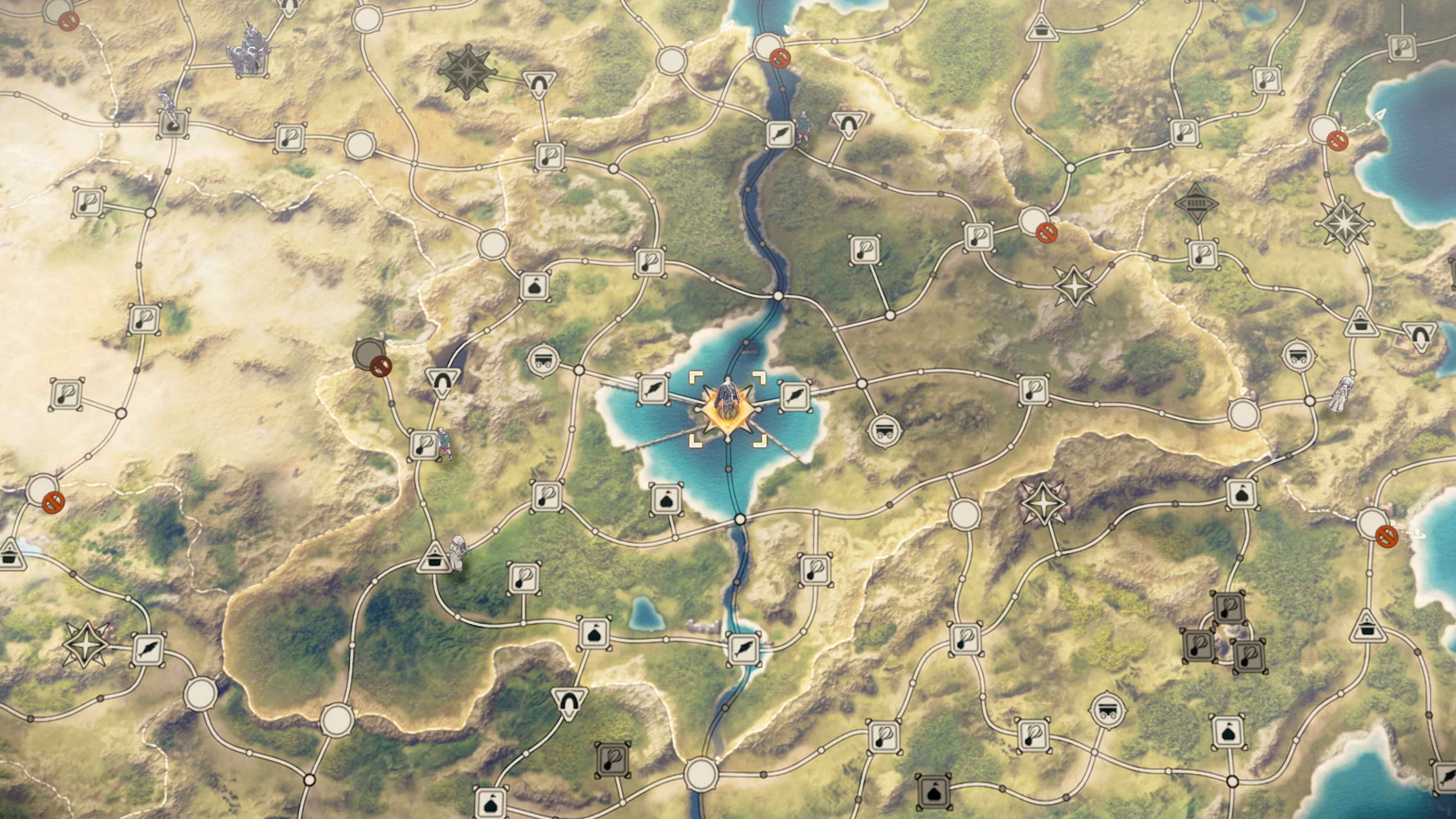
Fire Emblem Fortune’s Weave arrives to attention not only for its tactical RPG pedigree but also for how it runs on Nintendo's newer hardware.
The Fire Emblem franchise is a long-running tactical role-playing series primarily developed by Intelligent Systems and published by Nintendo.
Digital Foundry, Eurogamer’s technical analysis arm, recently tore down Fortune’s Weave on the Nintendo Switch 2 to document its rendering behavior and upscaling approach.
Digital Foundry’s analysis shows that Fortune’s Weave renders internally at modest resolutions: 720p when played docked and 540p in handheld.
The team also identified the use of NVIDIA’s DLSS image upscaling to present a higher-resolution image on-screen.
In docked mode, DLSS is used to upscale the native 720p render to a 1440p output; in handheld mode, the native 540p render is upscaled to 1080p.
In plain terms, Digital Foundry found the game is rendered at a lower internal resolution and then enhanced using DLSS to reach the higher display targets on the Nintendo Switch 2.
DLSS (Deep Learning Super Sampling) is NVIDIA’s AI-driven upscaling technology that reconstructs higher-resolution frames from lower-resolution renders, trading GPU workload for neural reconstruction.
Digital Foundry’s findings highlight how developers and middleware are leveraging such upscaling solutions on modern consoles to balance performance, battery life, and visual fidelity.
For Nintendo and developers, this kind of technical approach follows broader industry trends where machine-learning upscaling and temporal reconstruction are common tools to deliver higher apparent resolution without the full GPU cost of native rendering.
For players, the practical takeaway is that perceived resolution and image quality on the Switch 2 may depend on a mix of native rendering resolution, the chosen upscaling method, and whether the device is docked or in handheld mode.
Digital Foundry’s work remains a key resource for developers and players who want an empirical look at how games perform on current platforms.
As Fire Emblem Fortune’s Weave continues to reach Nintendo Switch 2 players via the console’s storefront and coverage in events like Nintendo Direct, expect technical teardowns from outlets like Digital Foundry to remain an important part of understanding next-generation console performance.
The Fire Emblem franchise is a long-running tactical role-playing series primarily developed by Intelligent Systems and published by Nintendo.
Digital Foundry, Eurogamer’s technical analysis arm, recently tore down Fortune’s Weave on the Nintendo Switch 2 to document its rendering behavior and upscaling approach.
Digital Foundry’s analysis shows that Fortune’s Weave renders internally at modest resolutions: 720p when played docked and 540p in handheld.
The team also identified the use of NVIDIA’s DLSS image upscaling to present a higher-resolution image on-screen.
In docked mode, DLSS is used to upscale the native 720p render to a 1440p output; in handheld mode, the native 540p render is upscaled to 1080p.
In plain terms, Digital Foundry found the game is rendered at a lower internal resolution and then enhanced using DLSS to reach the higher display targets on the Nintendo Switch 2.
DLSS (Deep Learning Super Sampling) is NVIDIA’s AI-driven upscaling technology that reconstructs higher-resolution frames from lower-resolution renders, trading GPU workload for neural reconstruction.
Digital Foundry’s findings highlight how developers and middleware are leveraging such upscaling solutions on modern consoles to balance performance, battery life, and visual fidelity.
For Nintendo and developers, this kind of technical approach follows broader industry trends where machine-learning upscaling and temporal reconstruction are common tools to deliver higher apparent resolution without the full GPU cost of native rendering.
For players, the practical takeaway is that perceived resolution and image quality on the Switch 2 may depend on a mix of native rendering resolution, the chosen upscaling method, and whether the device is docked or in handheld mode.
Digital Foundry’s work remains a key resource for developers and players who want an empirical look at how games perform on current platforms.
As Fire Emblem Fortune’s Weave continues to reach Nintendo Switch 2 players via the console’s storefront and coverage in events like Nintendo Direct, expect technical teardowns from outlets like Digital Foundry to remain an important part of understanding next-generation console performance.