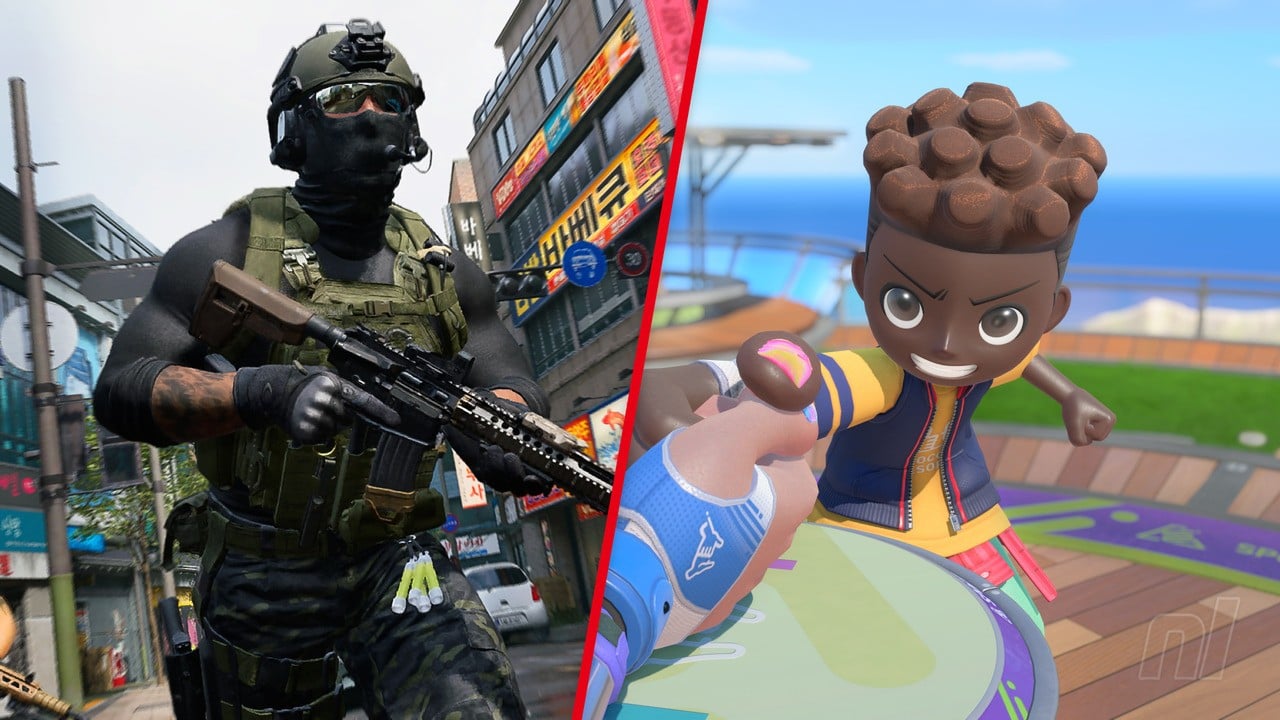
Call of Duty: Modern Warfare 4 has drawn close technical scrutiny following its release on Nintendo's new hardware platform commonly referred to as Switch 2.
The Call of Duty franchise, published by Activision and historically associated with developers such as Infinity Ward, has been a frequent barometer for cross-platform performance.
Established outlets including Digital Foundry and Nintendo Life have published detailed coverage of the port's technical profile and overall reception.
Digital Foundry's technical teardown concentrates on frame-rates, dynamic resolution behavior, and visual fidelity trade-offs.
Their analysis reports that campaign gameplay runs at a locked 30 frames per second, competitive multiplayer targets 60fps, and DMZ extraction mode runs at 40fps when a 120Hz display is connected.
They note the campaign remains stable at 30fps during interactive gameplay, though hitching can occur in pre-rendered cutscenes; DMZ performance likewise holds at 40fps but carries slightly higher input latency because of the lower locked rate.
Online multiplayer sessions can occasionally dip into the high 40s or low 50s, with the added input latency affecting high-level competitive play.
On image quality, Digital Foundry documents two primary anti-aliasing modes: a DLSS-like mode that runs at a dynamic 900p ceiling, dropping to as low as 450p in the most demanding scenarios, and an SMAA T2X mode that aims for a higher 1080p target.
In handheld play, resolution scales dynamically around 720p and can fall to roughly 360p during intense scenes.
The report catalogs several compromises versus contemporary console and PC builds: reduced asset resolution at close range, simplified reflections, lower-quality shadow rendering (including the absence of player shadows in campaign sequences), and more frequent pop-in of distant detail.
Despite these cutbacks, Digital Foundry judged the port to preserve the franchise's core gameplay elements and balance, describing the technical effort as a noteworthy achievement for a Nintendo platform release.
Nintendo Life's review gave Modern Warfare 4 a 9/10, calling it an "excellent demonstration" of the series' ongoing relevance on consoles.
For developers and technical leads, the Switch 2 port provides a current example of how modern AAA shooters scale visual systems and frame-rate targets across heterogeneous hardware while maintaining cross-platform parity.