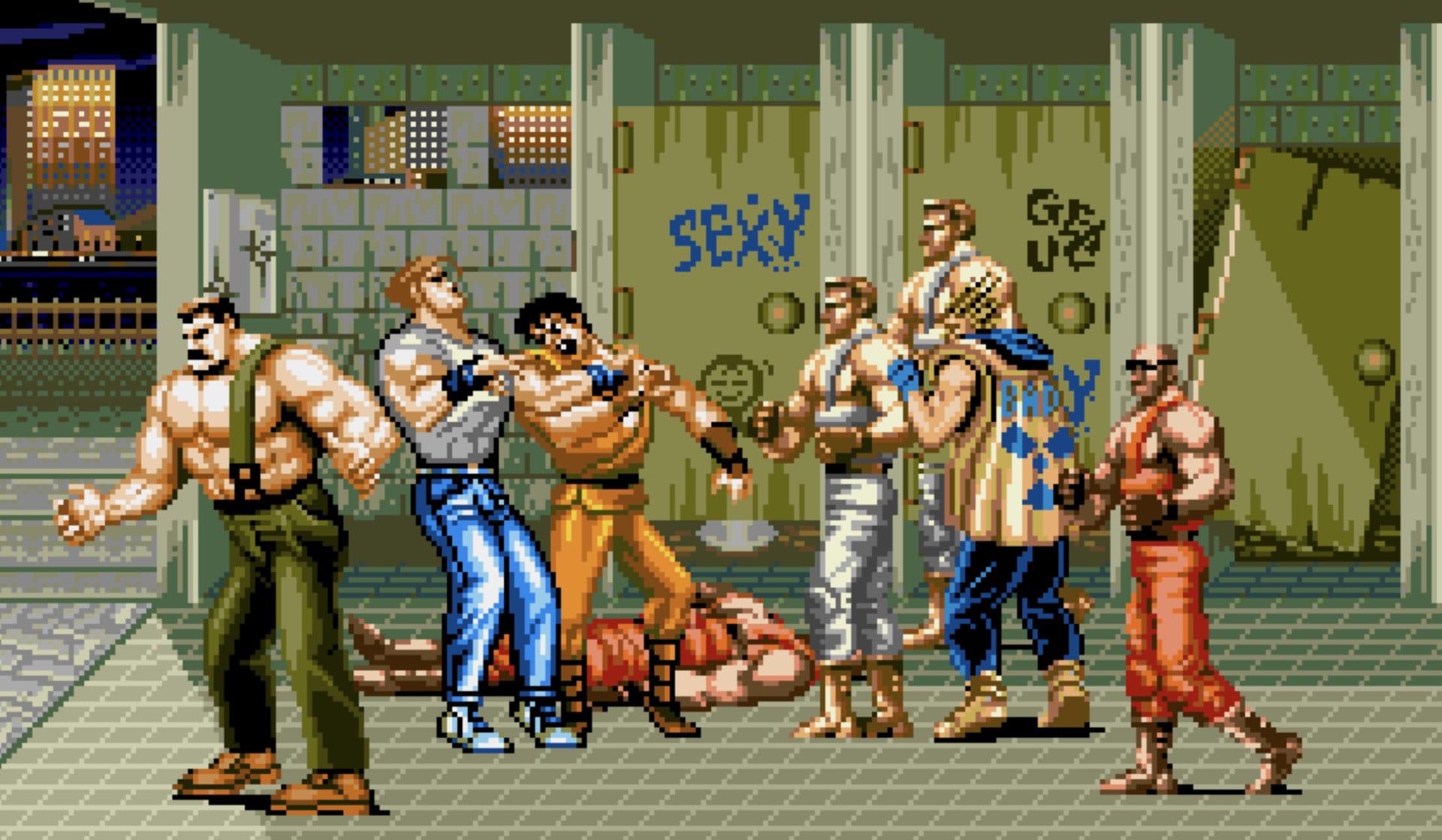

Mauro Xavier, the indie developer best known for his unofficial port of Capcom's Final Fight to the Mega Drive/Genesis (Final Fight MD), has publicly detailed how he integrates generative AI (GenAI) into parts of his workflow — while drawing firm boundaries around core creative and technical work.
Xavier set out his position and practical experiments in a long Patreon post, explaining which tasks he hands to AI tools and which he insists on doing himself.
Xavier is clear that he does not use AI to write or alter his game code.
He told patrons that programming remains a personal craft: he values learning through tackling problems directly and prefers to retain complete understanding of every line he writes.
When he does consult AI for development, he said it’s limited to asking free tools general questions about optimization best practices, and he avoids feeding his actual source code into those systems.
On audio and music, Xavier confirmed he experimented with GenAI for music generation in a project called Bullet Rhythm and ran CD audio tests in his Final Fight MD builds.
He described those experiments as exploratory rather than a replacement for human composition.
For sound effects he says he has not used GenAI; for voice work, however, he admitted using AI to help with pronunciation and to prototype lines, noting he plans to re-record some parts with his own voice where appropriate.
Xavier also discussed artwork and sprite production.
He uses AI as an assistive tool — for example, turning pen sketches into improved images — but says the outputs often require extensive manual correction to match low-resolution sprite aesthetics and color palettes.
He specifically acknowledged using GenAI-derived portraits during development of Driftin' Rage, but emphasized that he reworked nearly all of that art for the final product because AI outputs were not ready-to-use.
In his Patreon statement, Xavier framed AI as a learning and support tool rather than a creative shortcut.
He argued that indiscriminate reliance on AI would remove challenge, joy, and the human touch from game creation, and that creators must take responsibility for how they employ these technologies.
Xavier's cautionary, hands-on approach sits alongside broader industry moves: major publishers and platform holders, including EA, Sony, and Microsoft, are actively exploring GenAI for content and tooling.
Those efforts have amplified ongoing debates around ethics, copyright, and the environmental cost of large-scale AI models — concerns that Xavier and many in the indie scene continue to weigh as the technology evolves.
For developers and players watching the indie space, Xavier’s message is pragmatic: use AI where it teaches or expedites, but keep core craftsmanship — code, design intent, and pixel art — firmly in human hands.
Xavier set out his position and practical experiments in a long Patreon post, explaining which tasks he hands to AI tools and which he insists on doing himself.
Xavier is clear that he does not use AI to write or alter his game code.
He told patrons that programming remains a personal craft: he values learning through tackling problems directly and prefers to retain complete understanding of every line he writes.
When he does consult AI for development, he said it’s limited to asking free tools general questions about optimization best practices, and he avoids feeding his actual source code into those systems.
On audio and music, Xavier confirmed he experimented with GenAI for music generation in a project called Bullet Rhythm and ran CD audio tests in his Final Fight MD builds.
He described those experiments as exploratory rather than a replacement for human composition.
For sound effects he says he has not used GenAI; for voice work, however, he admitted using AI to help with pronunciation and to prototype lines, noting he plans to re-record some parts with his own voice where appropriate.
Xavier also discussed artwork and sprite production.
He uses AI as an assistive tool — for example, turning pen sketches into improved images — but says the outputs often require extensive manual correction to match low-resolution sprite aesthetics and color palettes.
He specifically acknowledged using GenAI-derived portraits during development of Driftin' Rage, but emphasized that he reworked nearly all of that art for the final product because AI outputs were not ready-to-use.
In his Patreon statement, Xavier framed AI as a learning and support tool rather than a creative shortcut.
He argued that indiscriminate reliance on AI would remove challenge, joy, and the human touch from game creation, and that creators must take responsibility for how they employ these technologies.
Xavier's cautionary, hands-on approach sits alongside broader industry moves: major publishers and platform holders, including EA, Sony, and Microsoft, are actively exploring GenAI for content and tooling.
Those efforts have amplified ongoing debates around ethics, copyright, and the environmental cost of large-scale AI models — concerns that Xavier and many in the indie scene continue to weigh as the technology evolves.
For developers and players watching the indie space, Xavier’s message is pragmatic: use AI where it teaches or expedites, but keep core craftsmanship — code, design intent, and pixel art — firmly in human hands.