Hard4Games, a prominent YouTube channel recognized for its contributions to video game preservation, has recently undertaken a notable project involving a WATA-graded prototype copy of 'Star Wars: Empire Strikes Back' for the NES.
The move brings renewed focus to the ongoing debate within the gaming community regarding the practice of grading unreleased game prototypes.
While grading standard retail games has become a prevalent trend, particularly in the collectible market, subjecting unreleased prototypes to the same process has been the subject of criticism.
Industry experts and game historians argue that prototypes are invaluable artifacts for game preservation.
Unlike their retail counterparts, these non-commercial versions often feature developmental differences, offering rare insights into the production and evolution of classic titles.
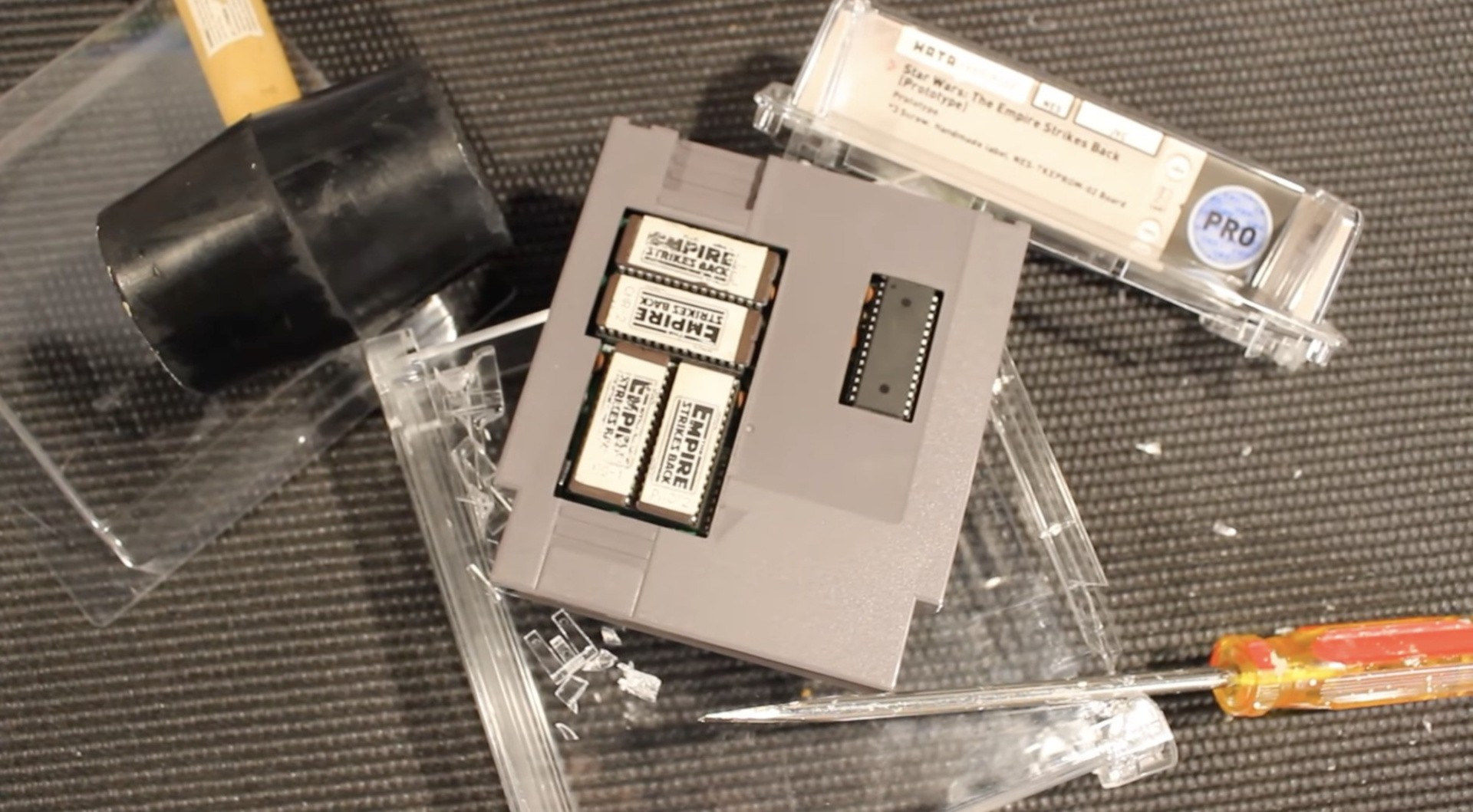
Hard4Games addressed what it described as a significant concern in the retro gaming sphere by methodically removing the sealed plastic case—applied by the game grading service WATA—from the NES prototype cartridge.
The extraction was performed with the intent of facilitating digital preservation.
The team successfully dumped the ROM, ensuring this piece of video game history will be accessible to researchers and preservationists in the future.
In a light-hearted twist, the now-empty WATA case was repurposed as an impromptu food and drink vessel, further underscoring the team's stance against permanently entombing prototypes.
Despite the anticipation, analysis of the dumped ROM revealed that this particular version of 'Star Wars: Empire Strikes Back' deviated little from the final retail release, which itself is often regarded as a lackluster title in the NES library.
However, Hard4Games emphasized the broader importance of their action, stating that liberating these graded prototypes is crucial for advancing the efforts of game historians and enthusiasts dedicated to digital preservation.
This case reignites dialogue around the role of companies such as WATA and the growing market for graded retro games, particularly as part of a larger movement toward responsible archiving and accessibility.
By taking a proactive approach, channels like Hard4Games play a pivotal role in preserving gaming history for future generations, ensuring that even rare or unreleased works remain available for academic and fan-driven study.
As the retro and classic gaming sectors continue to thrive via avenues like the Nintendo eShop and platforms including the Nintendo Switch, such preservation efforts highlight the complex balance between collectibility and accessibility.
Ultimately, the collaboration between enthusiasts and preservationists remains essential to safeguard the rich heritage of the Nintendo NES and the broader video game industry.
The move brings renewed focus to the ongoing debate within the gaming community regarding the practice of grading unreleased game prototypes.
While grading standard retail games has become a prevalent trend, particularly in the collectible market, subjecting unreleased prototypes to the same process has been the subject of criticism.
Industry experts and game historians argue that prototypes are invaluable artifacts for game preservation.
Unlike their retail counterparts, these non-commercial versions often feature developmental differences, offering rare insights into the production and evolution of classic titles.
Hard4Games addressed what it described as a significant concern in the retro gaming sphere by methodically removing the sealed plastic case—applied by the game grading service WATA—from the NES prototype cartridge.
The extraction was performed with the intent of facilitating digital preservation.
The team successfully dumped the ROM, ensuring this piece of video game history will be accessible to researchers and preservationists in the future.
In a light-hearted twist, the now-empty WATA case was repurposed as an impromptu food and drink vessel, further underscoring the team's stance against permanently entombing prototypes.
Despite the anticipation, analysis of the dumped ROM revealed that this particular version of 'Star Wars: Empire Strikes Back' deviated little from the final retail release, which itself is often regarded as a lackluster title in the NES library.
However, Hard4Games emphasized the broader importance of their action, stating that liberating these graded prototypes is crucial for advancing the efforts of game historians and enthusiasts dedicated to digital preservation.
This case reignites dialogue around the role of companies such as WATA and the growing market for graded retro games, particularly as part of a larger movement toward responsible archiving and accessibility.
By taking a proactive approach, channels like Hard4Games play a pivotal role in preserving gaming history for future generations, ensuring that even rare or unreleased works remain available for academic and fan-driven study.
As the retro and classic gaming sectors continue to thrive via avenues like the Nintendo eShop and platforms including the Nintendo Switch, such preservation efforts highlight the complex balance between collectibility and accessibility.
Ultimately, the collaboration between enthusiasts and preservationists remains essential to safeguard the rich heritage of the Nintendo NES and the broader video game industry.