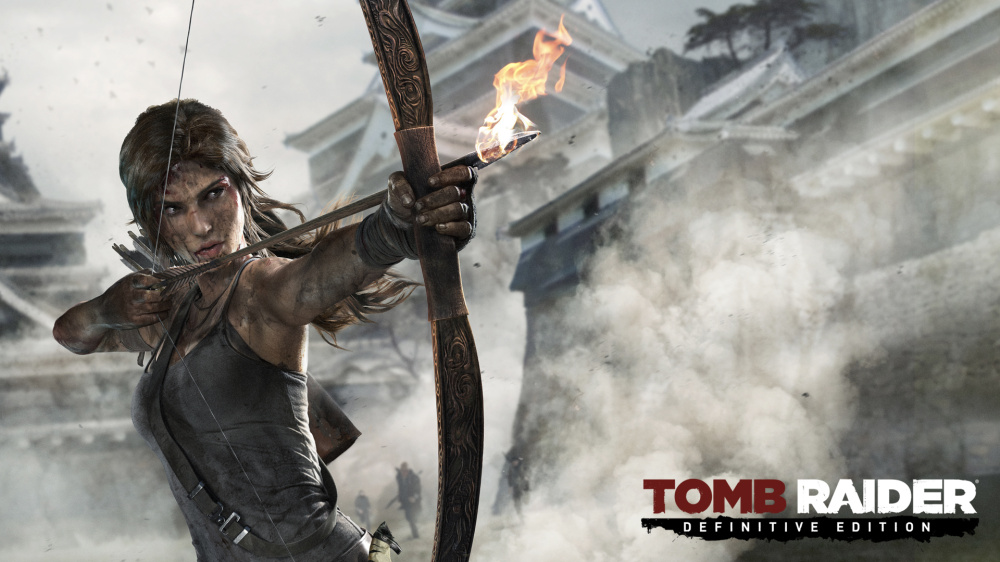
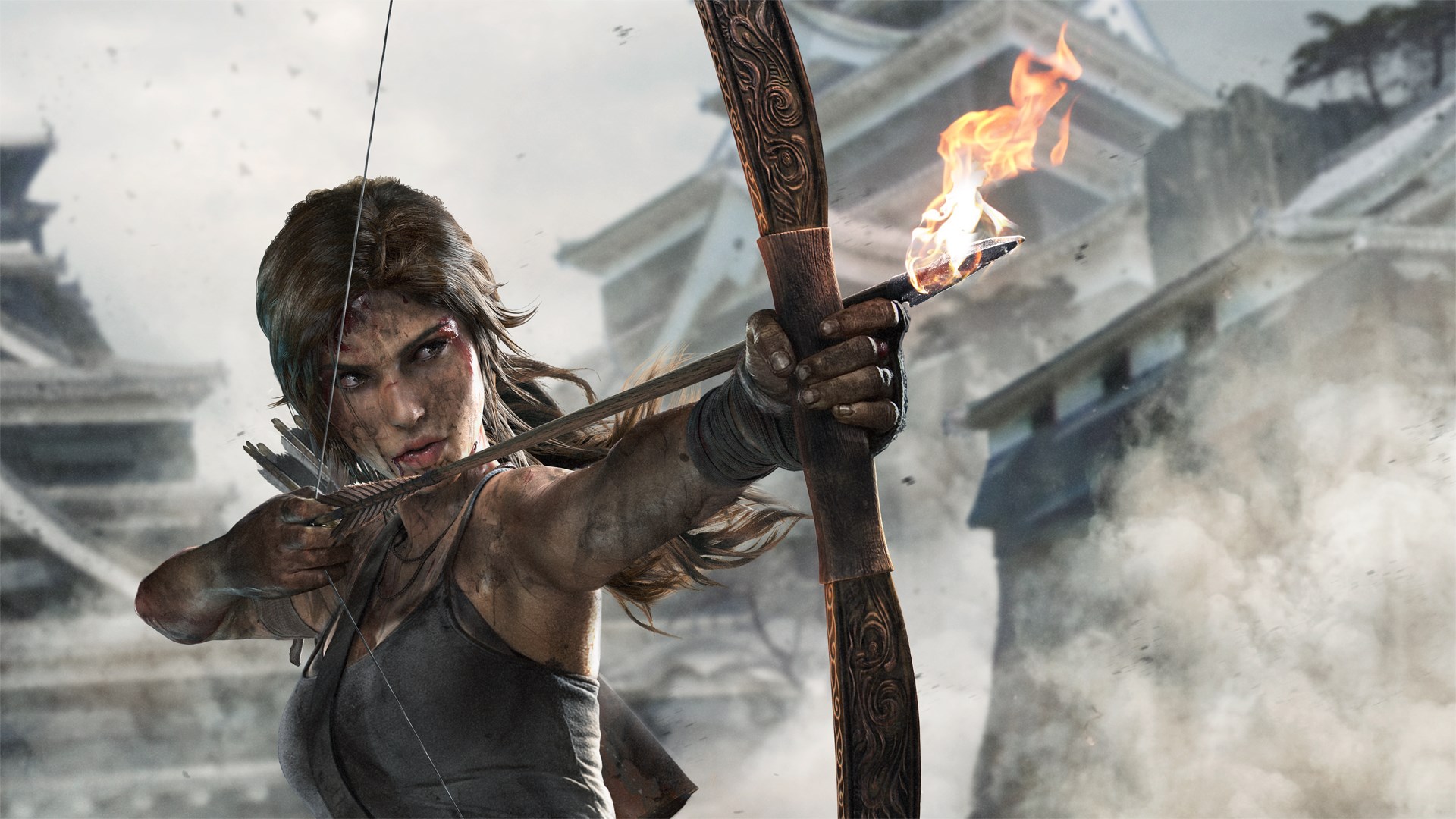
Tomb Raider: Definitive Edition has been a landmark title in the action-adventure genre, and its recent release on Nintendo Switch 2 and the standard Nintendo Switch brings the iconic 2013 reboot to a new audience.
Developed by Crystal Dynamics, the acclaimed studio behind the Tomb Raider franchise, the game’s latest versions have drawn significant attention from both fans and industry analysts.
Digital Foundry, renowned for its in-depth technical evaluations, has thoroughly assessed these new Nintendo Switch editions—providing valuable insights into frame rate, resolution, and graphical fidelity as compared to both the PlayStation 4 remaster and the PlayStation 3 original.
A close inspection reveals some notable differences and optimizations in Tomb Raider: Definitive Edition on Nintendo’s current hardware.
Texture quality has seen marked improvements when compared to the PS3 release, and the arrangement of foliage across the game’s lush jungle environments has been thoughtfully revised.
In addition, the game’s color grading has undergone subtle changes to better suit the Switch hardware’s capabilities.
According to Digital Foundry’s analysis, both docked and handheld modes on Nintendo Switch 2 deliver a native resolution of 1920x1080p (1080p), without relying on dynamic scaling or temporal anti-aliasing.
This provides a consistently sharp image, though some visual compromises are apparent.
Shadow coverage on Switch 2 is reduced versus the PS4 build, with elements like ambient occlusion, foliage shading, and the lighting under trees—and around protagonist Lara Croft—dialed back to optimize performance.
Meanwhile, the foliage density has been moderately decreased, and shadow rendering operates at a lower preset level.
Other advanced effects, such as the TresFX hair simulations and some depth of field during cutscenes, have been omitted or scaled back for technical reasons.
Despite these compromises, Digital Foundry highlights that Switch 2’s frame rate is highly stable at 60 frames per second, with only rare and brief dips during specific cutscenes.
In terms of raw gameplay performance, the Switch 2 version of Tomb Raider: Definitive Edition outpaces its PS4 counterpart.
Visual flourishes seen in the PS3 version—such as screen space rain and plant rain-splatter effects—are missing, though overall texture quality is superior on Switch 2 compared to the older console.
On the standard Nintendo Switch, Tomb Raider: Definitive Edition runs at a reduced resolution, typically ranging from 864p to 900p.
The frame rate is capped at 30 FPS, with all primary graphical elements—such as textures, effects, geometry, and foliage density—closely resembling the Switch 2 variant.
However, shadow quality is further downgraded, and minor differences in level-of-detail (LOD) for foliage are observable.
Frame rate dips are more frequent on the original Switch hardware, reflecting the more limited resources.
Tomb Raider: Definitive Edition is now available for both Nintendo Switch 2 and the original Nintendo Switch.
This comprehensive technical assessment by Digital Foundry confirms the game’s strong performance on Nintendo’s latest platform, achieving a balance between visual fidelity and fluid gameplay that honors the legacy of Crystal Dynamics’ seminal adventure.
For an in-depth breakdown, gamers and industry professionals are encouraged to review Digital Foundry’s full analysis, which details the technical enhancements and necessary trade-offs for each version available on the eShop.
Developed by Crystal Dynamics, the acclaimed studio behind the Tomb Raider franchise, the game’s latest versions have drawn significant attention from both fans and industry analysts.
Digital Foundry, renowned for its in-depth technical evaluations, has thoroughly assessed these new Nintendo Switch editions—providing valuable insights into frame rate, resolution, and graphical fidelity as compared to both the PlayStation 4 remaster and the PlayStation 3 original.
A close inspection reveals some notable differences and optimizations in Tomb Raider: Definitive Edition on Nintendo’s current hardware.
Texture quality has seen marked improvements when compared to the PS3 release, and the arrangement of foliage across the game’s lush jungle environments has been thoughtfully revised.
In addition, the game’s color grading has undergone subtle changes to better suit the Switch hardware’s capabilities.
According to Digital Foundry’s analysis, both docked and handheld modes on Nintendo Switch 2 deliver a native resolution of 1920x1080p (1080p), without relying on dynamic scaling or temporal anti-aliasing.
This provides a consistently sharp image, though some visual compromises are apparent.
Shadow coverage on Switch 2 is reduced versus the PS4 build, with elements like ambient occlusion, foliage shading, and the lighting under trees—and around protagonist Lara Croft—dialed back to optimize performance.
Meanwhile, the foliage density has been moderately decreased, and shadow rendering operates at a lower preset level.
Other advanced effects, such as the TresFX hair simulations and some depth of field during cutscenes, have been omitted or scaled back for technical reasons.
Despite these compromises, Digital Foundry highlights that Switch 2’s frame rate is highly stable at 60 frames per second, with only rare and brief dips during specific cutscenes.
In terms of raw gameplay performance, the Switch 2 version of Tomb Raider: Definitive Edition outpaces its PS4 counterpart.
Visual flourishes seen in the PS3 version—such as screen space rain and plant rain-splatter effects—are missing, though overall texture quality is superior on Switch 2 compared to the older console.
On the standard Nintendo Switch, Tomb Raider: Definitive Edition runs at a reduced resolution, typically ranging from 864p to 900p.
The frame rate is capped at 30 FPS, with all primary graphical elements—such as textures, effects, geometry, and foliage density—closely resembling the Switch 2 variant.
However, shadow quality is further downgraded, and minor differences in level-of-detail (LOD) for foliage are observable.
Frame rate dips are more frequent on the original Switch hardware, reflecting the more limited resources.
Tomb Raider: Definitive Edition is now available for both Nintendo Switch 2 and the original Nintendo Switch.
This comprehensive technical assessment by Digital Foundry confirms the game’s strong performance on Nintendo’s latest platform, achieving a balance between visual fidelity and fluid gameplay that honors the legacy of Crystal Dynamics’ seminal adventure.
For an in-depth breakdown, gamers and industry professionals are encouraged to review Digital Foundry’s full analysis, which details the technical enhancements and necessary trade-offs for each version available on the eShop.