
Since Pokémon X and Y marked the series’ leap into full 3D character models over a decade ago, the visual identity of every Pokémon has transformed significantly.
Developed by Game Freak and released on the Nintendo 3DS in 2013, Pokémon X and Y not only introduced around 70 new species, but also reimagined all 721 Pokémon from the previous generations in three dimensions—a technical and artistic feat that continues to influence main series games on platforms like the Nintendo Switch.
This comprehensive reworking presented unique challenges for Game Freak’s designers.
Recalling the development process, it becomes clear that crafting 3D models for every Pokémon (including alternate forms) under tight deadlines was a monumental task, leading to some models and animations standing out while others missed the mark.
As the franchise advanced to titles like Pokémon Sword and Shield, Pokémon Legends: Z-A, and the landmark Pokémon Scarlet and Violet, Game Freak has steadily addressed feedback and made notable model improvements to enhance personality, animation, and fidelity.
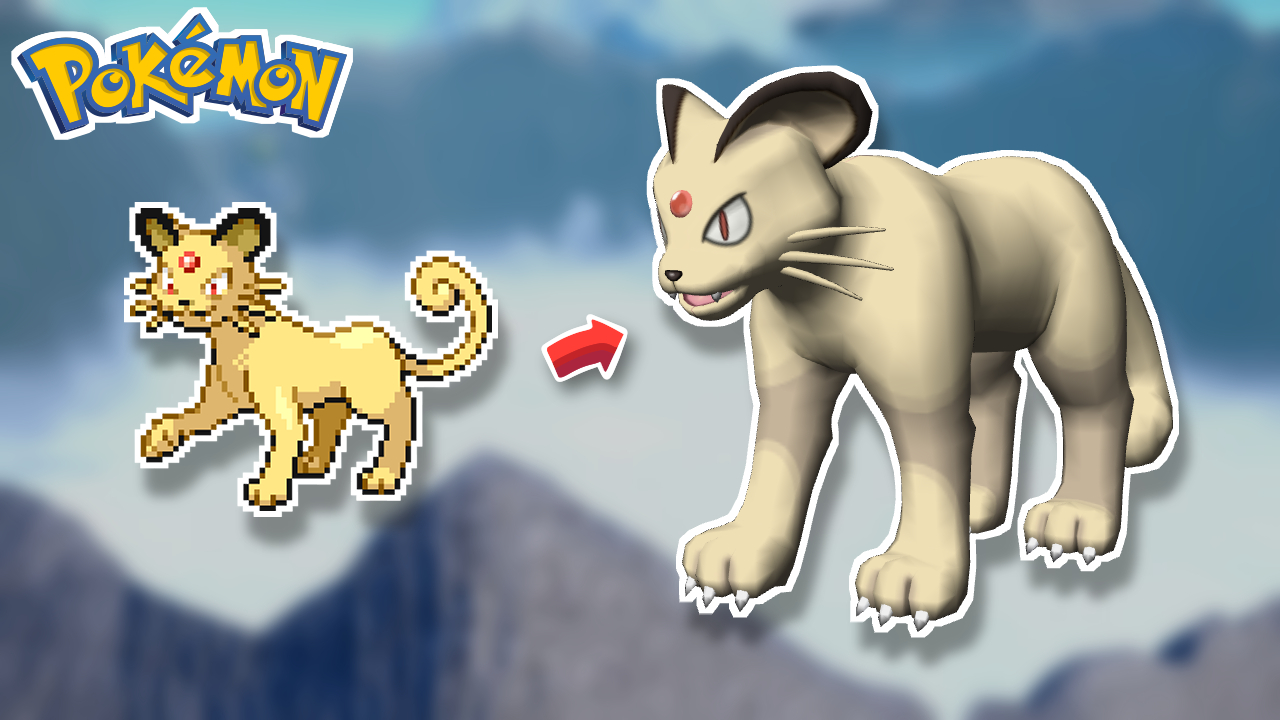
Take Purrloin, a Pokémon introduced in Unova.
In its original 2D sprite from Pokémon Black and White, Purrloin sits in a feline posture, exuding mischief and charm.
However, from X and Y onward, the 3D model depicts Purrloin standing upright, a puzzling shift considering its evolution, Liepard, remains quadrupedal.
Fans and artists alike have advocated for restoring its natural, cat-like stance to recapture the creature's intended appeal.
Zekrom and Reshiram, the iconic legendary Pokémon from Unova, also illustrate how transitioning from sprites to polygons can affect visual impact.
Both were celebrated for their vivid coloration in 2D, particularly Zekrom’s deep black body and electrifying blue highlights, which became muted grayscale shades in their 3D form.
Their signature energy effects—especially Reshiram’s blazing tail—are far less prominent in standard idle animations, diminishing their imposing presence outside battle moves.
Pokémon like Hippowdon offer another case study.
Traditionally illustrated nestled in a mound of sand with a wide, open jaw, the Gen 6 3D model instead has Hippowdon standing stiffly on its own, mouth closed and without its characteristic habitat.
Community consensus suggests that more expressive idle animations—such as having its jaw open occasionally or sand effects—would better reflect the essence seen in its original art and 2D sprites.
Steelix, too, highlights the importance of animation.
While its model retains the stone-snake design, the lack of motion or segment rotation in idle stances, unlike the subtle animations from Black and White, compromises its visual menace.
Similarly, the transformation of Ponyta from a stylized steed with large, expressive eyes to a more realistic, subdued look has sparked ongoing discussion among longtime fans.
Importantly, Game Freak has shown willingness to iterate on earlier modeling choices.
Pokémon such as Blastoise, Charizard, Venusaur, Mewtwo, Lugia, and Ho-Oh all received revised 3D models with improved proportions and livelier animations in Pokémon Scarlet and Violet for the Nintendo Switch.
For instance, Charizard’s updated idle animation now has it confidently meet its opponent’s gaze, adding dynamism and character depth missing from previous renditions.
Visual adjustments extend to color palettes, too.
Persian, a Kanto region classic, initially suffered from washed-out fur tones and disproportionate anatomy in its early 3D incarnation, but subsequent reworks—particularly in Scarlet and Violet—restored much of its feline grace and vibrancy.
Still, debates about artistic direction continue, especially when comparing the starkly cartoonish Alolan Persian with the more realistic overhaul of the Kanto version.
Flowing animations have proven crucial, notably for Pokémon like Eelektross.
While some fans lament its change from upright to floating stance, the current animation represents its Levitate ability and alludes to cultural icons like koinobori (Japanese windsocks), reinforcing the Pokémon’s conceptual roots.
Interestingly, in Pokémon Legends: Z-A, Eelektross occasionally walks on land, showcasing Game Freak’s flexibility with in-game presentation based on context.
Flying Pokémon, perhaps more than any other group, highlight the limitations of early 3D conventions.
The aerial-only approach, designed for Sky Battles in X and Y, leaves species such as Tropius, Skarmory, and Xatu suspended in air even when idling, detracting from naturalism.
Many players suggest that allowing these Pokémon to land at lower health—without sacrificing their immunities—would add nuance and verisimilitude.
With each new installment, Pokémon’s visual storytelling continues to evolve.
Whether through remastered color palettes, more nuanced idle animations, or wholly new 3D models on the Nintendo Switch, Game Freak demonstrates ongoing commitment to refining how beloved creatures are presented on-trail and in battle.
As players eagerly anticipate future releases like Pokémon Legends: Z-A, the hope is that lessons from past transitions will inform even bolder animation and design improvements throughout the main series.
Developed by Game Freak and released on the Nintendo 3DS in 2013, Pokémon X and Y not only introduced around 70 new species, but also reimagined all 721 Pokémon from the previous generations in three dimensions—a technical and artistic feat that continues to influence main series games on platforms like the Nintendo Switch.
This comprehensive reworking presented unique challenges for Game Freak’s designers.
Recalling the development process, it becomes clear that crafting 3D models for every Pokémon (including alternate forms) under tight deadlines was a monumental task, leading to some models and animations standing out while others missed the mark.
As the franchise advanced to titles like Pokémon Sword and Shield, Pokémon Legends: Z-A, and the landmark Pokémon Scarlet and Violet, Game Freak has steadily addressed feedback and made notable model improvements to enhance personality, animation, and fidelity.
Take Purrloin, a Pokémon introduced in Unova.
In its original 2D sprite from Pokémon Black and White, Purrloin sits in a feline posture, exuding mischief and charm.
However, from X and Y onward, the 3D model depicts Purrloin standing upright, a puzzling shift considering its evolution, Liepard, remains quadrupedal.
Fans and artists alike have advocated for restoring its natural, cat-like stance to recapture the creature's intended appeal.
Zekrom and Reshiram, the iconic legendary Pokémon from Unova, also illustrate how transitioning from sprites to polygons can affect visual impact.
Both were celebrated for their vivid coloration in 2D, particularly Zekrom’s deep black body and electrifying blue highlights, which became muted grayscale shades in their 3D form.
Their signature energy effects—especially Reshiram’s blazing tail—are far less prominent in standard idle animations, diminishing their imposing presence outside battle moves.
Pokémon like Hippowdon offer another case study.
Traditionally illustrated nestled in a mound of sand with a wide, open jaw, the Gen 6 3D model instead has Hippowdon standing stiffly on its own, mouth closed and without its characteristic habitat.
Community consensus suggests that more expressive idle animations—such as having its jaw open occasionally or sand effects—would better reflect the essence seen in its original art and 2D sprites.
Steelix, too, highlights the importance of animation.
While its model retains the stone-snake design, the lack of motion or segment rotation in idle stances, unlike the subtle animations from Black and White, compromises its visual menace.
Similarly, the transformation of Ponyta from a stylized steed with large, expressive eyes to a more realistic, subdued look has sparked ongoing discussion among longtime fans.
Importantly, Game Freak has shown willingness to iterate on earlier modeling choices.
Pokémon such as Blastoise, Charizard, Venusaur, Mewtwo, Lugia, and Ho-Oh all received revised 3D models with improved proportions and livelier animations in Pokémon Scarlet and Violet for the Nintendo Switch.
For instance, Charizard’s updated idle animation now has it confidently meet its opponent’s gaze, adding dynamism and character depth missing from previous renditions.
Visual adjustments extend to color palettes, too.
Persian, a Kanto region classic, initially suffered from washed-out fur tones and disproportionate anatomy in its early 3D incarnation, but subsequent reworks—particularly in Scarlet and Violet—restored much of its feline grace and vibrancy.
Still, debates about artistic direction continue, especially when comparing the starkly cartoonish Alolan Persian with the more realistic overhaul of the Kanto version.
Flowing animations have proven crucial, notably for Pokémon like Eelektross.
While some fans lament its change from upright to floating stance, the current animation represents its Levitate ability and alludes to cultural icons like koinobori (Japanese windsocks), reinforcing the Pokémon’s conceptual roots.
Interestingly, in Pokémon Legends: Z-A, Eelektross occasionally walks on land, showcasing Game Freak’s flexibility with in-game presentation based on context.
Flying Pokémon, perhaps more than any other group, highlight the limitations of early 3D conventions.
The aerial-only approach, designed for Sky Battles in X and Y, leaves species such as Tropius, Skarmory, and Xatu suspended in air even when idling, detracting from naturalism.
Many players suggest that allowing these Pokémon to land at lower health—without sacrificing their immunities—would add nuance and verisimilitude.
With each new installment, Pokémon’s visual storytelling continues to evolve.
Whether through remastered color palettes, more nuanced idle animations, or wholly new 3D models on the Nintendo Switch, Game Freak demonstrates ongoing commitment to refining how beloved creatures are presented on-trail and in battle.
As players eagerly anticipate future releases like Pokémon Legends: Z-A, the hope is that lessons from past transitions will inform even bolder animation and design improvements throughout the main series.