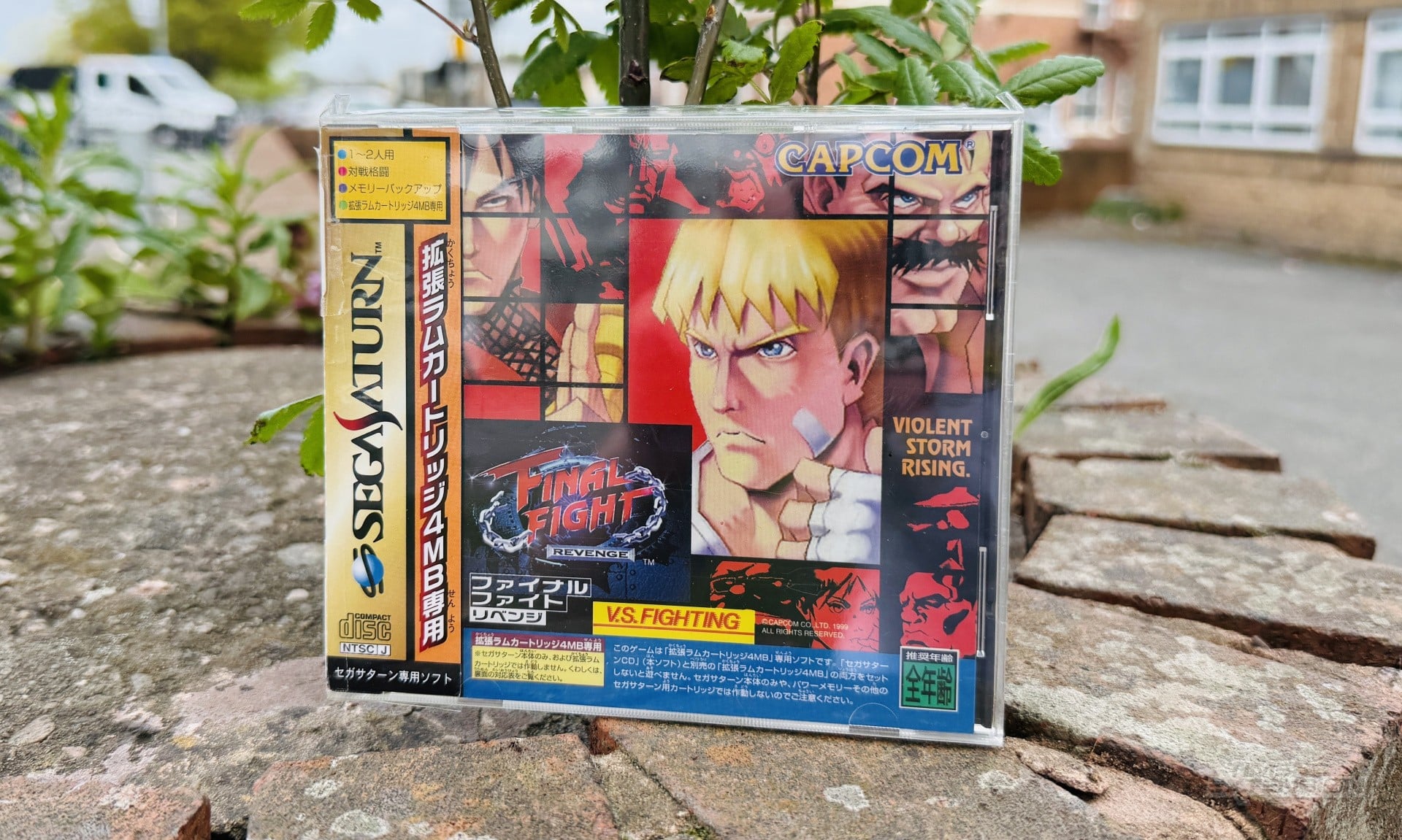




Final Fight Revenge arrived at the end of the 1990s as a surprising detour for Capcom’s beat ’em up flagship.
Developed by Capcom’s US team, Capcom Digital Studios, the game shifted the franchise from 2D side‑scrolling action into a 3D, one‑on‑one fighting format built for Sega’s Titan arcade hardware (ST‑V) and released on the Sega Saturn home console in 2000.
The project, chronicled in a detailed oral history by veteran journalist Matt Leone on his paywalled Design Room site, offers a window into a development run beset by creative friction and platform constraints.
Development context and platform choices
Capcom Digital Studios, a US studio that would later be associated with Maximo and Final Fight: Streetwise, led the project rather than Capcom’s Japan teams.
Final Fight Revenge was created for the ST‑V arcade board and the Sega Saturn, and the studio operated under the pressure of maintaining franchise expectations while adapting to prevailing industry trends toward 3D.
By the time the Saturn version reached consumers in 2000, Sega’s Dreamcast had already been on sale in Japan since late 1998, underscoring how platform timing affected the title’s commercial prospects.
Internal dynamics and managerial oversight
Members of the development team described strained relations between US leadership and visiting executives from Japan.
Environment artist Adrian Ludley said the US studio felt closely observed while trying to demonstrate it could produce a competitive fighting game.
Capcom USA president Bill Gardner recalled that when Capcom general manager Yoshiki Okamoto visited, his feedback often forced rapid directional changes that disrupted the studio’s momentum.
Art lead Jonathan Casco noted tensions between David Siller, who ran the US studio, and Okamoto, adding that Siller offered demonstrable support for the US team while some visiting personnel from Japan were notably critical.
Technical and design reflections
Producer Montgomery Singman and other staff reflected on hardware and design choices in hindsight.
Singman said the Saturn’s dual‑CPU architecture presented significant optimization challenges and lamented an exclusivity deal with Sega that precluded PlayStation hardware, which he believed would have simplified development.
He also suggested the game’s pivot to 3D one‑on‑one combat, with an emphasis on weapon pickups, departed from the franchise’s 2D roots and limited the title’s appeal.
Commercial reception and legacy
Final Fight Revenge was met with poor critical reception and underperformed commercially.
Team members recall that Capcom leadership publicly reprimanded staff over the outcome, and the project’s struggles informed later decisions at the studio—Capcom Digital Studios eventually rebranded as Capcom Studio 8 and pursued other projects.
Matt Leone’s full 5,000‑word oral history on Design Room compiles these firsthand accounts and is recommended for readers seeking deeper primary-source detail.
Developed by Capcom’s US team, Capcom Digital Studios, the game shifted the franchise from 2D side‑scrolling action into a 3D, one‑on‑one fighting format built for Sega’s Titan arcade hardware (ST‑V) and released on the Sega Saturn home console in 2000.
The project, chronicled in a detailed oral history by veteran journalist Matt Leone on his paywalled Design Room site, offers a window into a development run beset by creative friction and platform constraints.
Development context and platform choices
Capcom Digital Studios, a US studio that would later be associated with Maximo and Final Fight: Streetwise, led the project rather than Capcom’s Japan teams.
Final Fight Revenge was created for the ST‑V arcade board and the Sega Saturn, and the studio operated under the pressure of maintaining franchise expectations while adapting to prevailing industry trends toward 3D.
By the time the Saturn version reached consumers in 2000, Sega’s Dreamcast had already been on sale in Japan since late 1998, underscoring how platform timing affected the title’s commercial prospects.
Internal dynamics and managerial oversight
Members of the development team described strained relations between US leadership and visiting executives from Japan.
Environment artist Adrian Ludley said the US studio felt closely observed while trying to demonstrate it could produce a competitive fighting game.
Capcom USA president Bill Gardner recalled that when Capcom general manager Yoshiki Okamoto visited, his feedback often forced rapid directional changes that disrupted the studio’s momentum.
Art lead Jonathan Casco noted tensions between David Siller, who ran the US studio, and Okamoto, adding that Siller offered demonstrable support for the US team while some visiting personnel from Japan were notably critical.
Technical and design reflections
Producer Montgomery Singman and other staff reflected on hardware and design choices in hindsight.
Singman said the Saturn’s dual‑CPU architecture presented significant optimization challenges and lamented an exclusivity deal with Sega that precluded PlayStation hardware, which he believed would have simplified development.
He also suggested the game’s pivot to 3D one‑on‑one combat, with an emphasis on weapon pickups, departed from the franchise’s 2D roots and limited the title’s appeal.
Commercial reception and legacy
Final Fight Revenge was met with poor critical reception and underperformed commercially.
Team members recall that Capcom leadership publicly reprimanded staff over the outcome, and the project’s struggles informed later decisions at the studio—Capcom Digital Studios eventually rebranded as Capcom Studio 8 and pursued other projects.
Matt Leone’s full 5,000‑word oral history on Design Room compiles these firsthand accounts and is recommended for readers seeking deeper primary-source detail.