GoldenEye 007 remains a landmark first‑person shooter on the Nintendo 64.
Developed by Rare and released in 1997, the game combined mission-based action, precise controls and a now-classic split‑screen multiplayer mode to sell more than eight million copies worldwide and influence console FPS design for decades.
Martin Hollis served as lead designer during the project’s formative stages, and David Doak later joined Rare as a designer; Doak’s contributions and even his likeness appear in the finished game.
In recent social media remarks, David Doak outlined the design lineage behind GoldenEye’s satisfying gunplay, tracing core elements back to on-rails shooters such as Virtua Cop.
Doak said much of the title’s distinctive hit‑reaction timing and rhythmic cadence grew from an initial direction that borrowed from Virtua Cop’s approach to enemy animation and hit feedback.
Doak explained that GoldenEye was at one point conceived as an on‑rails shooter similar to Virtua Cop and Time Crisis, and that influence carried through in the behavior of enemy NPCs.
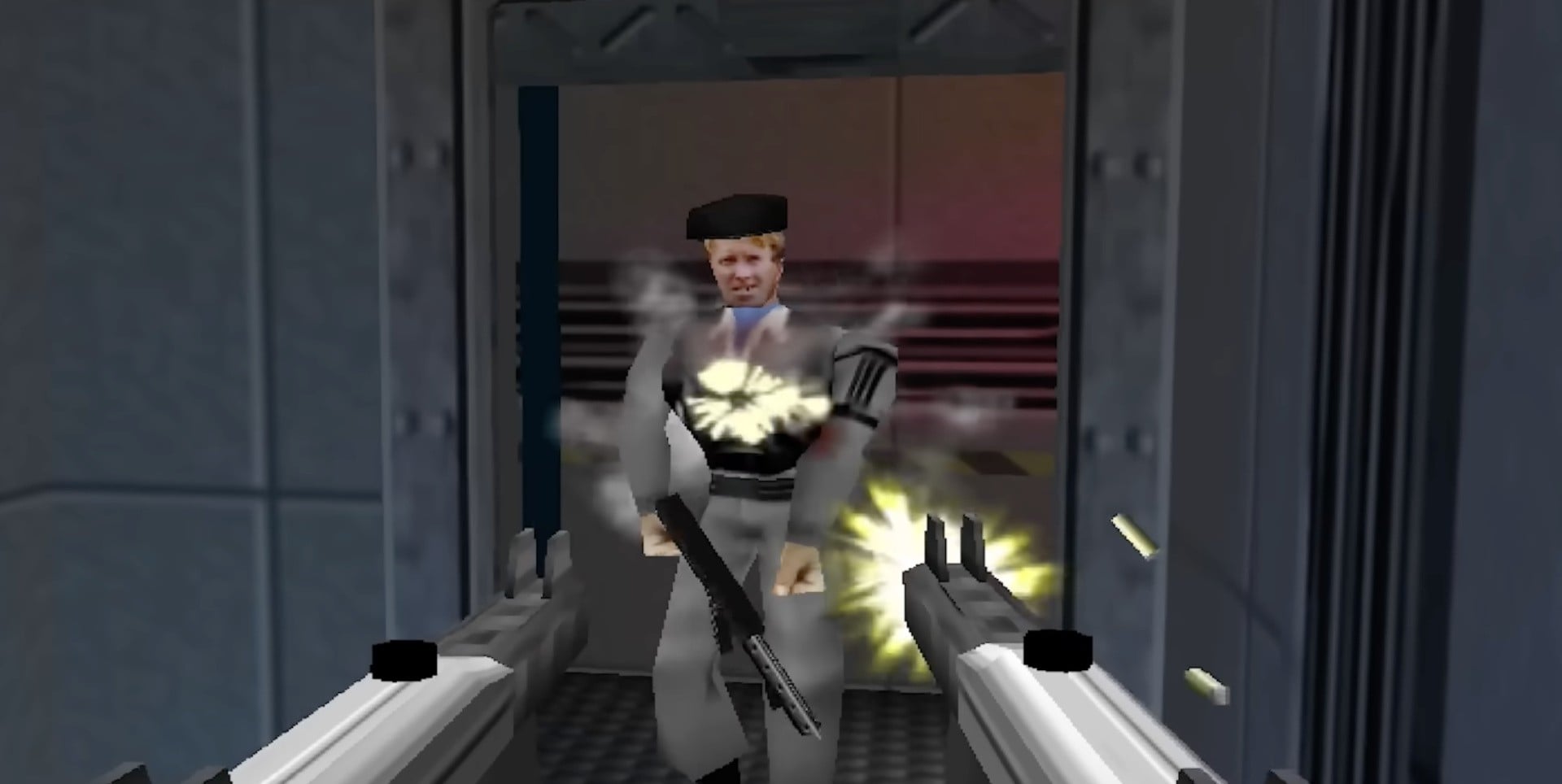
He described how enemies run to set positions, telegraph attacks and use location-specific hit reactions.
Those hit reactions produce a brief "stunned" state during which enemies cannot attack, creating opportunity windows for players to reprioritize targets, re‑aim or reload.
As players internalize the duration of those animations, Doak said they naturally learn to "juggle" threats—switching focus between enemies in a way that feels intuitive and empowering.
He also highlighted a subtle animation delay when enemies transition between poses; that small, consistent beat provides players with predictable timing cues.
Doak was careful to note that the hit‑react mechanics were already present when he joined Rare, but he acknowledged leaning into them via enemy placement and level setup to amplify the intended flow of encounters.
His later career moves are also notable: Doak co‑founded Free Radical Design in 1999, the studio behind the TimeSplitters series, which continued to explore fast‑paced console shooter design.
GoldenEye’s combination of animation-driven feedback and tactical pacing is widely cited as part of the "magic sauce" that made its combat memorable.
The title’s design decisions—rooted in observable animation cues and carefully tuned timings—help explain why its single‑player encounters and local multiplayer have remained touchstones in FPS history.
Developed by Rare and released in 1997, the game combined mission-based action, precise controls and a now-classic split‑screen multiplayer mode to sell more than eight million copies worldwide and influence console FPS design for decades.
Martin Hollis served as lead designer during the project’s formative stages, and David Doak later joined Rare as a designer; Doak’s contributions and even his likeness appear in the finished game.
In recent social media remarks, David Doak outlined the design lineage behind GoldenEye’s satisfying gunplay, tracing core elements back to on-rails shooters such as Virtua Cop.
Doak said much of the title’s distinctive hit‑reaction timing and rhythmic cadence grew from an initial direction that borrowed from Virtua Cop’s approach to enemy animation and hit feedback.
Doak explained that GoldenEye was at one point conceived as an on‑rails shooter similar to Virtua Cop and Time Crisis, and that influence carried through in the behavior of enemy NPCs.
He described how enemies run to set positions, telegraph attacks and use location-specific hit reactions.
Those hit reactions produce a brief "stunned" state during which enemies cannot attack, creating opportunity windows for players to reprioritize targets, re‑aim or reload.
As players internalize the duration of those animations, Doak said they naturally learn to "juggle" threats—switching focus between enemies in a way that feels intuitive and empowering.
He also highlighted a subtle animation delay when enemies transition between poses; that small, consistent beat provides players with predictable timing cues.
Doak was careful to note that the hit‑react mechanics were already present when he joined Rare, but he acknowledged leaning into them via enemy placement and level setup to amplify the intended flow of encounters.
His later career moves are also notable: Doak co‑founded Free Radical Design in 1999, the studio behind the TimeSplitters series, which continued to explore fast‑paced console shooter design.
GoldenEye’s combination of animation-driven feedback and tactical pacing is widely cited as part of the "magic sauce" that made its combat memorable.
The title’s design decisions—rooted in observable animation cues and carefully tuned timings—help explain why its single‑player encounters and local multiplayer have remained touchstones in FPS history.