
Bandai Namco’s renowned JRPG legacy continues with the release of Tales of Berseria Remastered, scheduled to launch on Nintendo Switch on February 26, 2026.
This entry follows a lineage of highly praised titles such as Tales of Symphonia and Tales of Vesperia, which have captivated fans across multiple platforms.
Now, with increased accessibility via the Nintendo Switch and the eShop, this remaster invites both seasoned players and newcomers to experience its intense narrative-driven gameplay and notable quality-of-life improvements.
Tales of Berseria Remastered is the latest adaptation from Bandai Namco, with the developer and publisher maintaining a strong relationship with Nintendo hardware through consistent releases and remasters.
The game places players in the role of Velvet Crowe, a complex protagonist whose journey is defined by a quest for answers and the pursuit of a figure from her troubled past.
Three years after a pivotal prologue, Velvet is joined by a cast of diverse companions, each with their own backstory and motivation, effectively drawing players into a web of compelling, interlocking narratives.
One of this remaster’s standout aspects remains its voice acting.
Cristina Vee, known for her work in the Shantae series, delivers an expressive English performance as Velvet, expertly balancing the character’s hardened resolve and underlying vulnerability.
Rina Sato, the acclaimed Japanese voice actress, also lends depth to Velvet in the original language track.
The casting prowess provides players with an authentic and engaging experience, regardless of their preferred language setting.
The gameplay mechanics stay true to the core of the Tales series while offering unique elements.
Players navigate sprawling overworlds, engage NPCs, and unlock dungeons populated with treasures and collectibles.
Tales of Berseria Remastered distinguishes itself with real-time battle arenas, allowing players mobility and flexibility when chaining combos and exploiting enemy weaknesses.
Customization, while present in weapon and armor systems, leans toward simplicity, focusing attention on the story and character progression.
Players will notice that initial backtracking has been alleviated compared to the original release.
A fast travel feature introduces a welcome improvement in pacing, implemented earlier in this version based on player feedback.
While some pacing concerns linger, these adjustments mark a clear upgrade in accessibility and user experience on Nintendo Switch.
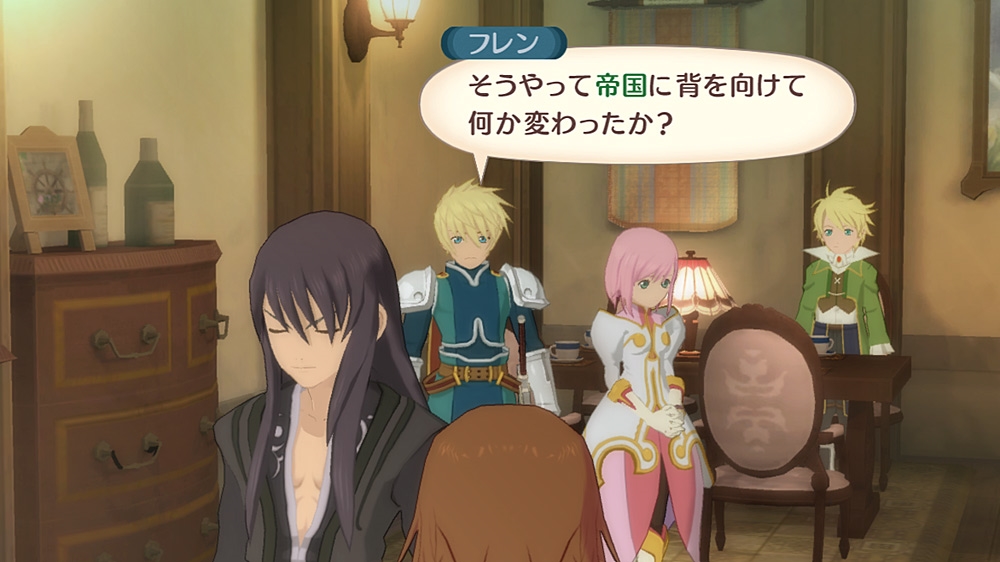
However, visually, Tales of Berseria Remastered carries over some dated elements.
Environmental textures, dungeon design, and background detail often fall short of modern expectations, sometimes evoking a retro aesthetic reminiscent of the PlayStation 2 era.
While character models appear slightly refined, the graphical update does not push the boundaries typically associated with full remasters.
Performance, on the other hand, remains steady at 30 FPS, and the experience is consistently smooth regardless of whether users play docked or in handheld mode on Switch.
Musically, while the game features memorable tracks like the 'Theme of Velvet' and Magilou’s distinctive theme, much of the soundtrack serves as an atmospheric backdrop rather than a standout highlight.
Still, the high quality of cutscenes, boss encounters, and voice performances reinforces the strength of the narrative, helping maintain player engagement amid repetitive segments.
In summary, Tales of Berseria Remastered is a solid addition to the franchise’s Switch lineup and the wider Nintendo ecosystem, even if it falls short of a full graphical overhaul.
For fans seeking rich storytelling, layered character development, and accessible JRPG combat, this release delivers where it matters most.
As a port with notable improvements, it offers a definitive way to experience one of Bandai Namco’s standout titles from the Tales series on modern Nintendo hardware.
This entry follows a lineage of highly praised titles such as Tales of Symphonia and Tales of Vesperia, which have captivated fans across multiple platforms.
Now, with increased accessibility via the Nintendo Switch and the eShop, this remaster invites both seasoned players and newcomers to experience its intense narrative-driven gameplay and notable quality-of-life improvements.
Tales of Berseria Remastered is the latest adaptation from Bandai Namco, with the developer and publisher maintaining a strong relationship with Nintendo hardware through consistent releases and remasters.
The game places players in the role of Velvet Crowe, a complex protagonist whose journey is defined by a quest for answers and the pursuit of a figure from her troubled past.
Three years after a pivotal prologue, Velvet is joined by a cast of diverse companions, each with their own backstory and motivation, effectively drawing players into a web of compelling, interlocking narratives.
One of this remaster’s standout aspects remains its voice acting.
Cristina Vee, known for her work in the Shantae series, delivers an expressive English performance as Velvet, expertly balancing the character’s hardened resolve and underlying vulnerability.
Rina Sato, the acclaimed Japanese voice actress, also lends depth to Velvet in the original language track.
The casting prowess provides players with an authentic and engaging experience, regardless of their preferred language setting.
The gameplay mechanics stay true to the core of the Tales series while offering unique elements.
Players navigate sprawling overworlds, engage NPCs, and unlock dungeons populated with treasures and collectibles.
Tales of Berseria Remastered distinguishes itself with real-time battle arenas, allowing players mobility and flexibility when chaining combos and exploiting enemy weaknesses.
Customization, while present in weapon and armor systems, leans toward simplicity, focusing attention on the story and character progression.
Players will notice that initial backtracking has been alleviated compared to the original release.
A fast travel feature introduces a welcome improvement in pacing, implemented earlier in this version based on player feedback.
While some pacing concerns linger, these adjustments mark a clear upgrade in accessibility and user experience on Nintendo Switch.
However, visually, Tales of Berseria Remastered carries over some dated elements.
Environmental textures, dungeon design, and background detail often fall short of modern expectations, sometimes evoking a retro aesthetic reminiscent of the PlayStation 2 era.
While character models appear slightly refined, the graphical update does not push the boundaries typically associated with full remasters.
Performance, on the other hand, remains steady at 30 FPS, and the experience is consistently smooth regardless of whether users play docked or in handheld mode on Switch.
Musically, while the game features memorable tracks like the 'Theme of Velvet' and Magilou’s distinctive theme, much of the soundtrack serves as an atmospheric backdrop rather than a standout highlight.
Still, the high quality of cutscenes, boss encounters, and voice performances reinforces the strength of the narrative, helping maintain player engagement amid repetitive segments.
In summary, Tales of Berseria Remastered is a solid addition to the franchise’s Switch lineup and the wider Nintendo ecosystem, even if it falls short of a full graphical overhaul.
For fans seeking rich storytelling, layered character development, and accessible JRPG combat, this release delivers where it matters most.
As a port with notable improvements, it offers a definitive way to experience one of Bandai Namco’s standout titles from the Tales series on modern Nintendo hardware.


