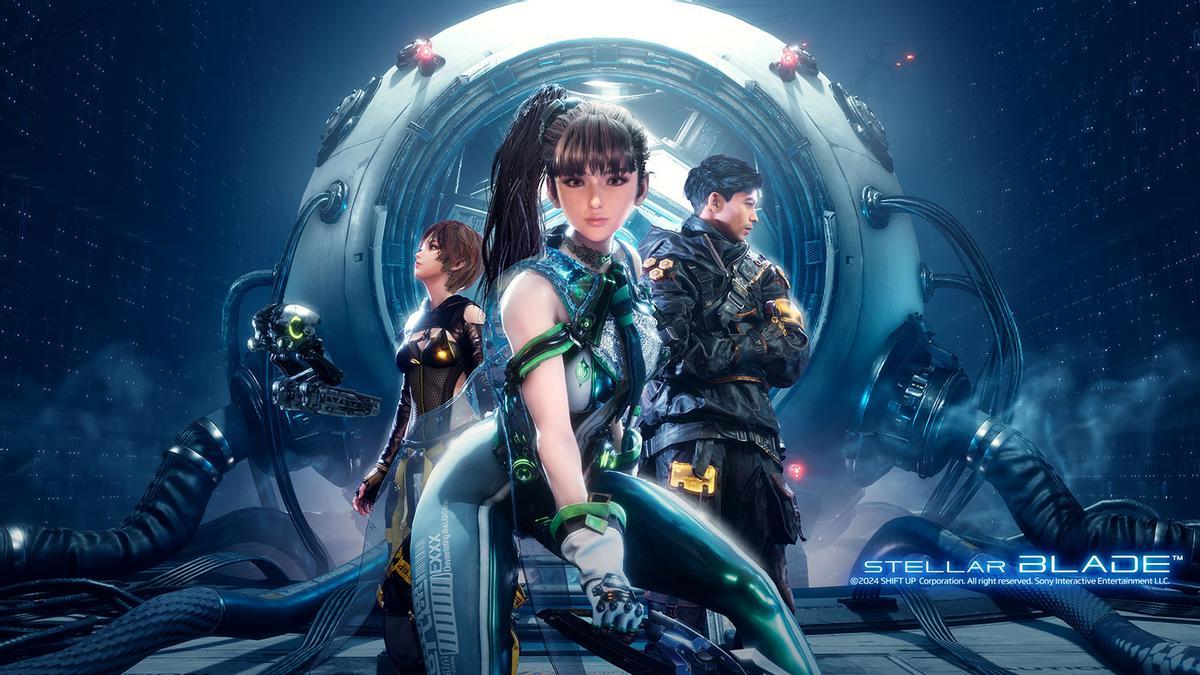
Stellar Blade arrives on Nintendo Switch 2 this week, and a full technical examination from Digital Foundry has outlined how the port compares to the PlayStation 5 build.
Developed by Shift Up, Stellar Blade is one of the early high-profile releases on Nintendo's next-generation handheld-console hybrid.
The analysis focuses on performance techniques such as frame generation, internal resolution targets in docked and handheld modes, and the visual compromises made to achieve a stable presentation on Switch 2 hardware.
Digital Foundry's report highlights several areas where the Switch 2 port differs from the PS5 original.
In journalistic terms: the Switch 2 build reduces environmental detail compared with the PS5 version, and pop-in of distant assets is more noticeable.
Cutbacks tend to be less obvious in some camera shots, but when larger-scale views are shown the reductions become more clear.
Lighting fidelity has also been scaled back in several scenes to preserve performance.
On performance and upscaling, Digital Foundry documents that the Switch 2 version uses frame generation to improve perceived smoothness.
Specifically, FSR3 frame generation is applied by default on the Switch 2 port to take a 30 FPS input and present it as 60 FPS.
With frame generation engaged, exploration sequences often maintain a steady 60 FPS for healthy stretches; however, combat encounters and cutscenes still see occasional dropped frames, though prolonged dips are uncommon.
Resolution and mode specifics are detailed in the analysis.
In docked mode with frame generation active, the internal render target averages around 540p.
Disabling frame generation raises the internal docked resolution to roughly 648p and produces a frame rate in the mid-30s to mid-40s FPS range.
Handheld mode renders at about 360p internally and shows a similar performance profile to docked mode; with frame generation off, variable refresh rate (VRR) can assist with perceived frame pacing in handheld use.
The report also notes that DLSS is used on Switch 2 in this build to provide a more stable presentation compared with the PS5 version.
With frame generation turned off, Digital Foundry states the game looks essentially identical visually aside from the higher internal resolution when frame generation is disabled.
For readers who want a complete assessment, Digital Foundry's full technical analysis covers additional frame timing and image-quality comparisons.
If you missed it, a separate review of Stellar Blade on Nintendo Switch 2 is also available for a broader appraisal of gameplay, controls, and content in the new port.