Small Saga on Nintendo Switch arrives as a compact, character-driven indie RPG that pairs striking pixel diorama visuals with a surprisingly serious narrative.
Built around a miniature, rodent-filled setting called Rodentia, the Switch release expands the original experience with challenge modes and extras while retaining the core turn-based systems that define the game.
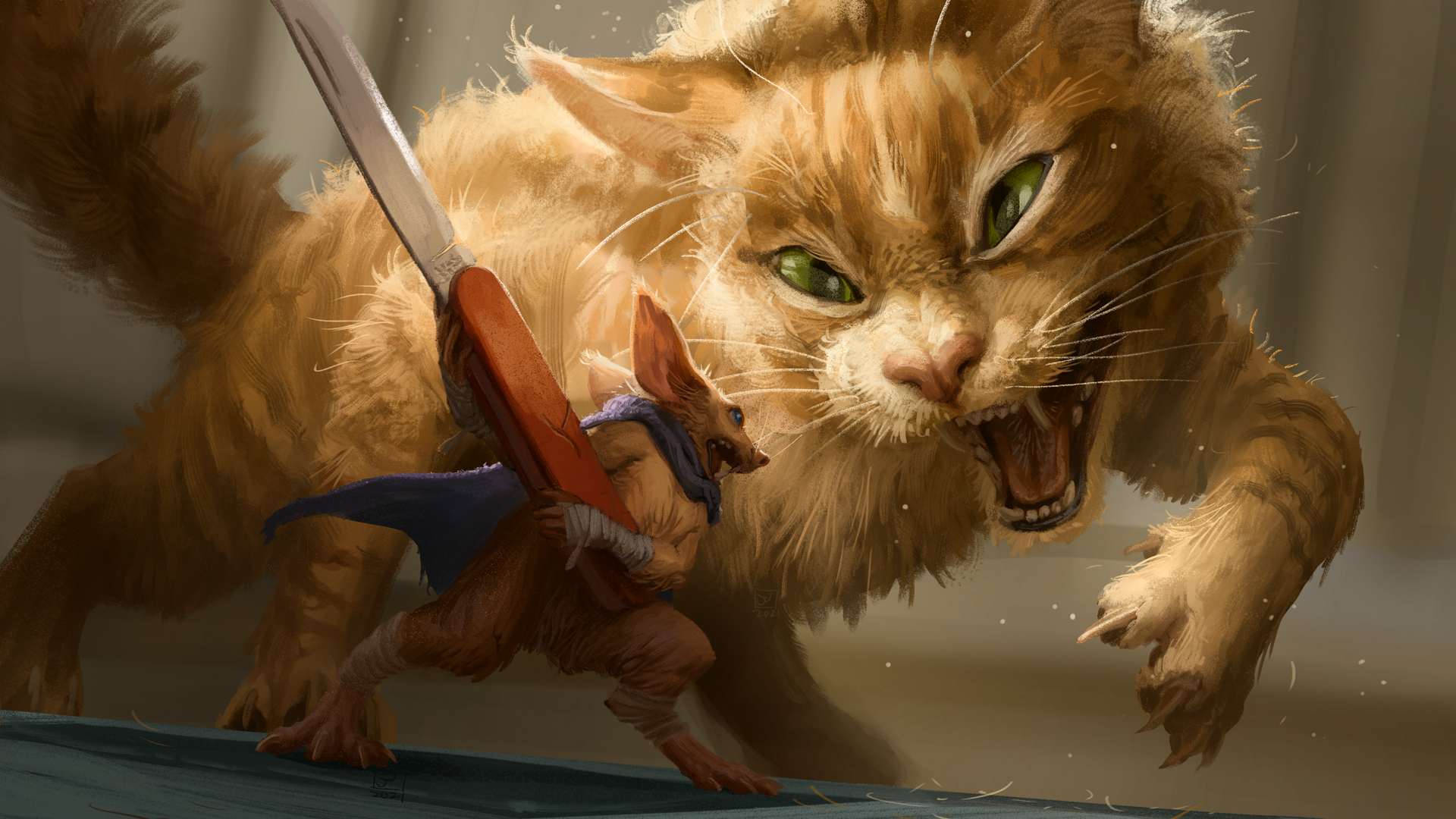
The player assumes the role of Verm, a revenge-driven mouse whose initial mission to avenge his brother quickly entangles him in Rodentia's larger conflicts.
Early on the game shifts tone from light and whimsical to darker, more consequential themes, blending dark humor and pop-culture asides with moments of genuine gravity.
What begins as a deceptively cute mouse RPG reveals deeper worldbuilding and stakes within the first quarter-hour of play.
Rodentia reimagines the human world at rodent scale: discarded human objects become weapons, buildings, and furniture, and humans are deified by the small inhabitants.
The story centers on the Yellow God of Death and a cultural belief called the Old Way, which discourages interference with the gods.
As Verm progresses, his personal quest expands into a confrontation with religious and systemic forces shaping Rodentia.
Small Saga limits parties to four characters, each with defined combat roles and branching skill trees.
Verm favors offensive play with a switchblade God tool; Siobhan uses a lighter-based Overclock mechanic for charged attacks; Bruce functions as a support bard; and Gwen is an aggressive rat attacker with high-risk, high-reward options.
Skill points are awarded through story progression, and players can respec to experiment with different builds.
Optional quests unlock weapons, ultimate abilities, and character-specific upgrades.
Combat forgoes traditional random encounters and experience-point grinding.
Battles emphasize energy management, ability selection, and tactical use of character strengths.
Food items replenish health and resources between fights, and the Switch port adds challenge modes such as Titan Reaper Mode and late-game Rogue Leagues for players seeking greater difficulty.
Visually, Small Saga stands out for its miniature diorama perspective and detailed pixel art.
The scale contrast between rodents and human objects is used creatively across environments, and the Switch version includes extras such as a jukebox, a Knife Darts minigame, a developer interview, and a travel guide in the extras menu.
The developer has noted on Reddit that the artwork evolved over development, an evolution observable across the game’s chapters.
With a main story runtime reported around 7–10 hours depending on optional content, Small Saga aims to be a concise, polished experience rather than an epic grind.
For players browsing the eShop for an artful, story-forward indie RPG on Nintendo Switch, Small Saga is a memorable, well-crafted option.
Built around a miniature, rodent-filled setting called Rodentia, the Switch release expands the original experience with challenge modes and extras while retaining the core turn-based systems that define the game.
The player assumes the role of Verm, a revenge-driven mouse whose initial mission to avenge his brother quickly entangles him in Rodentia's larger conflicts.
Early on the game shifts tone from light and whimsical to darker, more consequential themes, blending dark humor and pop-culture asides with moments of genuine gravity.
What begins as a deceptively cute mouse RPG reveals deeper worldbuilding and stakes within the first quarter-hour of play.
Rodentia reimagines the human world at rodent scale: discarded human objects become weapons, buildings, and furniture, and humans are deified by the small inhabitants.
The story centers on the Yellow God of Death and a cultural belief called the Old Way, which discourages interference with the gods.
As Verm progresses, his personal quest expands into a confrontation with religious and systemic forces shaping Rodentia.
Small Saga limits parties to four characters, each with defined combat roles and branching skill trees.
Verm favors offensive play with a switchblade God tool; Siobhan uses a lighter-based Overclock mechanic for charged attacks; Bruce functions as a support bard; and Gwen is an aggressive rat attacker with high-risk, high-reward options.
Skill points are awarded through story progression, and players can respec to experiment with different builds.
Optional quests unlock weapons, ultimate abilities, and character-specific upgrades.
Combat forgoes traditional random encounters and experience-point grinding.
Battles emphasize energy management, ability selection, and tactical use of character strengths.
Food items replenish health and resources between fights, and the Switch port adds challenge modes such as Titan Reaper Mode and late-game Rogue Leagues for players seeking greater difficulty.
Visually, Small Saga stands out for its miniature diorama perspective and detailed pixel art.
The scale contrast between rodents and human objects is used creatively across environments, and the Switch version includes extras such as a jukebox, a Knife Darts minigame, a developer interview, and a travel guide in the extras menu.
The developer has noted on Reddit that the artwork evolved over development, an evolution observable across the game’s chapters.
With a main story runtime reported around 7–10 hours depending on optional content, Small Saga aims to be a concise, polished experience rather than an epic grind.
For players browsing the eShop for an artful, story-forward indie RPG on Nintendo Switch, Small Saga is a memorable, well-crafted option.