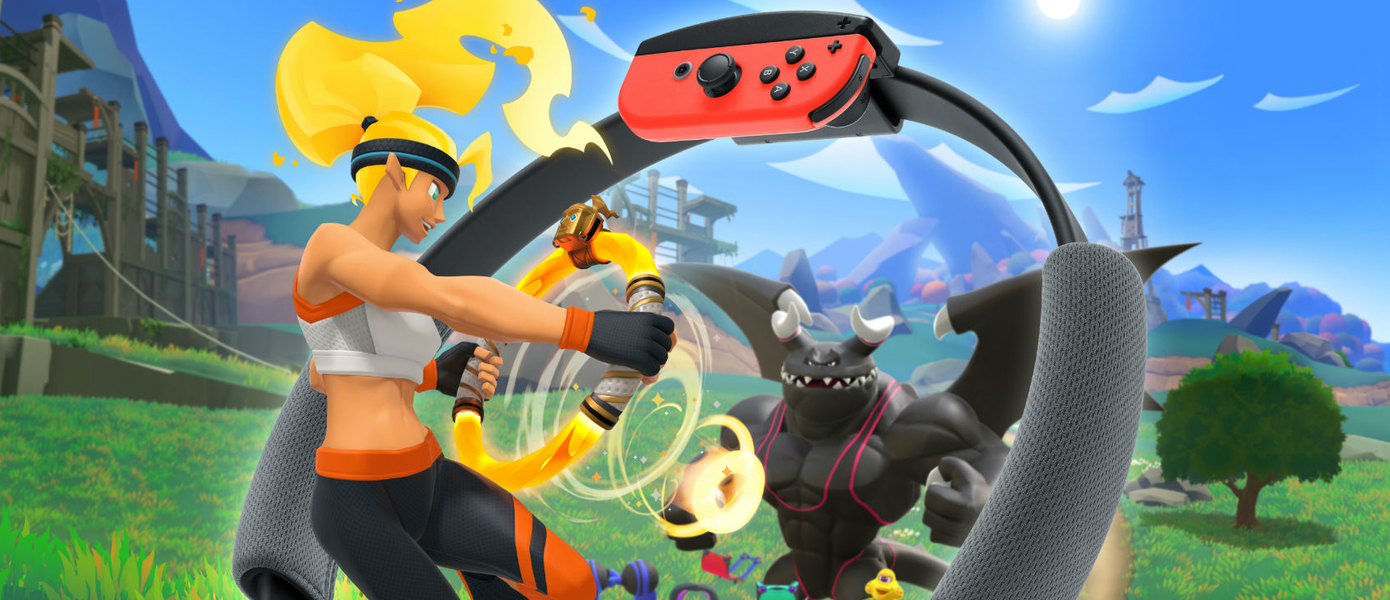

A new clinical trial suggests that Ring Fit Adventure, Nintendo's fitness-focused game for the Nintendo Switch, can produce measurable benefits for people with mild depressive symptoms.
Published by JMIR Publications and led by researchers Kexin Huang and Lei Song from Jilin University, the study evaluated whether a commercially available exergame could reduce depressive symptoms and improve sleep and anxiety outcomes in a real-world cohort.
The randomized trial enrolled 84 participants diagnosed with subthreshold depression.
Half of the group was assigned to play Ring Fit Adventure for sessions lasting 50–60 minutes, two to three times per week, over an eight-week period.
The comparison group continued with their usual routines.
Outcomes were assessed through a 16-week follow-up, and the researchers reported that participants in the Ring Fit Adventure cohort experienced significantly greater reductions in depressive symptoms, along with improvements in sleep quality and anxiety measures.
The study team described the results as evidence that existing exergaming platforms may serve as an accessible and engaging option for early mental health support outside traditional clinical settings.
They also recommended that future research include extended follow-up periods to determine whether observed benefits are sustained over time.
Qualitative feedback collected during the trial highlighted specific game features that helped sustain engagement.
Players said they were motivated by the title’s role-playing elements, including progress indicators, visible enemy health gauges, and a steady sense of leveling up.
Participants also cited the game’s narrative, sound cues, character customization, and branching paths as factors that made exercise consistent and enjoyable.
The authors acknowledged limitations that affect generalizability.
The sample consisted exclusively of university students who took part under the supervision of the research team, and play sessions were conducted in a laboratory environment rather than typical home settings.
These factors could influence adherence and outcomes compared with unsupervised, at-home play.
Ring Fit Adventure launched exclusively on the Nintendo Switch in 2019 and shipped with the Ring-Con accessory, a resistance-based controller that integrates motion and strength exercises into gameplay.
The title has been commercially successful and remains a high-profile example of exergaming; Nintendo Wire gave it a near-perfect review score.
Ring Fit Adventure’s Ring-Con has also appeared as a crossover item in Animal Crossing: New Horizons, and Nintendo has continued to reference the franchise in organized support initiatives.
While the Jilin University trial is a notable contribution to research on exercise video games and mental health, the authors and independent observers agree that larger studies with diverse populations and longer-term monitoring are needed to confirm durability and broader applicability of the benefits documented in this study.
Published by JMIR Publications and led by researchers Kexin Huang and Lei Song from Jilin University, the study evaluated whether a commercially available exergame could reduce depressive symptoms and improve sleep and anxiety outcomes in a real-world cohort.
The randomized trial enrolled 84 participants diagnosed with subthreshold depression.
Half of the group was assigned to play Ring Fit Adventure for sessions lasting 50–60 minutes, two to three times per week, over an eight-week period.
The comparison group continued with their usual routines.
Outcomes were assessed through a 16-week follow-up, and the researchers reported that participants in the Ring Fit Adventure cohort experienced significantly greater reductions in depressive symptoms, along with improvements in sleep quality and anxiety measures.
The study team described the results as evidence that existing exergaming platforms may serve as an accessible and engaging option for early mental health support outside traditional clinical settings.
They also recommended that future research include extended follow-up periods to determine whether observed benefits are sustained over time.
Qualitative feedback collected during the trial highlighted specific game features that helped sustain engagement.
Players said they were motivated by the title’s role-playing elements, including progress indicators, visible enemy health gauges, and a steady sense of leveling up.
Participants also cited the game’s narrative, sound cues, character customization, and branching paths as factors that made exercise consistent and enjoyable.
The authors acknowledged limitations that affect generalizability.
The sample consisted exclusively of university students who took part under the supervision of the research team, and play sessions were conducted in a laboratory environment rather than typical home settings.
These factors could influence adherence and outcomes compared with unsupervised, at-home play.
Ring Fit Adventure launched exclusively on the Nintendo Switch in 2019 and shipped with the Ring-Con accessory, a resistance-based controller that integrates motion and strength exercises into gameplay.
The title has been commercially successful and remains a high-profile example of exergaming; Nintendo Wire gave it a near-perfect review score.
Ring Fit Adventure’s Ring-Con has also appeared as a crossover item in Animal Crossing: New Horizons, and Nintendo has continued to reference the franchise in organized support initiatives.
While the Jilin University trial is a notable contribution to research on exercise video games and mental health, the authors and independent observers agree that larger studies with diverse populations and longer-term monitoring are needed to confirm durability and broader applicability of the benefits documented in this study.