
Xenoblade Chronicles X is Monolith Soft’s large-scale JRPG built exclusively for the Wii U and released in 2015.
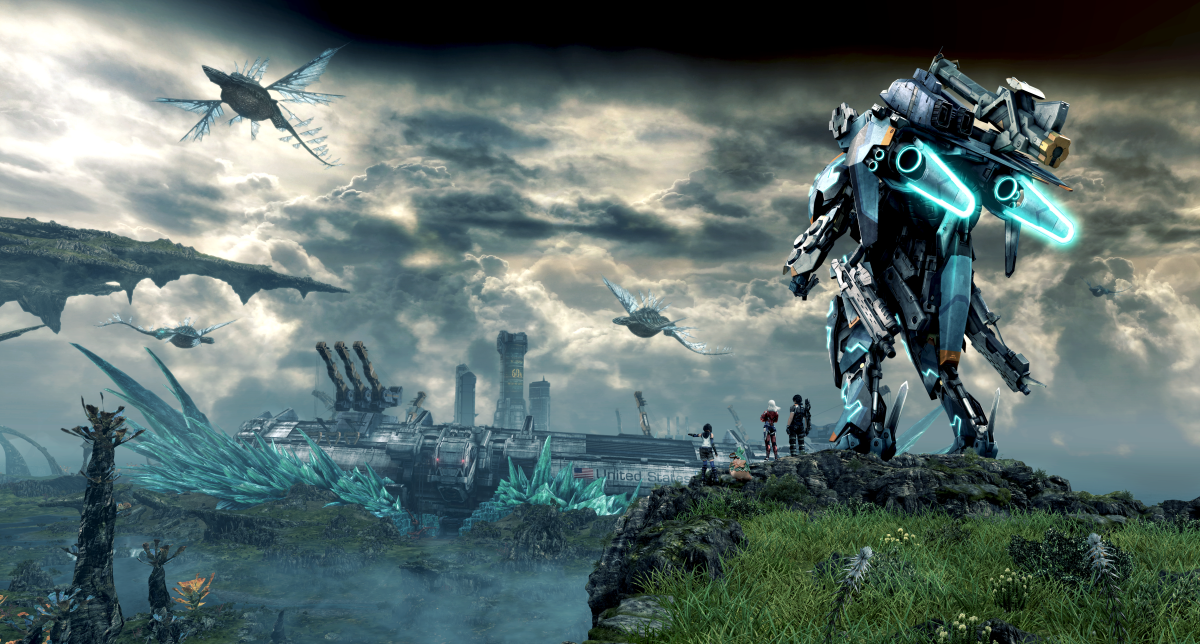
The game follows the remnants of humanity on Planet Mira after the White Whale crash and expands the franchise’s scope from the personal, character-driven narrative of the original Xenoblade Chronicles on Wii to a broader, open-world survival story focused on New Los Angeles and multiple continents.
Monolith Soft’s design choices make clear one central truth: Xenoblade Chronicles X is not a direct sequel in tone or structure to the original.
It is a deliberately different experience, trading a tightly knit core cast for a customizable player protagonist and a sprawling world to explore.
Instead of a voiced, pre-established lead, players create a silent protagonist with a limited set of customization options; the player character communicates through gestures while other party members provide verbal context.
The main campaign is presented in chapter-based missions, and much of the game’s narrative progression is signposted through mission updates and objectives rather than continuous storytelling.
Side content receives more cinematic attention: many side quests are bookended by short cut-scenes that deepen the city and settlement inhabitants of New Los Angeles and make optional missions feel meaningful.
Gameplay pivots on an expansive class system and the inclusion of Skells — rideable mechs that become available after Chapter 6 — which introduce a second layer of combat and exploration.
Classes grant active arts tied to specific weapons and passive skills unlocked through leveling; players must allocate a shared Battle Point pool to upgrade those abilities.
FrontierNet serves as the game’s interactive map and fast-travel backbone, and probe installation expands resources and travel convenience across Mira.
There are practical design constraints worth noting: Xenoblade Chronicles X uses a single save file, meaning players cannot create multiple independent progressions.
Fuel management and Miranium costs also limit prolonged Skell use, which affects how frequently players can take to the skies.
Objective markers generally guide exploration across Mira’s vast continents, though some quests can require extensive searching when target spawns are scarce or small.
Ultimately, Xenoblade Chronicles X is an ambitious entry in the franchise: a game defined by scale, a deep class-driven combat system, and the introduction of Skells to Monolith Soft’s active combat.
For players seeking a long-form open-world JRPG on Wii U, it offers significant rewards, even as its narrative presentation and some design choices temper the emotional immediacy found in the series’ first installment.
The game follows the remnants of humanity on Planet Mira after the White Whale crash and expands the franchise’s scope from the personal, character-driven narrative of the original Xenoblade Chronicles on Wii to a broader, open-world survival story focused on New Los Angeles and multiple continents.
Monolith Soft’s design choices make clear one central truth: Xenoblade Chronicles X is not a direct sequel in tone or structure to the original.
It is a deliberately different experience, trading a tightly knit core cast for a customizable player protagonist and a sprawling world to explore.
Instead of a voiced, pre-established lead, players create a silent protagonist with a limited set of customization options; the player character communicates through gestures while other party members provide verbal context.
The main campaign is presented in chapter-based missions, and much of the game’s narrative progression is signposted through mission updates and objectives rather than continuous storytelling.
Side content receives more cinematic attention: many side quests are bookended by short cut-scenes that deepen the city and settlement inhabitants of New Los Angeles and make optional missions feel meaningful.
Gameplay pivots on an expansive class system and the inclusion of Skells — rideable mechs that become available after Chapter 6 — which introduce a second layer of combat and exploration.
Classes grant active arts tied to specific weapons and passive skills unlocked through leveling; players must allocate a shared Battle Point pool to upgrade those abilities.
FrontierNet serves as the game’s interactive map and fast-travel backbone, and probe installation expands resources and travel convenience across Mira.
There are practical design constraints worth noting: Xenoblade Chronicles X uses a single save file, meaning players cannot create multiple independent progressions.
Fuel management and Miranium costs also limit prolonged Skell use, which affects how frequently players can take to the skies.
Objective markers generally guide exploration across Mira’s vast continents, though some quests can require extensive searching when target spawns are scarce or small.
Ultimately, Xenoblade Chronicles X is an ambitious entry in the franchise: a game defined by scale, a deep class-driven combat system, and the introduction of Skells to Monolith Soft’s active combat.
For players seeking a long-form open-world JRPG on Wii U, it offers significant rewards, even as its narrative presentation and some design choices temper the emotional immediacy found in the series’ first installment.