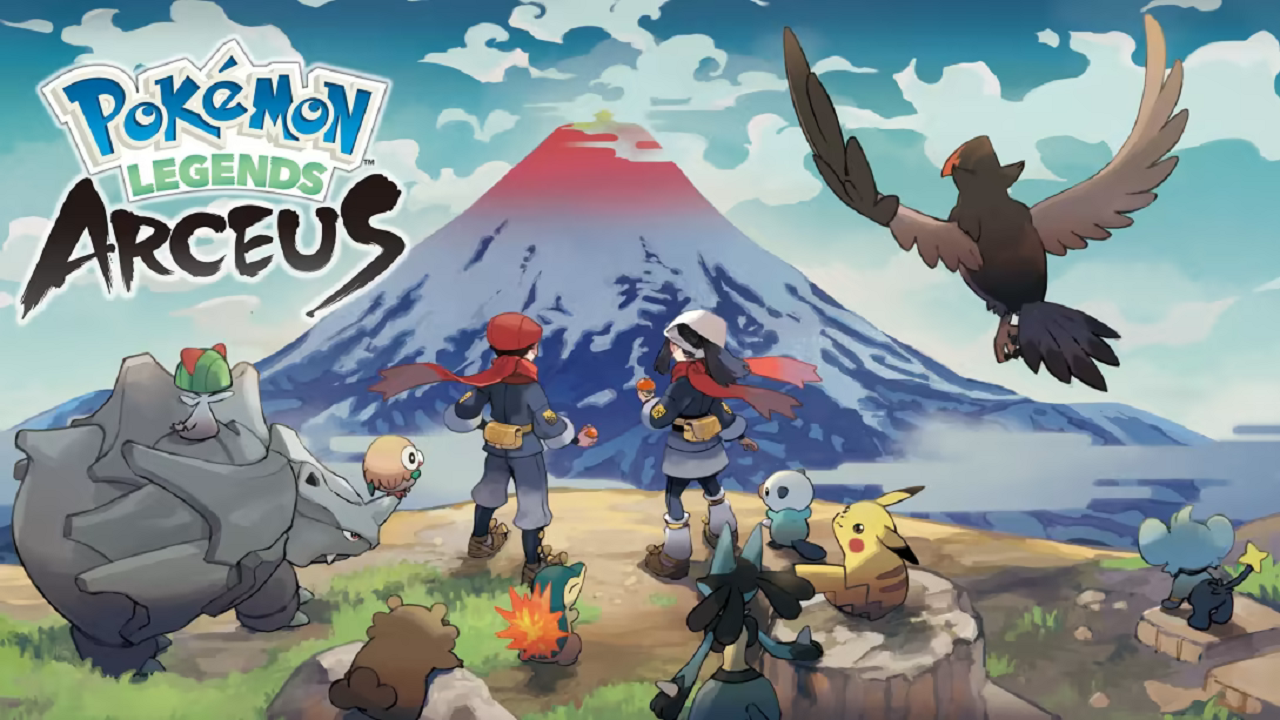
Pokémon Legends: Arceus – released worldwide for the Nintendo Switch on January 28, 2022 – marks a transformative moment for both Game Freak and Nintendo’s beloved franchise.
Departing from the traditional path that has defined Pokémon since 1996, this game sets a new course with inventive mechanics and a compelling design that has resonated strongly with both longtime fans and newcomers.
Game Freak, renowned for bringing numerous entries of the Pokémon series to life, takes players to the ancient Hisui region, known in modern times as Sinnoh.
Unusually for the franchise, the game starts with the protagonist being transported back in time by Arceus, where Pokémon and humans have yet to build the cooperative relationships fans have come to expect.
In this untamed era, Pokémon may attack the player directly if provoked, marking a striking shift in player immersion and game challenge.
Rather than following the classic “earn eight badges and challenge the Elite Four” formula, Pokémon Legends: Arceus places the emphasis squarely on building the region’s very first Pokédex.
The core gameplay centers around exploration, discovery, and research.
Players must observe Pokémon behaviors, complete detailed tasks for each Pokémon entry—such as seeing them use certain moves, defeating them, or capturing multiples—to fully complete their Pokédex data.
This mechanic adds a rewarding depth and a more substantial sense of accomplishment.
In a departure that mirrors open-world titles, players roam freely across expansive zones, encountering spontaneous Pokémon spawns and collecting resources.
The game introduces the formidable Alpha Pokémon, larger and higher-leveled variants that offer a real challenge.
As one player recounted, encountering an Alpha at level 45 with a much weaker team required a careful strategy reminiscent of facing powerful enemies like Lynels in The Legend of Zelda: Breath of the Wild.
These tougher encounters are optional but provide a welcomed layer of difficulty that keeps gameplay fresh and engaging.
The design also embraces new systems such as crafting, allowing players to create their own Poké Balls and helpful items from materials found throughout Hisui.
This addition addresses the need for convenience and exploration: instead of frequent trips to Poké Marts, players craft supplies on the go, maintaining momentum and immersion in the vast wilds.
However, not all reviews have been glowing.
While fans and critics praised the inventive gameplay and greater challenge, some noted that the graphics were not up to par with contemporary Nintendo Switch titles.
Occasional visual glitches—such as Pokémon popping in and out of existence or stuttered animations—were observed, especially for flying species and during transitions between environments.
Another common critique involved the abundance of unskippable cutscenes, which slowed the pace and sometimes broke the sense of exploration for series veterans eager to dive right into the gameplay.
Still, the innovative direction is widely celebrated.
Game Freak’s decision to revisit and reimagine the ‘Wild Area’ from Pokémon Sword and Pokémon Shield as a core element in Legends: Arceus has expanded the possibilities of what a Pokémon game can be.
The dynamic weather, time-of-day mechanics, and the freedom to sneak up and catch Pokémon without battling have reinvigorated the series’ foundational catch-and-collect appeal.
Pokémon Legends: Arceus stands out as a high point for the franchise’s modern era, earning excellent reviews and becoming one of the best-selling titles on the Nintendo Switch, with over 14.83 million copies sold as of March 2023.
The game’s commitment to exploration, player agency, and mechanical experimentation signals a bright future for both Game Freak and the future of Pokémon on Nintendo hardware.
In summary, while some aspects such as the visuals and story pacing leave room for improvement, Pokémon Legends: Arceus demonstrates that bold changes can yield remarkable results for one of gaming’s most storied franchises.
The Hisui Region invites trainers not just to battle, but to explore, study, and rediscover what made Pokémon magical in the first place.
As the series continues to evolve, Legends: Arceus serves as a beacon for innovation on the Nintendo Switch and beyond.
Departing from the traditional path that has defined Pokémon since 1996, this game sets a new course with inventive mechanics and a compelling design that has resonated strongly with both longtime fans and newcomers.
Game Freak, renowned for bringing numerous entries of the Pokémon series to life, takes players to the ancient Hisui region, known in modern times as Sinnoh.
Unusually for the franchise, the game starts with the protagonist being transported back in time by Arceus, where Pokémon and humans have yet to build the cooperative relationships fans have come to expect.
In this untamed era, Pokémon may attack the player directly if provoked, marking a striking shift in player immersion and game challenge.
Rather than following the classic “earn eight badges and challenge the Elite Four” formula, Pokémon Legends: Arceus places the emphasis squarely on building the region’s very first Pokédex.
The core gameplay centers around exploration, discovery, and research.
Players must observe Pokémon behaviors, complete detailed tasks for each Pokémon entry—such as seeing them use certain moves, defeating them, or capturing multiples—to fully complete their Pokédex data.
This mechanic adds a rewarding depth and a more substantial sense of accomplishment.
In a departure that mirrors open-world titles, players roam freely across expansive zones, encountering spontaneous Pokémon spawns and collecting resources.
The game introduces the formidable Alpha Pokémon, larger and higher-leveled variants that offer a real challenge.
As one player recounted, encountering an Alpha at level 45 with a much weaker team required a careful strategy reminiscent of facing powerful enemies like Lynels in The Legend of Zelda: Breath of the Wild.
These tougher encounters are optional but provide a welcomed layer of difficulty that keeps gameplay fresh and engaging.
The design also embraces new systems such as crafting, allowing players to create their own Poké Balls and helpful items from materials found throughout Hisui.
This addition addresses the need for convenience and exploration: instead of frequent trips to Poké Marts, players craft supplies on the go, maintaining momentum and immersion in the vast wilds.
However, not all reviews have been glowing.
While fans and critics praised the inventive gameplay and greater challenge, some noted that the graphics were not up to par with contemporary Nintendo Switch titles.
Occasional visual glitches—such as Pokémon popping in and out of existence or stuttered animations—were observed, especially for flying species and during transitions between environments.
Another common critique involved the abundance of unskippable cutscenes, which slowed the pace and sometimes broke the sense of exploration for series veterans eager to dive right into the gameplay.
Still, the innovative direction is widely celebrated.
Game Freak’s decision to revisit and reimagine the ‘Wild Area’ from Pokémon Sword and Pokémon Shield as a core element in Legends: Arceus has expanded the possibilities of what a Pokémon game can be.
The dynamic weather, time-of-day mechanics, and the freedom to sneak up and catch Pokémon without battling have reinvigorated the series’ foundational catch-and-collect appeal.
Pokémon Legends: Arceus stands out as a high point for the franchise’s modern era, earning excellent reviews and becoming one of the best-selling titles on the Nintendo Switch, with over 14.83 million copies sold as of March 2023.
The game’s commitment to exploration, player agency, and mechanical experimentation signals a bright future for both Game Freak and the future of Pokémon on Nintendo hardware.
In summary, while some aspects such as the visuals and story pacing leave room for improvement, Pokémon Legends: Arceus demonstrates that bold changes can yield remarkable results for one of gaming’s most storied franchises.
The Hisui Region invites trainers not just to battle, but to explore, study, and rediscover what made Pokémon magical in the first place.
As the series continues to evolve, Legends: Arceus serves as a beacon for innovation on the Nintendo Switch and beyond.