Intro
Lumen Tale: Memories of Trey is a 2D role-playing experience on Nintendo Switch that casts players as Trey, an amnesiac protagonist navigating the world of Talea.
The game centers on exploration, turn-based battles, and a creature-capture loop: players use orbs called Bilia to capture mystical creatures known as Animon and deploy them in combat.
This review draws on in-game systems, presentation, and design to assess where the title excels and where it needs refinement.
Overview and presentation
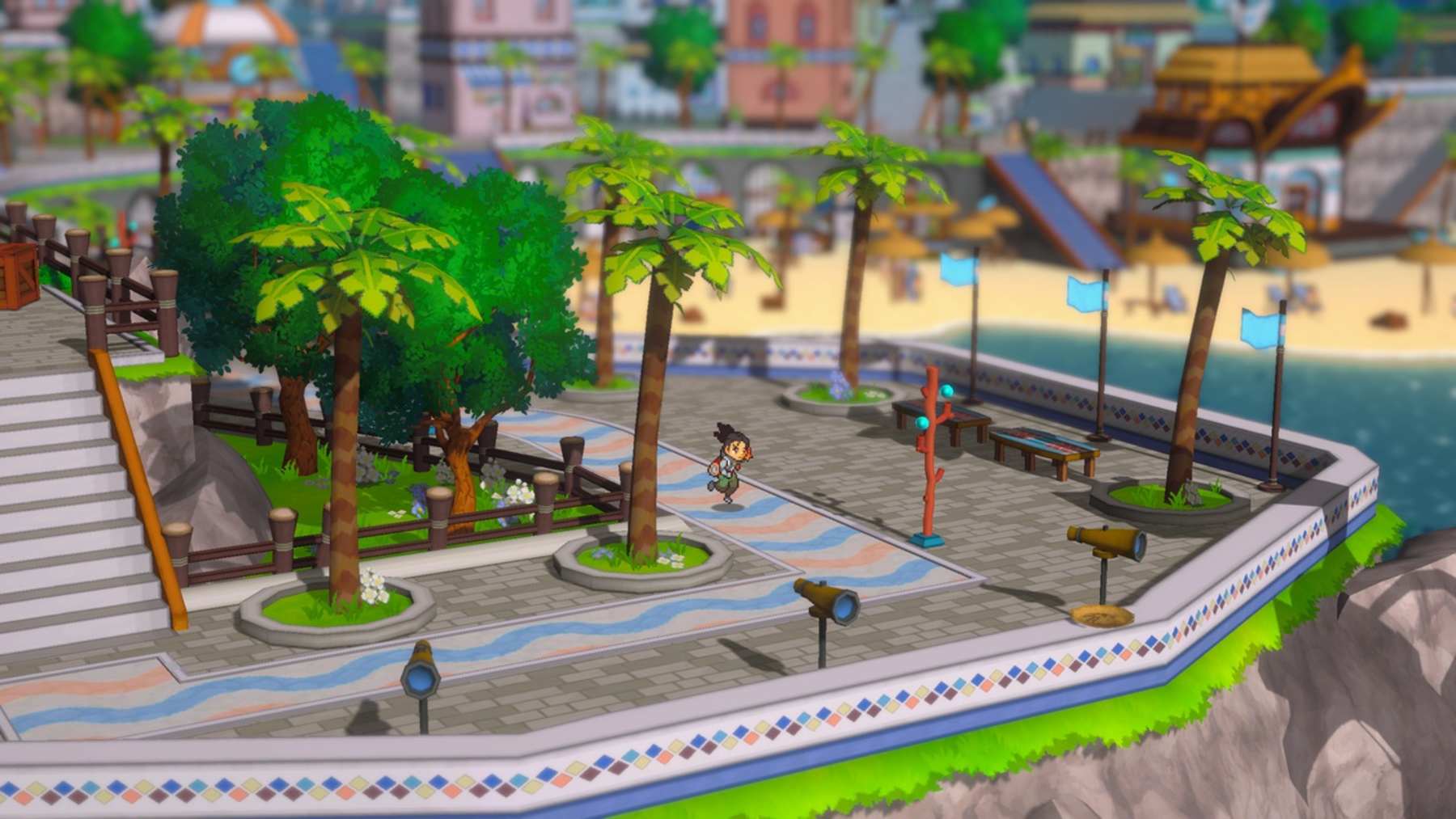
Visually, Lumen Tale delivers a polished high-resolution 2D aesthetic.
Environments in Talea employ strong use of color, perspective, and level design that support exploration.
The sound design is mixed: combat tracks include a harpsichord element that reinforces tension in encounters, while overworld music is intentionally subdued, sometimes to the point of being too calming for active exploration.
Design and narrative
The story leverages a familiar amnesia trope to motivate exploration and discovery.
Supporting characters offer varying degrees of engagement, from key narrative beats to lighter, local dialogue.
The structure opens new areas as players complete sections; once unlocked, regions are largely free to roam.
Combat, capture, and controls
Battles are a standard turn-based system with an ordered action list for all Animon on the field.
Players can use attacks, special moves, defensive buffs, and consumables.
A notable design choice is that the order of turns draws from a single list of units, which produces a randomized turn sequence rather than strict alternating team turns.
The title explicitly nods to the Pokémon franchise in its capture-and-battle core loop, using Bilia to secure Animon for use in future encounters.
However, several mechanics limit the capture experience: the capture minigame requires precise timing and variable button inputs that can change between attempts, and the sequence can feel inconsistent and frustrating in practice.
Control schemes introduce additional friction.
The player’s weapon behaves like a yo-yo and requires holding the R button, aiming with the right stick, then releasing R to fire.
The multi-step input proved unintuitive and led to missed shots during testing; a simpler fire mapping could improve responsiveness.
Systems and quality-of-life
Item pickup is straightforward—collectible items appear as small sparkling points in the world.
Rest points act as save and crafting sites but lack clear tutorials, making the creation system harder to approach for new players.
Conclusion
Lumen Tale: Memories of Trey on Nintendo Switch shows strong visual design, a competent turn-based framework, and a compelling exploration loop.
Its capture mechanics and certain control decisions hold the experience back from greatness.
The game earns a solid 7/10 for delivering enjoyable moments and clear potential, while highlighting areas where iterative improvements would raise it into the top tier of creature-collection RPGs.
Lumen Tale: Memories of Trey is a 2D role-playing experience on Nintendo Switch that casts players as Trey, an amnesiac protagonist navigating the world of Talea.
The game centers on exploration, turn-based battles, and a creature-capture loop: players use orbs called Bilia to capture mystical creatures known as Animon and deploy them in combat.
This review draws on in-game systems, presentation, and design to assess where the title excels and where it needs refinement.
Overview and presentation
Visually, Lumen Tale delivers a polished high-resolution 2D aesthetic.
Environments in Talea employ strong use of color, perspective, and level design that support exploration.
The sound design is mixed: combat tracks include a harpsichord element that reinforces tension in encounters, while overworld music is intentionally subdued, sometimes to the point of being too calming for active exploration.
Design and narrative
The story leverages a familiar amnesia trope to motivate exploration and discovery.
Supporting characters offer varying degrees of engagement, from key narrative beats to lighter, local dialogue.
The structure opens new areas as players complete sections; once unlocked, regions are largely free to roam.
Combat, capture, and controls
Battles are a standard turn-based system with an ordered action list for all Animon on the field.
Players can use attacks, special moves, defensive buffs, and consumables.
A notable design choice is that the order of turns draws from a single list of units, which produces a randomized turn sequence rather than strict alternating team turns.
The title explicitly nods to the Pokémon franchise in its capture-and-battle core loop, using Bilia to secure Animon for use in future encounters.
However, several mechanics limit the capture experience: the capture minigame requires precise timing and variable button inputs that can change between attempts, and the sequence can feel inconsistent and frustrating in practice.
Control schemes introduce additional friction.
The player’s weapon behaves like a yo-yo and requires holding the R button, aiming with the right stick, then releasing R to fire.
The multi-step input proved unintuitive and led to missed shots during testing; a simpler fire mapping could improve responsiveness.
Systems and quality-of-life
Item pickup is straightforward—collectible items appear as small sparkling points in the world.
Rest points act as save and crafting sites but lack clear tutorials, making the creation system harder to approach for new players.
Conclusion
Lumen Tale: Memories of Trey on Nintendo Switch shows strong visual design, a competent turn-based framework, and a compelling exploration loop.
Its capture mechanics and certain control decisions hold the experience back from greatness.
The game earns a solid 7/10 for delivering enjoyable moments and clear potential, while highlighting areas where iterative improvements would raise it into the top tier of creature-collection RPGs.