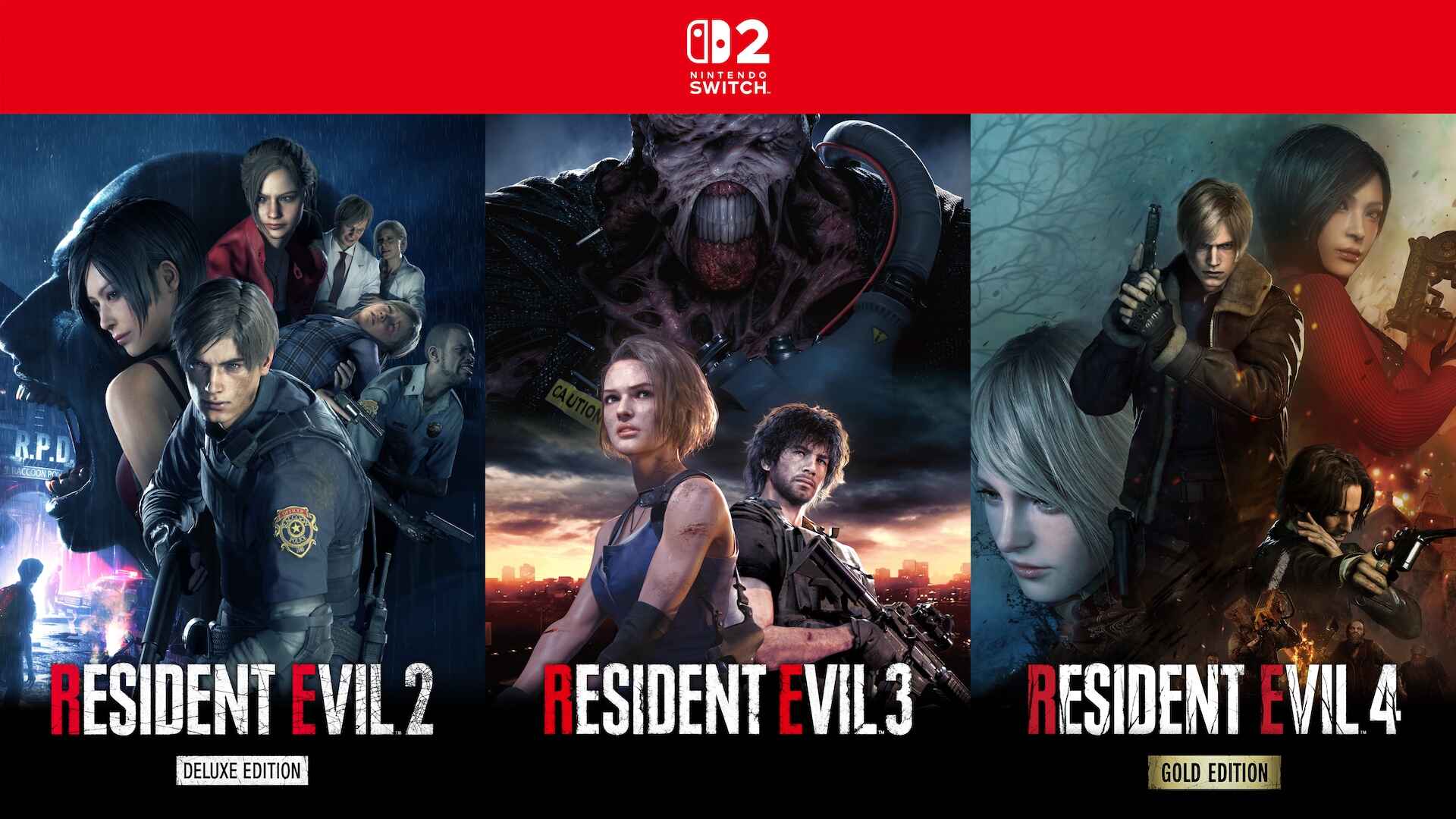
Resident Evil Requiem has rapidly become one of the most anticipated releases to showcase the capabilities of the Nintendo Switch 2.
Developed by Capcom, the game arrives on Nintendo’s next-generation platform on February 27, and industry experts—including the renowned analysis team Digital Foundry—have turned their attention to its technical performance.
The results reveal both the promise and the challenges of running a graphics-intensive game like Resident Evil Requiem on Nintendo's latest hardware.
Digital Foundry, recognized for their meticulous technical reviews, recently published an in-depth analysis of the Nintendo Switch 2 version of Resident Evil Requiem.
Drawing comparisons to the PlayStation 5 (PS5) version, the report notes that while the Switch 2 manages to achieve a visual presentation that is strikingly similar to its current-gen console counterpart, there are several notable differences stemming from hardware limitations and technical strategies employed by Capcom.
Notably, Resident Evil Requiem on Nintendo Switch 2 does not feature ray tracing and exhibits differences in hair rendering, as well as visibly reduced texture quality and less detailed character models.
These compromises, however, are described as subtle and not immediately obvious during gameplay.
Lighting effects have also been adjusted, with the Switch 2 utilizing lower-resolution volumetric lighting to balance performance and visuals.
One of the most significant technical achievements is the integration of NVIDIA’s Deep Learning Super Sampling (DLSS) technology.
The Switch 2 renders the game internally at a 540p resolution when docked and dynamically upscales it to a probable 1080p output, thanks to DLSS.
This approach allows for sharper visuals, particularly on larger screens, even though the internal resolution is notably lower than the PS5’s native 1080p.
In handheld mode, internal resolution drops to 360p, but handheld players still benefit from an upscaled image, and the user interface is presented at 1080p on the Switch 2 versus 4K on the PS5.
Performance-wise, Resident Evil Requiem aims for a 60 frames per second (FPS) target on Nintendo Switch 2.
Digital Foundry’s analysis confirms that this target is achieved in less demanding, smaller-scale sections of the game.
However, during more graphically intense moments, the frame rate dips into the 40-50 FPS range, dropping as low as 30 FPS in the most challenging sequences while docked.
In handheld mode, performance can fall to a minimum of 25 FPS under the heaviest load.
On the positive side, loading times are reported to be fast, ensuring a smoother gameplay experience overall.
Interestingly, the image quality on the Nintendo Switch 2 version of Resident Evil Requiem is described as superior to that of Xbox Series S, though with some trade-offs in performance.
Capcom’s balanced approach prioritizes visual fidelity while maintaining reasonable frame rates, showcasing the potential of the Nintendo Switch 2 hardware when supported by advanced upscaling technologies like DLSS.
Resident Evil Requiem’s arrival on the Nintendo Switch 2 via the eShop enhances the platform’s growing reputation for receiving technically ambitious third-party titles.
For those seeking more detailed frame rate and resolution breakdowns, Digital Foundry’s full technical report provides an excellent resource.
As Capcom continues to optimize its games for Nintendo hardware, Resident Evil Requiem stands as a testament to the significant advances made in how leading franchises can be experienced on the go.
Developed by Capcom, the game arrives on Nintendo’s next-generation platform on February 27, and industry experts—including the renowned analysis team Digital Foundry—have turned their attention to its technical performance.
The results reveal both the promise and the challenges of running a graphics-intensive game like Resident Evil Requiem on Nintendo's latest hardware.
Digital Foundry, recognized for their meticulous technical reviews, recently published an in-depth analysis of the Nintendo Switch 2 version of Resident Evil Requiem.
Drawing comparisons to the PlayStation 5 (PS5) version, the report notes that while the Switch 2 manages to achieve a visual presentation that is strikingly similar to its current-gen console counterpart, there are several notable differences stemming from hardware limitations and technical strategies employed by Capcom.
Notably, Resident Evil Requiem on Nintendo Switch 2 does not feature ray tracing and exhibits differences in hair rendering, as well as visibly reduced texture quality and less detailed character models.
These compromises, however, are described as subtle and not immediately obvious during gameplay.
Lighting effects have also been adjusted, with the Switch 2 utilizing lower-resolution volumetric lighting to balance performance and visuals.
One of the most significant technical achievements is the integration of NVIDIA’s Deep Learning Super Sampling (DLSS) technology.
The Switch 2 renders the game internally at a 540p resolution when docked and dynamically upscales it to a probable 1080p output, thanks to DLSS.
This approach allows for sharper visuals, particularly on larger screens, even though the internal resolution is notably lower than the PS5’s native 1080p.
In handheld mode, internal resolution drops to 360p, but handheld players still benefit from an upscaled image, and the user interface is presented at 1080p on the Switch 2 versus 4K on the PS5.
Performance-wise, Resident Evil Requiem aims for a 60 frames per second (FPS) target on Nintendo Switch 2.
Digital Foundry’s analysis confirms that this target is achieved in less demanding, smaller-scale sections of the game.
However, during more graphically intense moments, the frame rate dips into the 40-50 FPS range, dropping as low as 30 FPS in the most challenging sequences while docked.
In handheld mode, performance can fall to a minimum of 25 FPS under the heaviest load.
On the positive side, loading times are reported to be fast, ensuring a smoother gameplay experience overall.
Interestingly, the image quality on the Nintendo Switch 2 version of Resident Evil Requiem is described as superior to that of Xbox Series S, though with some trade-offs in performance.
Capcom’s balanced approach prioritizes visual fidelity while maintaining reasonable frame rates, showcasing the potential of the Nintendo Switch 2 hardware when supported by advanced upscaling technologies like DLSS.
Resident Evil Requiem’s arrival on the Nintendo Switch 2 via the eShop enhances the platform’s growing reputation for receiving technically ambitious third-party titles.
For those seeking more detailed frame rate and resolution breakdowns, Digital Foundry’s full technical report provides an excellent resource.
As Capcom continues to optimize its games for Nintendo hardware, Resident Evil Requiem stands as a testament to the significant advances made in how leading franchises can be experienced on the go.