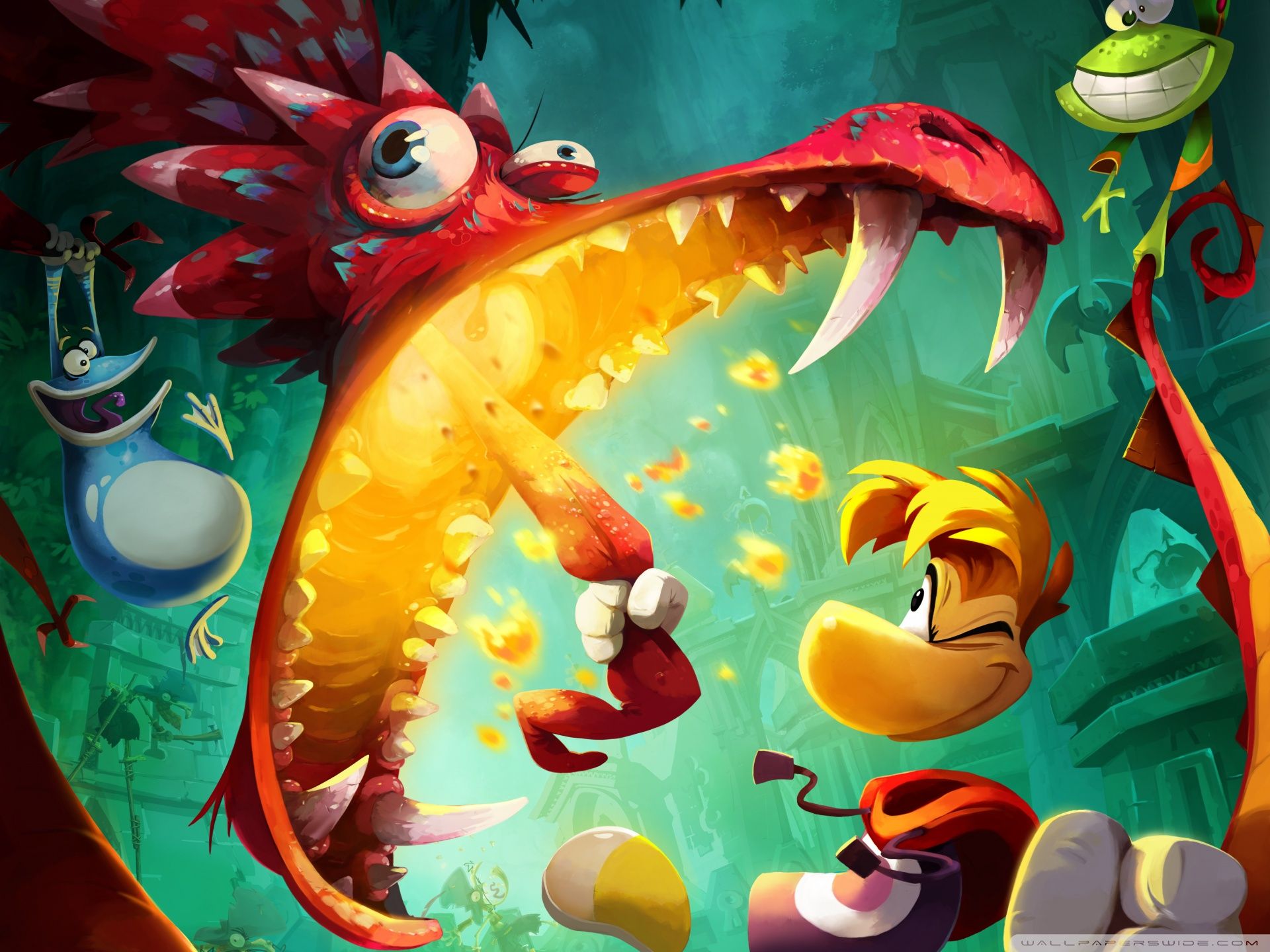


Rayman Legends Retold lands on Nintendo Switch 2 on October 1, 2026, marking Ubisoft's return to one of its most celebrated platformers.
Developed jointly by Ubisoft Milan and Ubisoft Montpellier, the project reimagines the 2013 original Rayman Legends with a full 3D/2.5D graphical overhaul, new levels and modes, and technical upgrades tailored for modern hardware.
Why remake Legends in 3D
Production director Alessandro Arndt Mucchi explained that the team chose Rayman Legends as a launch point for the series' future because of its robust gameplay and rich but fragmented lore.
The remake is intended to unify that storytelling and present a clearer vision of Rayman's world for both longtime fans and newcomers.
Realization and animation director Marco Renso added that moving to 3D creates opportunities to immerse players in the Glade of Dreams, bend perspectives, and make cutscenes and characters feel more alive.
Project origins and development timeline
The effort began in late 2023 at Ubisoft Montpellier, with Ubisoft Milan joining in early 2024.
The collaboration grew out of shared design goals between the two studios and matured into the current co-development arrangement.
Michel Ancel, Rayman's original co-creator, was consulted at the outset but is not part of the ongoing creative process, which is managed entirely by Milan and Montpellier.
Engine, visuals and technical targets
Rayman Legends Retold uses a hybrid technology approach, combining the Snowdrop engine for new visual features with the UbiArt Framework that powered the original game, a choice made to preserve the franchise's signature look while advancing audio and graphics.
The team is leveraging Snowdrop features such as ray tracing and volumetric clouds and is targeting 60 frames per second on Nintendo Switch 2, while maintaining content parity across platforms.
Translating 2D art to 3D
Developers outlined challenges in turning expressive 2D drawings into three-dimensional assets.
Characters that relied on 2D tricks required careful redesign to preserve extreme poses and readability from multiple angles.
The 3D conversion also enabled new camera work, close-ups and nuanced animations that were not possible in the original 2D presentation.
New content and features
The remake adds fresh content including dragon rides that connect realms, reworked hub areas, new musical maps, and a new realm with an additional ending.
Multiplayer mode Kung Foot returns as Kung Foot Evo with new animations, arena changes and gameplay additions that the team says expand the original arcade-style experience.
The developers also confirmed recent hands-on impressions and gameplay footage are available from preview coverage.
Positioning Rayman for the future
Ubisoft describes Rayman Legends Retold as a new beginning for the franchise.
While the studio is not announcing future Rayman projects, the remake is explicitly positioned as the foundation for what comes next.
Developed jointly by Ubisoft Milan and Ubisoft Montpellier, the project reimagines the 2013 original Rayman Legends with a full 3D/2.5D graphical overhaul, new levels and modes, and technical upgrades tailored for modern hardware.
Why remake Legends in 3D
Production director Alessandro Arndt Mucchi explained that the team chose Rayman Legends as a launch point for the series' future because of its robust gameplay and rich but fragmented lore.
The remake is intended to unify that storytelling and present a clearer vision of Rayman's world for both longtime fans and newcomers.
Realization and animation director Marco Renso added that moving to 3D creates opportunities to immerse players in the Glade of Dreams, bend perspectives, and make cutscenes and characters feel more alive.
Project origins and development timeline
The effort began in late 2023 at Ubisoft Montpellier, with Ubisoft Milan joining in early 2024.
The collaboration grew out of shared design goals between the two studios and matured into the current co-development arrangement.
Michel Ancel, Rayman's original co-creator, was consulted at the outset but is not part of the ongoing creative process, which is managed entirely by Milan and Montpellier.
Engine, visuals and technical targets
Rayman Legends Retold uses a hybrid technology approach, combining the Snowdrop engine for new visual features with the UbiArt Framework that powered the original game, a choice made to preserve the franchise's signature look while advancing audio and graphics.
The team is leveraging Snowdrop features such as ray tracing and volumetric clouds and is targeting 60 frames per second on Nintendo Switch 2, while maintaining content parity across platforms.
Translating 2D art to 3D
Developers outlined challenges in turning expressive 2D drawings into three-dimensional assets.
Characters that relied on 2D tricks required careful redesign to preserve extreme poses and readability from multiple angles.
The 3D conversion also enabled new camera work, close-ups and nuanced animations that were not possible in the original 2D presentation.
New content and features
The remake adds fresh content including dragon rides that connect realms, reworked hub areas, new musical maps, and a new realm with an additional ending.
Multiplayer mode Kung Foot returns as Kung Foot Evo with new animations, arena changes and gameplay additions that the team says expand the original arcade-style experience.
The developers also confirmed recent hands-on impressions and gameplay footage are available from preview coverage.
Positioning Rayman for the future
Ubisoft describes Rayman Legends Retold as a new beginning for the franchise.
While the studio is not announcing future Rayman projects, the remake is explicitly positioned as the foundation for what comes next.