

Tom Tilley repurposes a salad spinner as a Puzzle Bobble (Bust-A-Move) controller — modern DIY meets a 1990s Taito classic
Computer scientist and hardware hobbyist Dr. Tom Tilley has again attracted attention for turning everyday household objects into unconventional game controllers.
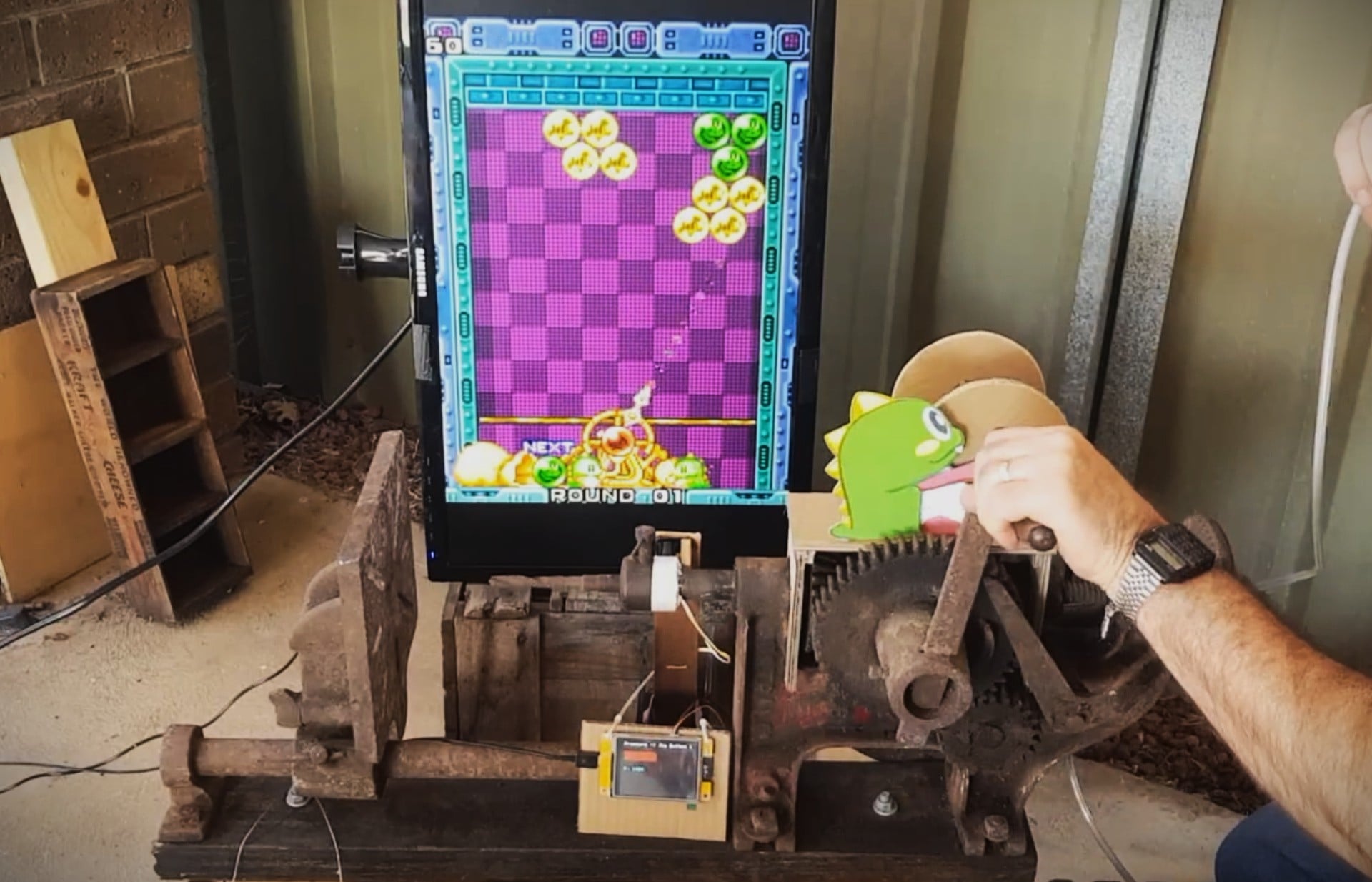
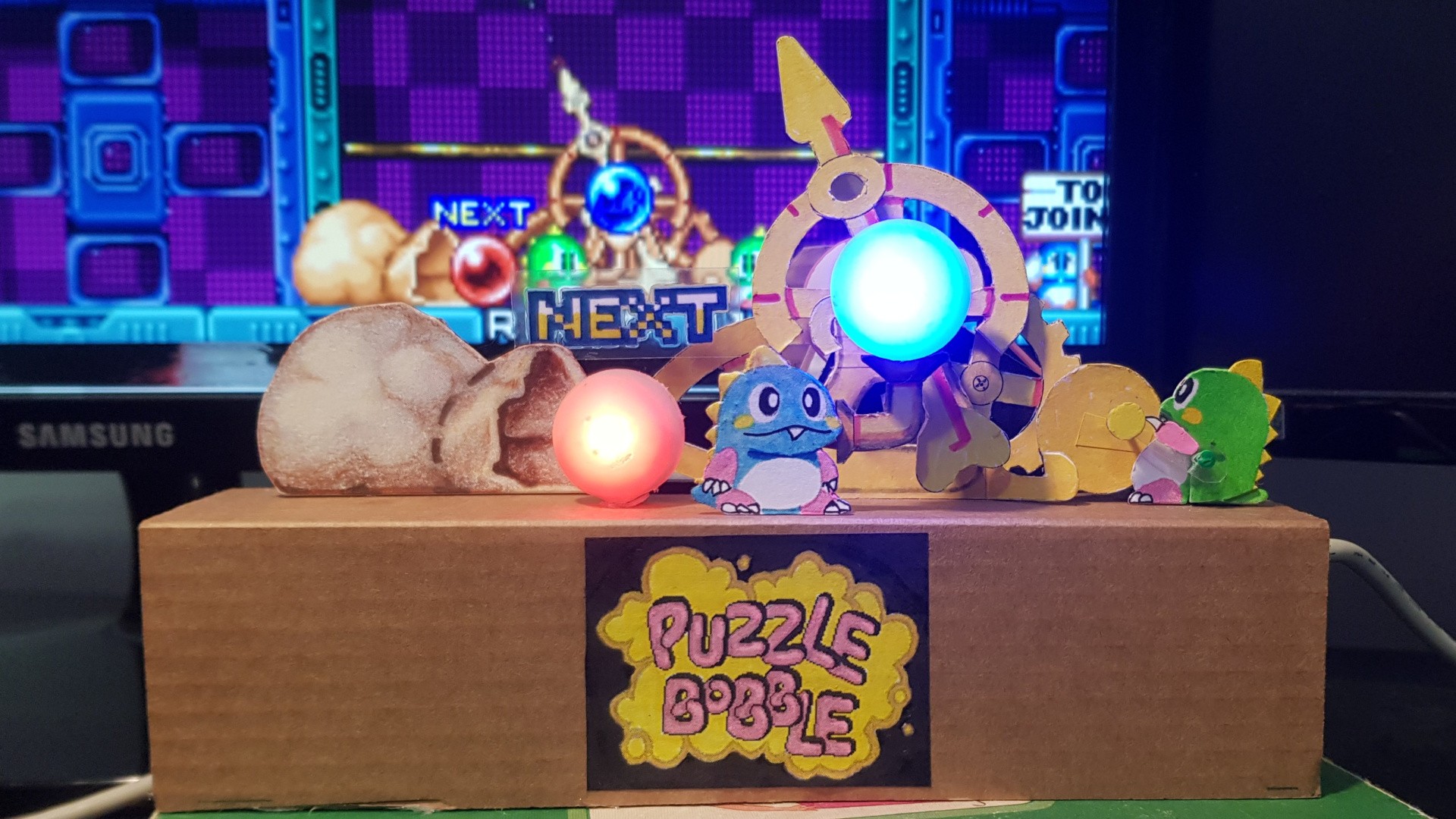
This time Tilley converted a common salad spinner into an operational input device for Taito’s Puzzle Bobble (known as Bust-A-Move in some regions), the arcade puzzle game originally released by Taito in 1994 and since widely ported to home consoles.
Tilley’s build follows earlier projects in which he adapted items such as a deodorant ball and a football to control Katamari Damacy, and other unusual controllers built from coffee grinders and PVC pipe.
For the salad-spinner mod, he mounted an optical mouse and some cardboard inside the spinner and added an external firing button on the lid.
When the spinner is turned, the optical sensor reads the rotation and translates that motion into on-screen aiming; the external button is used to fire bubbles.
Tilley documented the project on social channels and explained that the idea began when his wife suggested discarding the spinner.
Rather than letting it end up in a charity shop, he repurposed the device to test whether it could serve as a controller for Puzzle Bobble.
His explanation on Twitter framed the build as a practical and playful re-use of household hardware rather than a permanent controller replacement.
Puzzle Bobble, developed by Taito and featuring characters derived from Bubble Bobble, has endured through decades of ports and re-releases.
Taito’s library of arcade-era titles has frequently been made available on modern digital storefronts, and many retro puzzle and arcade games continue to find audiences on platforms including Nintendo systems and digital services such as the Nintendo eShop.
Tilley posts videos of his experimental controllers to his YouTube channel and maintains a project website with details of his builds.
For developers, hardware tinkerers and Nintendo-era enthusiasts, his work highlights creative input design and the enduring appeal of classic arcade gameplay like Puzzle Bobble’s simple, physics-driven mechanics.
For ongoing updates and more inventive controller projects, follow Tilley’s social posts and channel where he archives his documented experiments.
Computer scientist and hardware hobbyist Dr. Tom Tilley has again attracted attention for turning everyday household objects into unconventional game controllers.
This time Tilley converted a common salad spinner into an operational input device for Taito’s Puzzle Bobble (known as Bust-A-Move in some regions), the arcade puzzle game originally released by Taito in 1994 and since widely ported to home consoles.
Tilley’s build follows earlier projects in which he adapted items such as a deodorant ball and a football to control Katamari Damacy, and other unusual controllers built from coffee grinders and PVC pipe.
For the salad-spinner mod, he mounted an optical mouse and some cardboard inside the spinner and added an external firing button on the lid.
When the spinner is turned, the optical sensor reads the rotation and translates that motion into on-screen aiming; the external button is used to fire bubbles.
Tilley documented the project on social channels and explained that the idea began when his wife suggested discarding the spinner.
Rather than letting it end up in a charity shop, he repurposed the device to test whether it could serve as a controller for Puzzle Bobble.
His explanation on Twitter framed the build as a practical and playful re-use of household hardware rather than a permanent controller replacement.
Puzzle Bobble, developed by Taito and featuring characters derived from Bubble Bobble, has endured through decades of ports and re-releases.
Taito’s library of arcade-era titles has frequently been made available on modern digital storefronts, and many retro puzzle and arcade games continue to find audiences on platforms including Nintendo systems and digital services such as the Nintendo eShop.
Tilley posts videos of his experimental controllers to his YouTube channel and maintains a project website with details of his builds.
For developers, hardware tinkerers and Nintendo-era enthusiasts, his work highlights creative input design and the enduring appeal of classic arcade gameplay like Puzzle Bobble’s simple, physics-driven mechanics.
For ongoing updates and more inventive controller projects, follow Tilley’s social posts and channel where he archives his documented experiments.