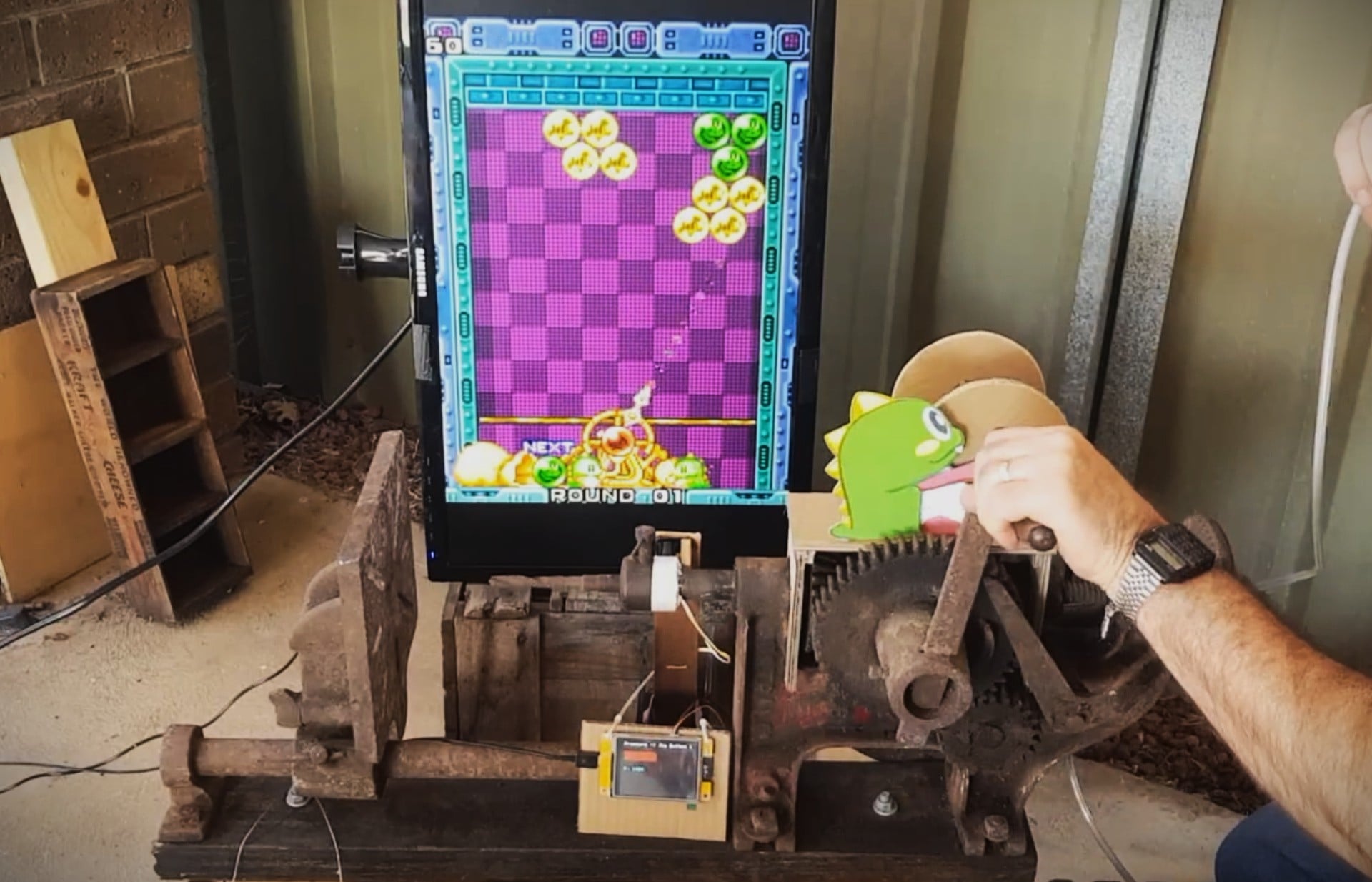
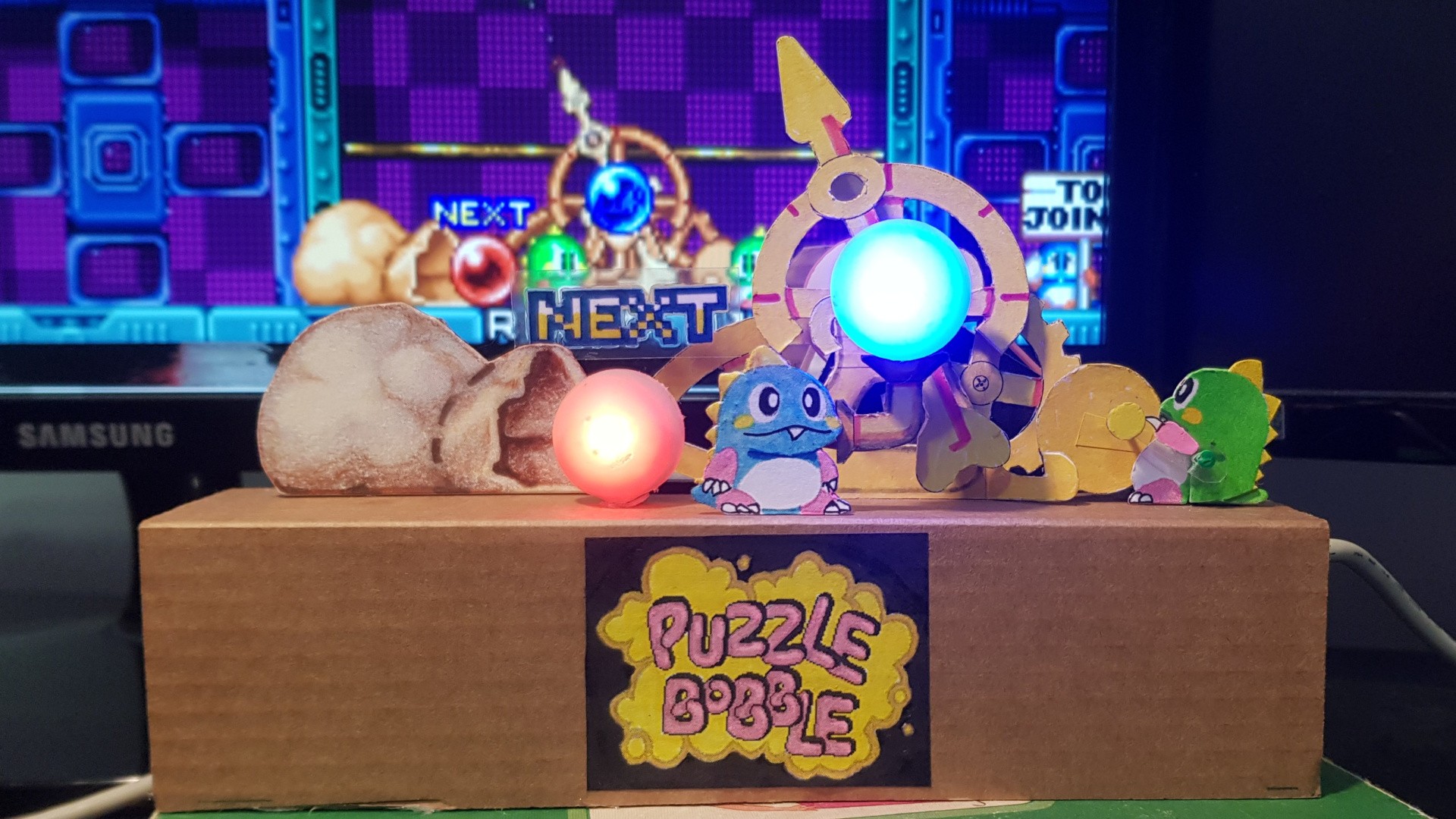
On Monday 16 December 2024, computer scientist and hardware hacker DrTomTilley published documentation and images of a homebuilt recreation of the arcade aiming mechanism from Puzzle Bobble — known in some regions as Bust-A-Move. The original Puzzle Bobble arcade game was released by Taito in 1994; Tilley’s project translates that in-game object into a working physical accessory that sits alongside a television and responds to play in real time.
Tilley built the device largely from low-cost, everyday materials combined with a few modern components. The mechanism uses cardboard, bamboo skewers, rubber bands, a deodorant roller ball, two nails and several 3D-printed pulleys. For electronics and control it relies on an Arduino Uno microcontroller and a custom Lua script, which reads game input from the emulator and updates a servo motor to move the mechanism left and right. The setup runs with the original 1994 Puzzle Bobble arcade ROM in the open-source MAME emulator.
According to Tilley’s notes, the physical mechanism mirrors the player’s in-game movements and can change the color of the attached bubbles to match those shown on screen. In journalistic terms: the device replicates onscreen motion and dynamically updates its visible bubble colors to reflect the state of the game in real time.
Tilley is a frequent maker within the video game hobbyist scene. Previous projects featured on gaming sites include DIY controllers inspired by Katamari Damacy and Puzzle Bobble, as well as a low-cost hack that repurposed a Paw Patrol toy into a controller for Sega’s Super Hang-On. He also maintains a portfolio of larger novelty projects on his website, listing items such as a large-scale Game & Watch recreation and an Asteroids-themed fish tank.
The Puzzle Bobble recreation highlights how hobbyist makers can bridge classic arcade software and physical peripherals using emulation, microcontrollers and 3D printing. While the project centers on an arcade original running in MAME, the broader Puzzle Bobble franchise has appeared on numerous home consoles over the years, and modern audiences often look to platforms such as Nintendo Switch and digital storefronts like the Nintendo eShop for official re-releases.
For developers and hardware hackers, Tilley’s build offers a clear example of combining simple materials with Arduino control and emulator integration to recreate arcade feel. His work provides both a technical reference and a reminder of how tangible interfaces can enhance retro gaming experiences.
Puzzle Bobble Aiming Mechanism Recreated in Real Life by DrTomTilley
Nintendo News Hub
Game Pages Mentioned In This Article
Use these Nintendo Switch game pages to keep exploring the titles connected to this story, including related genres, developers, screenshots, and more coverage.
Related Topics
Explore more articles about these topics:
Source: TimeExtension