The gyroid controversy: how a decorative item in Animal Crossing (GameCube) drew parental complaints
When Animal Crossing launched on Nintendo’s GameCube in 2002, the series’ gentle, community-driven design established it as a family-friendly staple.
Developed by Nintendo EAD, the title introduced mechanics and decorative items that would be expanded in later entries across Nintendo platforms.
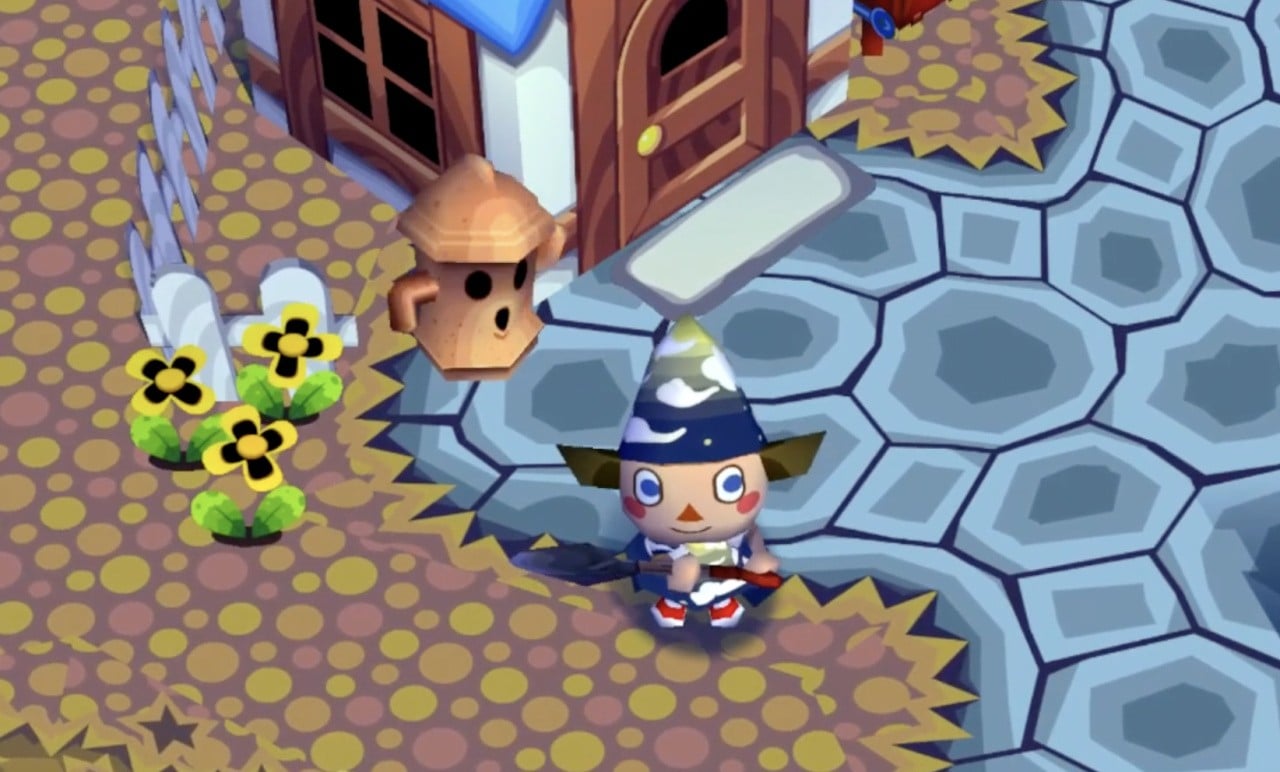
One early, unexpected flashpoint involved gyroid-style statues players could place outside their houses — a feature that prompted customer comments when the GameCube game reached Western audiences.
In a 2004 interview with Electronic Gaming Monthly (EGM), later highlighted by retro-focused outlet Sasha’s Retrobytes, Nintendo Game Counsellor Rick Sandbom recalled the volume and nature of support calls the company received.
Sandbom said Nintendo got numerous upset phone calls from parents who believed a skin-toned hydrant-like gyroid resembled a wiggling penis, and that the company’s customer-support database even included a dedicated entry explaining how staff should respond to such complaints.
He added that the calls were routed to veteran hotline staff rather than junior agents.
Gyroids — collectible, often oddly animated decorative items inspired by traditional Japanese burial urns and garden ornaments — became a recurring visual and gameplay element in the Animal Crossing franchise.
The series continued to evolve on handheld and home platforms, with Animal Crossing: New Leaf arriving on Nintendo 3DS in 2012 (Japan) / 2013 (North America) and Animal Crossing: New Horizons launching on Nintendo Switch on March 20, 2020.
Nintendo has used Nintendo Direct presentations and the Nintendo eShop to announce and distribute subsequent updates, ports, and related content for the franchise.
The episode is now a footnote in the series’ history: despite the brief controversy, Animal Crossing remained positioned as a broadly accessible, family-oriented franchise and went on to become one of Nintendo’s most visible IPs on modern hardware.
The gyroid anecdote underscores how even minor design choices can generate outsized attention, and how Nintendo’s customer-support systems handled public reaction during the early 2000s GameCube era.
When Animal Crossing launched on Nintendo’s GameCube in 2002, the series’ gentle, community-driven design established it as a family-friendly staple.
Developed by Nintendo EAD, the title introduced mechanics and decorative items that would be expanded in later entries across Nintendo platforms.
One early, unexpected flashpoint involved gyroid-style statues players could place outside their houses — a feature that prompted customer comments when the GameCube game reached Western audiences.
In a 2004 interview with Electronic Gaming Monthly (EGM), later highlighted by retro-focused outlet Sasha’s Retrobytes, Nintendo Game Counsellor Rick Sandbom recalled the volume and nature of support calls the company received.
Sandbom said Nintendo got numerous upset phone calls from parents who believed a skin-toned hydrant-like gyroid resembled a wiggling penis, and that the company’s customer-support database even included a dedicated entry explaining how staff should respond to such complaints.
He added that the calls were routed to veteran hotline staff rather than junior agents.
Gyroids — collectible, often oddly animated decorative items inspired by traditional Japanese burial urns and garden ornaments — became a recurring visual and gameplay element in the Animal Crossing franchise.
The series continued to evolve on handheld and home platforms, with Animal Crossing: New Leaf arriving on Nintendo 3DS in 2012 (Japan) / 2013 (North America) and Animal Crossing: New Horizons launching on Nintendo Switch on March 20, 2020.
Nintendo has used Nintendo Direct presentations and the Nintendo eShop to announce and distribute subsequent updates, ports, and related content for the franchise.
The episode is now a footnote in the series’ history: despite the brief controversy, Animal Crossing remained positioned as a broadly accessible, family-oriented franchise and went on to become one of Nintendo’s most visible IPs on modern hardware.
The gyroid anecdote underscores how even minor design choices can generate outsized attention, and how Nintendo’s customer-support systems handled public reaction during the early 2000s GameCube era.