

Ocarina of Time Remake: Developers Confirm Full Rebuild and Modernized Controls
Nintendo's remake of The Legend of Zelda: Ocarina of Time has been the subject of renewed developer commentary, with the team emphasizing that the project involved rebuilding the classic from the ground up.
The original Ocarina of Time launched on the Nintendo 64 in 1998 and remains one of the most influential action-adventure games in the industry.
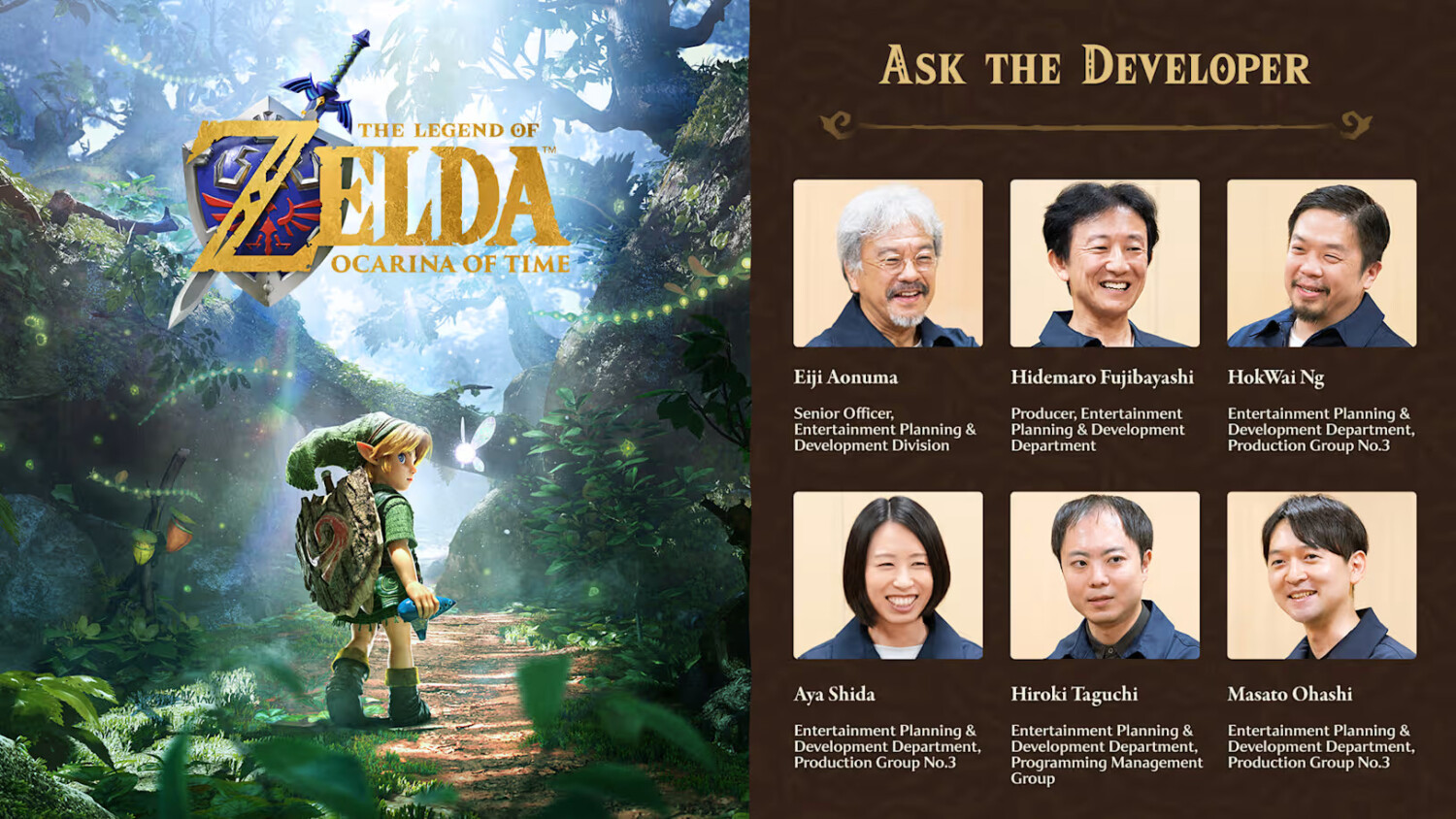
In a recent interview, director HokWai Ng, program director Hiroki Taguchi, series producer Eiji Aonuma, and art director Aya Shida outlined the technical and design choices behind the remake.
Rebuilding rather than porting
Program director Hiroki Taguchi explained that, unlike some remakes that begin by porting existing code and iterating on it, the team chose to recreate every element from scratch.
He said the passage of nearly three decades since the original release made a ground-up approach the most practical.
Taguchi added that the team implemented features, compared them directly against the original, and refined them repeatedly to retain the original game s feel without turning it into something wholly different.
The developers placed particular emphasis on preserving the nuanced responsiveness of player actions, dedicating significant research and development to match that aspect of the original experience.
Preserving core gameplay while updating controls
Director HokWai Ng noted that the fundamentals of Link s actions were intentionally preserved even as animations and inputs were modernized.
The remake team wanted long-time players to recognize core behaviors, while also smoothing the learning curve for those familiar with newer Zelda titles.
Designing jump controls and removing auto-jump
On the subject of jumping, Ng explained that the original game relied on an auto-jump system tied to the control stick, with jump opportunities deliberately constrained by level geometry.
For the remake, the team moved to a dedicated jump button to match control schemes used in more recent series entries, allowing players to jump freely.
Aonuma highlighted the consequences of that choice, noting that enabling universal jumping significantly expanded the range of possible player actions and required careful adjustments to the environment to prevent unintended shortcuts or gameplay issues.
Art director Aya Shida added that designing for two playable versions of Link, Young Link and Adult Link, introduced additional complexity because their jump distances differ slightly, which affected gap and terrain design across Hyrule.
Context within Nintendo s remake strategy
Nintendo has a history of reworking and remastering legacy titles for modern hardware, including remakes released on Nintendo Switch and digital distribution through the Nintendo eShop.
While the development team behind this Ocarina of Time remake prioritized a faithful core experience, their iterative, from-scratch approach and control updates demonstrate how Nintendo balances preservation with modern usability.
For players and industry observers, the developers comments provide a clear window into the technical and design trade-offs involved in remaking a landmark 1998 release for contemporary audiences.