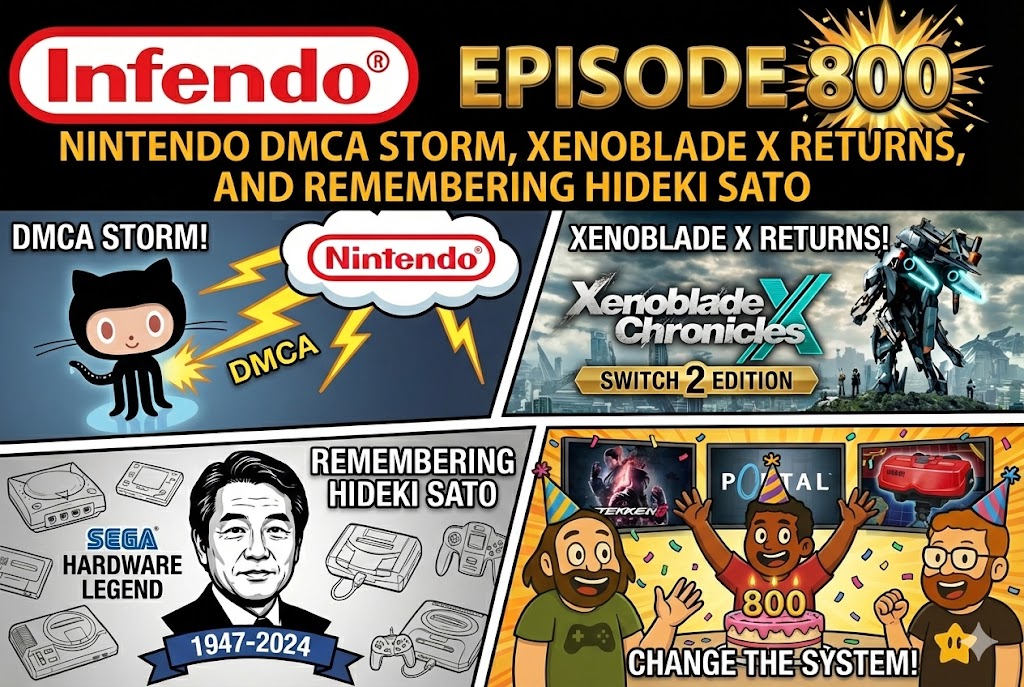
Nintendo has significantly escalated its ongoing campaign to combat Nintendo Switch emulation, by issuing Digital Millennium Copyright Act (DMCA) notices to a broad array of emulator projects and their forks hosted on GitHub.
This latest enforcement action affects well-known and active Nintendo Switch emulators including Eden, Citron, Kenji-NX, and MeloNX.
Notably, even discontinued projects such as Sudachi and Skyline have received DMCA notices, showcasing the thoroughness of Nintendo's latest crackdown.
The tension between Nintendo and Switch emulator developers reached new heights in 2024.
The company initiated a high-profile lawsuit against the creators of Yuzu, a Nintendo Switch emulator, which concluded with a settlement that set a clear legal precedent.
Later that year, Discord servers for emulators, including Suyu and Sudachi, were temporarily taken offline, and Nintendo also succeeded in taking down Ryujinx, another major player in the emulation community.
Despite last year's developments, new iterations and forks of Nintendo Switch emulators—namely Citron and Eden—emerged as the emulation scene strove to remain accessible to enthusiasts.
However, Nintendo's intensified efforts in 2024 demonstrate a zero-tolerance approach to unauthorized software that facilitates Switch game emulation.
A spokesperson for Nintendo emphasized that the company is focused on ensuring that fans play Nintendo Switch games exclusively through legitimate hardware and services.
Nintendo's DMCA actions cited concerns about the circumvention of the Nintendo Switch's technological protection measures (TPMs), particularly the use of cryptographic keys embedded in the console that are required to decrypt games.
Although the presence of these cryptographic keys is not intrinsic to forks like Citron and Eden, their availability and potential for misuse triggered Nintendo’s legal response.
At the time of this article's publication, the impacted repositories currently remain visible on GitHub, but precedent suggests they could be delisted imminently as the DMCA process advances.
In reaction to the takedowns, some development teams have transferred their projects to private servers, preserving their codebases outside of public view.
However, removal from GitHub—the world’s most prominent code repository—could considerably limit the discoverability and accessibility of these emulators for users and developers alike.
Nintendo’s intensified legal stance in 2024 marks a pivotal moment in the ongoing struggle between console manufacturers and emulator creators.
As Nintendo Switch hardware continues to thrive with landmark releases and strong eShop sales, the company’s message to the emulation community is unequivocal: unauthorized distribution and reverse engineering of Switch software will face swift and decisive legal action.
For the latest updates on Nintendo Switch legal developments, eShop news, and game releases, stay tuned to our Nintendo coverage hub.
This latest enforcement action affects well-known and active Nintendo Switch emulators including Eden, Citron, Kenji-NX, and MeloNX.
Notably, even discontinued projects such as Sudachi and Skyline have received DMCA notices, showcasing the thoroughness of Nintendo's latest crackdown.
The tension between Nintendo and Switch emulator developers reached new heights in 2024.
The company initiated a high-profile lawsuit against the creators of Yuzu, a Nintendo Switch emulator, which concluded with a settlement that set a clear legal precedent.
Later that year, Discord servers for emulators, including Suyu and Sudachi, were temporarily taken offline, and Nintendo also succeeded in taking down Ryujinx, another major player in the emulation community.
Despite last year's developments, new iterations and forks of Nintendo Switch emulators—namely Citron and Eden—emerged as the emulation scene strove to remain accessible to enthusiasts.
However, Nintendo's intensified efforts in 2024 demonstrate a zero-tolerance approach to unauthorized software that facilitates Switch game emulation.
A spokesperson for Nintendo emphasized that the company is focused on ensuring that fans play Nintendo Switch games exclusively through legitimate hardware and services.
Nintendo's DMCA actions cited concerns about the circumvention of the Nintendo Switch's technological protection measures (TPMs), particularly the use of cryptographic keys embedded in the console that are required to decrypt games.
Although the presence of these cryptographic keys is not intrinsic to forks like Citron and Eden, their availability and potential for misuse triggered Nintendo’s legal response.
At the time of this article's publication, the impacted repositories currently remain visible on GitHub, but precedent suggests they could be delisted imminently as the DMCA process advances.
In reaction to the takedowns, some development teams have transferred their projects to private servers, preserving their codebases outside of public view.
However, removal from GitHub—the world’s most prominent code repository—could considerably limit the discoverability and accessibility of these emulators for users and developers alike.
Nintendo’s intensified legal stance in 2024 marks a pivotal moment in the ongoing struggle between console manufacturers and emulator creators.
As Nintendo Switch hardware continues to thrive with landmark releases and strong eShop sales, the company’s message to the emulation community is unequivocal: unauthorized distribution and reverse engineering of Switch software will face swift and decisive legal action.
For the latest updates on Nintendo Switch legal developments, eShop news, and game releases, stay tuned to our Nintendo coverage hub.