
Shigeru Miyamoto, the legendary Nintendo designer behind Super Mario Bros. and The Legend of Zelda, has confirmed that Mario’s now-familiar B‑Dash — the technique where holding the B button while running lets Mario cross small gaps — originated as an unintended programming quirk.
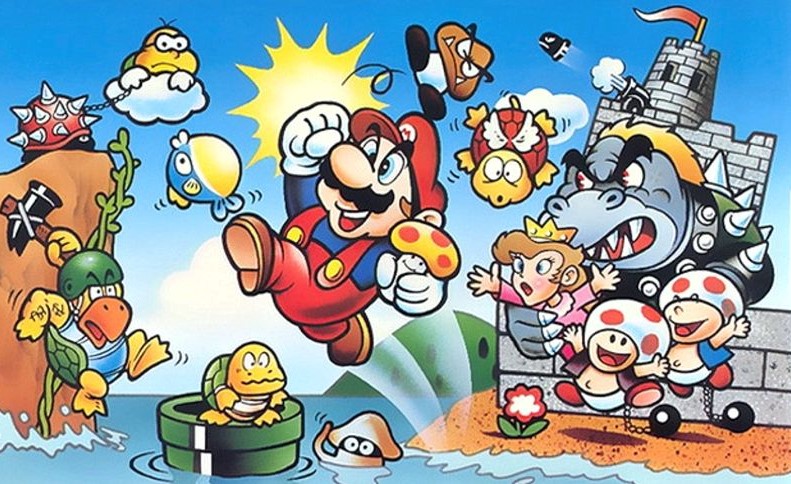
Super Mario Bros., developed by Nintendo’s internal teams and released for the Famicom in Japan on September 13, 1985 (and for the Nintendo Entertainment System in North America later that year), remains one of the company’s defining titles and has sold more than 40 million copies worldwide.
Miyamoto explained that the B‑Dash sprung from flawed collision detection with the ground: a programmer noticed Mario did not fall in certain fast-running situations and attempted to correct it, but Miyamoto found the effect enjoyable and insisted the behavior remain in the game.
That small decision turned into a core movement technique that players learned to exploit and master.
He also recounted other development serendipities that became signature features.
A bug that caused coins to appear in midair evolved into the official Hidden Block mechanic; an offhand idea from graphic artist Takashi Tezuka for a fish that could both swim and leap produced the Cheep Cheep enemy.
To make that concept work in gameplay, Miyamoto said the team raised the floor in certain levels — notably World 2-3 — so players could see fish leap from the water rather than have them surprise the player from below.
Miyamoto attributed many of these emergent mechanics to collaborative development.
He emphasized that the game’s design emerged from team discussion and iteration rather than single-author decisions.
In that spirit he encouraged open communication in the office, and he still collaborates with early team members such as Takashi Tezuka (design), programmer Toshihiko Nakago, and composer Koji Kondo, whose soundtrack helped define the series’ audio identity.
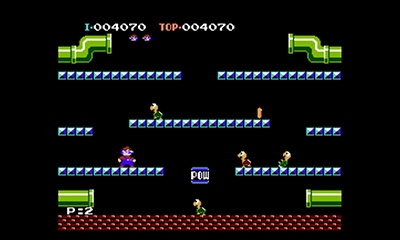
Super Mario Bros. has seen numerous re-releases and ports across Nintendo platforms, from NES cartridges to the NES Classic Edition and digital availability through Nintendo Switch Online’s NES library and various eShop packages.
The origin stories Miyamoto shares underline how technical constraints and close-knit teams at Nintendo transformed programming anomalies into enduring gameplay innovations that shaped not only Super Mario Bros. but platform design more broadly.
Super Mario Bros., developed by Nintendo’s internal teams and released for the Famicom in Japan on September 13, 1985 (and for the Nintendo Entertainment System in North America later that year), remains one of the company’s defining titles and has sold more than 40 million copies worldwide.
Miyamoto explained that the B‑Dash sprung from flawed collision detection with the ground: a programmer noticed Mario did not fall in certain fast-running situations and attempted to correct it, but Miyamoto found the effect enjoyable and insisted the behavior remain in the game.
That small decision turned into a core movement technique that players learned to exploit and master.
He also recounted other development serendipities that became signature features.
A bug that caused coins to appear in midair evolved into the official Hidden Block mechanic; an offhand idea from graphic artist Takashi Tezuka for a fish that could both swim and leap produced the Cheep Cheep enemy.
To make that concept work in gameplay, Miyamoto said the team raised the floor in certain levels — notably World 2-3 — so players could see fish leap from the water rather than have them surprise the player from below.
Miyamoto attributed many of these emergent mechanics to collaborative development.
He emphasized that the game’s design emerged from team discussion and iteration rather than single-author decisions.
In that spirit he encouraged open communication in the office, and he still collaborates with early team members such as Takashi Tezuka (design), programmer Toshihiko Nakago, and composer Koji Kondo, whose soundtrack helped define the series’ audio identity.
Super Mario Bros. has seen numerous re-releases and ports across Nintendo platforms, from NES cartridges to the NES Classic Edition and digital availability through Nintendo Switch Online’s NES library and various eShop packages.
The origin stories Miyamoto shares underline how technical constraints and close-knit teams at Nintendo transformed programming anomalies into enduring gameplay innovations that shaped not only Super Mario Bros. but platform design more broadly.