
Shigeru Miyamoto has confirmed that one of Super Mario Bros.' most familiar mechanics — the B‑Dash — began life as a programming anomaly.
The revelation, shared in an interview with Japanese magazine Casa Brutus, sheds light on how serendipity and team collaboration shaped design decisions during the NES era.
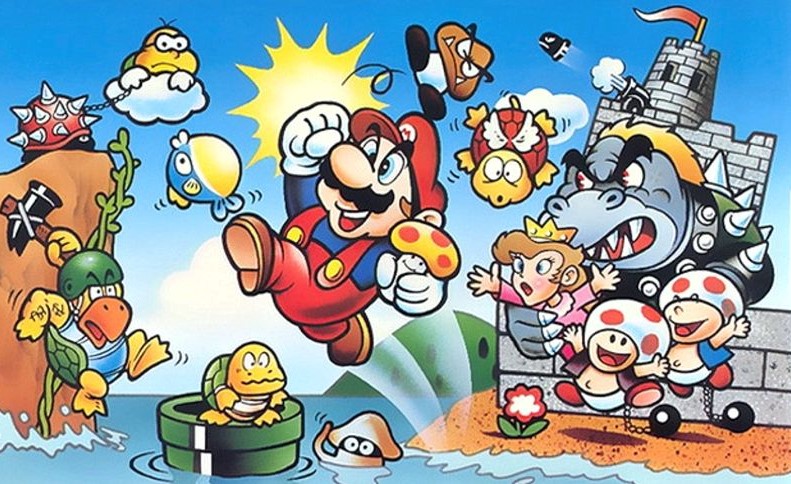
Super Mario Bros., developed by Nintendo and directed by Shigeru Miyamoto with contributions from Takashi Tezuka, programmer Toshihiko Nakago, and composer Koji Kondo, launched in 1985 on Nintendo's Famicom/NES hardware (Japan: September 13, 1985; North America: October 18, 1985).
The game is one of the best‑selling titles in history, moving more than 40 million copies worldwide across original releases and later ports, and has been reissued on platforms including the Game Boy Color, Virtual Console, the NES Classic Edition, and via Nintendo Switch Online.
Miyamoto explained that the dash mechanic — executed by holding the controller’s B button while running to gain extra speed and clear small gaps — originated from flawed ground collision detection in the code.
When a programmer noticed Mario not falling as expected, Miyamoto decided to keep the behavior because it made the game more enjoyable, turning a bug into an enduring design feature.
He also recounted other development discoveries that became core game elements.
A programming quirk that caused coins to appear in midair was formalized as the “Hidden Block.” Similarly, Miyamoto credited graphic artist Takashi Tezuka with proposing a fish enemy that could leap from water; after design refinements, that concept evolved into the Cheep Cheep and informed the higher‑pier staging of World 2‑3 so players could better anticipate the creature’s movement.
Miyamoto emphasized the collective nature of the project, noting that the team’s free exchange of ideas produced many of the game’s memorable moments.
He recalled discouraging isolated work habits in the studio — even going so far as to ban headphones — to keep communication flowing across disciplines.
Miyamoto also highlighted that he continues to work with members of that original team, including Tezuka, Nakago, and Kondo, underscoring Nintendo’s long continuity in talent.
The anecdote about the B‑Dash is a reminder of how early technical constraints and studio culture influenced level design and player controls on the NES, and how those design choices have echoed across subsequent Mario releases on platforms from the NES to the Nintendo Switch and its online services.
The revelation, shared in an interview with Japanese magazine Casa Brutus, sheds light on how serendipity and team collaboration shaped design decisions during the NES era.
Super Mario Bros., developed by Nintendo and directed by Shigeru Miyamoto with contributions from Takashi Tezuka, programmer Toshihiko Nakago, and composer Koji Kondo, launched in 1985 on Nintendo's Famicom/NES hardware (Japan: September 13, 1985; North America: October 18, 1985).
The game is one of the best‑selling titles in history, moving more than 40 million copies worldwide across original releases and later ports, and has been reissued on platforms including the Game Boy Color, Virtual Console, the NES Classic Edition, and via Nintendo Switch Online.
Miyamoto explained that the dash mechanic — executed by holding the controller’s B button while running to gain extra speed and clear small gaps — originated from flawed ground collision detection in the code.
When a programmer noticed Mario not falling as expected, Miyamoto decided to keep the behavior because it made the game more enjoyable, turning a bug into an enduring design feature.
He also recounted other development discoveries that became core game elements.
A programming quirk that caused coins to appear in midair was formalized as the “Hidden Block.” Similarly, Miyamoto credited graphic artist Takashi Tezuka with proposing a fish enemy that could leap from water; after design refinements, that concept evolved into the Cheep Cheep and informed the higher‑pier staging of World 2‑3 so players could better anticipate the creature’s movement.
Miyamoto emphasized the collective nature of the project, noting that the team’s free exchange of ideas produced many of the game’s memorable moments.
He recalled discouraging isolated work habits in the studio — even going so far as to ban headphones — to keep communication flowing across disciplines.
Miyamoto also highlighted that he continues to work with members of that original team, including Tezuka, Nakago, and Kondo, underscoring Nintendo’s long continuity in talent.
The anecdote about the B‑Dash is a reminder of how early technical constraints and studio culture influenced level design and player controls on the NES, and how those design choices have echoed across subsequent Mario releases on platforms from the NES to the Nintendo Switch and its online services.