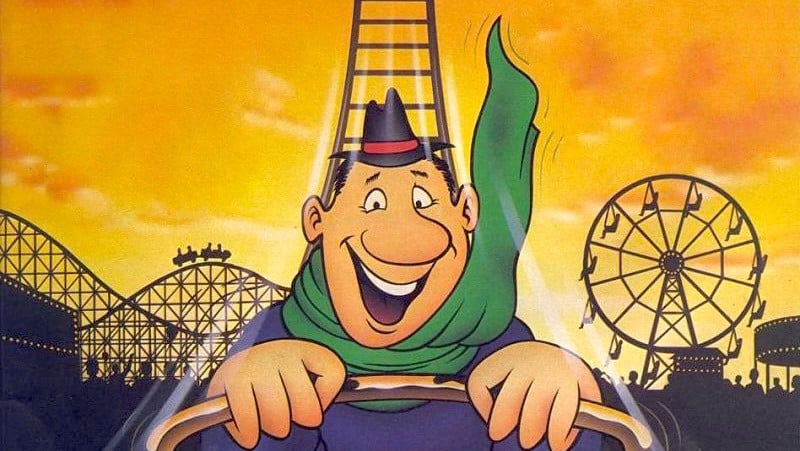
Roller Coaster remains one of the ZX Spectrum's most intriguing footnotes.
Released in 1985, the 2D platformer — set in a recreation of Blackpool Pleasure Beach — earned a rave 94% review in Crash magazine and cemented its place in retro gaming lore.
For decades, the game's creator was known only by the credit "S.
Brocklehurst," a name that until recently yielded virtually no public information about the developer's identity or career.
The developer's other Spectrum-era releases include Animator 1 (1986), Tarantula (1987), and Merlin (1988).
A new interview in Retro Gamer provides long-awaited clarity.
The developer confirms that the credit reading "S.
Brocklehurst" was deliberately chosen to preserve privacy: he used his wife's name as a pen name so he could work without being disturbed.
In his words, he wanted to keep his anonymity and avoid people showing up while he was programming.
The detail is made more poignant by the revelation that his wife died during the COVID pandemic; the developer now sees the Roller Coaster credit as a lasting tribute to her.
Despite critical acclaim, Roller Coaster did not translate into strong sales at the time.
The title was later adapted by publisher Elite Systems for the handheld market in 1991 as Dragon's Lair: The Legend on the Nintendo Game Boy, a release that visually retooled Roller Coaster's amusement-park setting into a medieval, Dragon's Lair–inspired aesthetic and positioned protagonist Dirk The Daring as stranded in a themed environment.
The Retro Gamer interview also clarifies the developer's relationship with Elite.
He reports that he held a three-year licence with Elite Systems for Roller Coaster rather than an indefinite assignment of rights; he says he only learned about the Game Boy conversion years later and that he did not receive payment for that Nintendo release.
Elite and its partners continue to exploit the property: Elite has worked with Incube8 to re-release Roller Coaster in physical form for collectors.
The Retro Gamer piece is the most substantive primary-source account yet published about the elusive figure behind Roller Coaster.
For historians of the ZX Spectrum and retro-collectors, the interview provides verifiable facts about the game's creation, its critical reception, subsequent ports, and the personal choices that kept its creator in the shadows for decades.
Released in 1985, the 2D platformer — set in a recreation of Blackpool Pleasure Beach — earned a rave 94% review in Crash magazine and cemented its place in retro gaming lore.
For decades, the game's creator was known only by the credit "S.
Brocklehurst," a name that until recently yielded virtually no public information about the developer's identity or career.
The developer's other Spectrum-era releases include Animator 1 (1986), Tarantula (1987), and Merlin (1988).
A new interview in Retro Gamer provides long-awaited clarity.
The developer confirms that the credit reading "S.
Brocklehurst" was deliberately chosen to preserve privacy: he used his wife's name as a pen name so he could work without being disturbed.
In his words, he wanted to keep his anonymity and avoid people showing up while he was programming.
The detail is made more poignant by the revelation that his wife died during the COVID pandemic; the developer now sees the Roller Coaster credit as a lasting tribute to her.
Despite critical acclaim, Roller Coaster did not translate into strong sales at the time.
The title was later adapted by publisher Elite Systems for the handheld market in 1991 as Dragon's Lair: The Legend on the Nintendo Game Boy, a release that visually retooled Roller Coaster's amusement-park setting into a medieval, Dragon's Lair–inspired aesthetic and positioned protagonist Dirk The Daring as stranded in a themed environment.
The Retro Gamer interview also clarifies the developer's relationship with Elite.
He reports that he held a three-year licence with Elite Systems for Roller Coaster rather than an indefinite assignment of rights; he says he only learned about the Game Boy conversion years later and that he did not receive payment for that Nintendo release.
Elite and its partners continue to exploit the property: Elite has worked with Incube8 to re-release Roller Coaster in physical form for collectors.
The Retro Gamer piece is the most substantive primary-source account yet published about the elusive figure behind Roller Coaster.
For historians of the ZX Spectrum and retro-collectors, the interview provides verifiable facts about the game's creation, its critical reception, subsequent ports, and the personal choices that kept its creator in the shadows for decades.