
Pokémon Champions: Full Launch Roster of 186 Playable Pokémon Across All Generations
Pokémon Champions, the latest strategic battle simulator from The Pokémon Company and Game Freak, made its debut on the Nintendo Switch to high anticipation.
Following the tradition of recent Pokémon franchise entries, Pokémon Champions arrives with a curated roster, focusing on competitive integrity while offering players a diverse array of beloved creatures.
At launch, the Nintendo Switch exclusive features a total of 186 fully evolved Pokémon drawn from all nine main series generations.
Launching on Nintendo Switch and available via the eShop, Pokémon Champions aims to refine the formula of team-based Pokémon battles.
As part of its balanced approach, this new title limits the pool of playable Pokémon to only fully evolved forms at launch, in line with previous battle simulators and competitive-focused modes seen within the franchise.
Official details from The Pokémon Company confirm that players can choose from 186 fully evolved Pokémon, including popular favorites and select regional forms to ensure a wide range of strategies and team compositions.
As of launch, base forms, baby Pokémon, and most non-evolving species are not included in the playable roster, keeping the gameplay experience focused and competitive.
Pokémon Champions Launch Roster: All Playable Pokémon
Below is the breakdown of all fully evolved Pokémon available at launch, organized by generation:
Generation I includes iconic Pokémon such as Venusaur, Charizard, Pikachu, Raichu (including Alolan form), Gengar, and Dragonite, among others.
Unique regional forms like Alolan Ninetales and Hisuian Arcanine further expand options for Kanto favorites.
Generation II features powerhouses like Meganium, Typhlosion (plus Hisuian form), Feraligatr, Tyranitar, and Umbreon, embracing both Johto classics and alternate-region forms such as Galarian Slowking.
From Hoenn, Generation III introduces competitive mainstays including Gardevoir, Aggron, Milotic, and Absol, lending diversity to team roles with options like Pelipper, Sableye, and Banette.
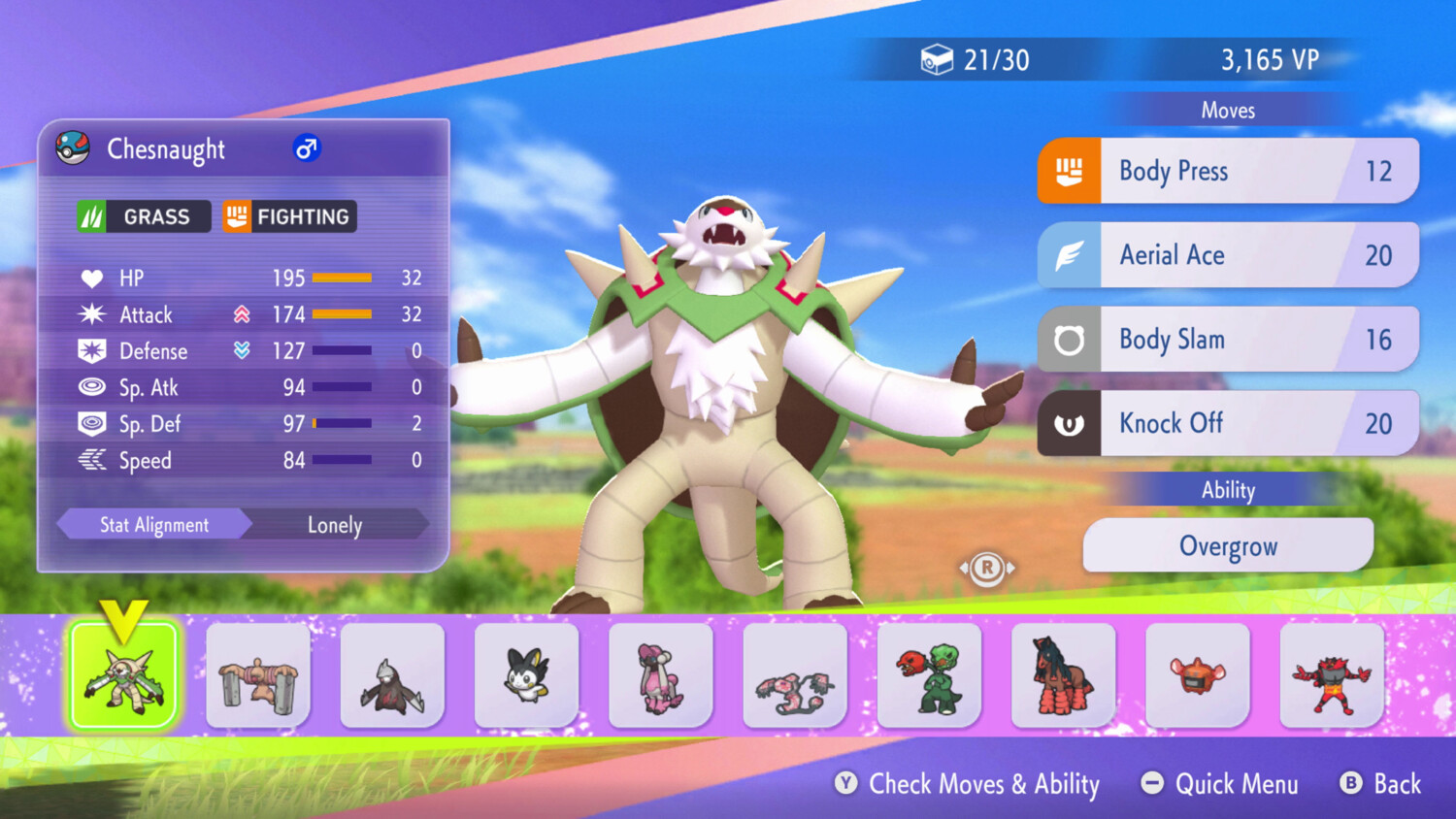
Sinnoh’s Generation IV is well-represented with starters Torterra, Infernape, and Empoleon, as well as popular Pokémon like Lucario, Garchomp, Weavile, and Rotom.
Generation V slots in Unovan favorites including Serperior, Emboar, Zoroark (and its Hisuian form), Hydreigon, Volcarona, and Excadrill, along with a variety of regional versions such as Galarian Stunfisk.
Kalos’ Generation VI sees the inclusion of viral sensations like Greninja, Sylveon, and Aegislash, accompanied by Talonflame, Goodra, Diggersby, and more.
Alola (Generation VII) brings unique additions such as Decidueye (plus Hisuian form), Incineroar, Primarina, Lycanroc, Mimikyu, and Tsareena.
Galar’s Generation VIII presents modern favorites Dragapult, Corviknight, Hatterene, and Kleavor among others, including Hisuian region representatives like Basculegion and Sneasler.
Finally, Generation IX debuts with Meowscarada, Skeledirge, Quaquaval, Kingambit, Tinkaton, and newcomer Hydrapple, among others, providing a taste of the latest Paldea region Pokémon for competitive play.
Reflecting on the selectivity of the roster, an official spokesperson from The Pokémon Company recently summarized: "As with previous Pokémon simulator releases, we've aimed to present a robust yet focused selection at launch, drawing from each generation to create satisfying team variety for all trainers."
Pokémon Champions’ strategic emphasis and curated selection reinforce its identity as a premier battle simulator for the Nintendo Switch.
The methodical rollout of Pokémon, including various regional forms, underscores Game Freak and The Pokémon Company’s commitment to balanced gameplay while honoring fan-favorite creatures from across the franchise’s storied history.
Launching with 186 fully evolved Pokémon, Pokémon Champions offers a robust starting point for both casual and competitive players on Nintendo Switch.
For the complete current list of Pokémon available in Pokémon Champions, visit the official game page on the Nintendo eShop or check The Pokémon Company’s official website.
Pokémon Champions, the latest strategic battle simulator from The Pokémon Company and Game Freak, made its debut on the Nintendo Switch to high anticipation.
Following the tradition of recent Pokémon franchise entries, Pokémon Champions arrives with a curated roster, focusing on competitive integrity while offering players a diverse array of beloved creatures.
At launch, the Nintendo Switch exclusive features a total of 186 fully evolved Pokémon drawn from all nine main series generations.
Launching on Nintendo Switch and available via the eShop, Pokémon Champions aims to refine the formula of team-based Pokémon battles.
As part of its balanced approach, this new title limits the pool of playable Pokémon to only fully evolved forms at launch, in line with previous battle simulators and competitive-focused modes seen within the franchise.
Official details from The Pokémon Company confirm that players can choose from 186 fully evolved Pokémon, including popular favorites and select regional forms to ensure a wide range of strategies and team compositions.
As of launch, base forms, baby Pokémon, and most non-evolving species are not included in the playable roster, keeping the gameplay experience focused and competitive.
Pokémon Champions Launch Roster: All Playable Pokémon
Below is the breakdown of all fully evolved Pokémon available at launch, organized by generation:
Generation I includes iconic Pokémon such as Venusaur, Charizard, Pikachu, Raichu (including Alolan form), Gengar, and Dragonite, among others.
Unique regional forms like Alolan Ninetales and Hisuian Arcanine further expand options for Kanto favorites.
Generation II features powerhouses like Meganium, Typhlosion (plus Hisuian form), Feraligatr, Tyranitar, and Umbreon, embracing both Johto classics and alternate-region forms such as Galarian Slowking.
From Hoenn, Generation III introduces competitive mainstays including Gardevoir, Aggron, Milotic, and Absol, lending diversity to team roles with options like Pelipper, Sableye, and Banette.
Sinnoh’s Generation IV is well-represented with starters Torterra, Infernape, and Empoleon, as well as popular Pokémon like Lucario, Garchomp, Weavile, and Rotom.
Generation V slots in Unovan favorites including Serperior, Emboar, Zoroark (and its Hisuian form), Hydreigon, Volcarona, and Excadrill, along with a variety of regional versions such as Galarian Stunfisk.
Kalos’ Generation VI sees the inclusion of viral sensations like Greninja, Sylveon, and Aegislash, accompanied by Talonflame, Goodra, Diggersby, and more.
Alola (Generation VII) brings unique additions such as Decidueye (plus Hisuian form), Incineroar, Primarina, Lycanroc, Mimikyu, and Tsareena.
Galar’s Generation VIII presents modern favorites Dragapult, Corviknight, Hatterene, and Kleavor among others, including Hisuian region representatives like Basculegion and Sneasler.
Finally, Generation IX debuts with Meowscarada, Skeledirge, Quaquaval, Kingambit, Tinkaton, and newcomer Hydrapple, among others, providing a taste of the latest Paldea region Pokémon for competitive play.
Reflecting on the selectivity of the roster, an official spokesperson from The Pokémon Company recently summarized: "As with previous Pokémon simulator releases, we've aimed to present a robust yet focused selection at launch, drawing from each generation to create satisfying team variety for all trainers."
Pokémon Champions’ strategic emphasis and curated selection reinforce its identity as a premier battle simulator for the Nintendo Switch.
The methodical rollout of Pokémon, including various regional forms, underscores Game Freak and The Pokémon Company’s commitment to balanced gameplay while honoring fan-favorite creatures from across the franchise’s storied history.
Launching with 186 fully evolved Pokémon, Pokémon Champions offers a robust starting point for both casual and competitive players on Nintendo Switch.
For the complete current list of Pokémon available in Pokémon Champions, visit the official game page on the Nintendo eShop or check The Pokémon Company’s official website.