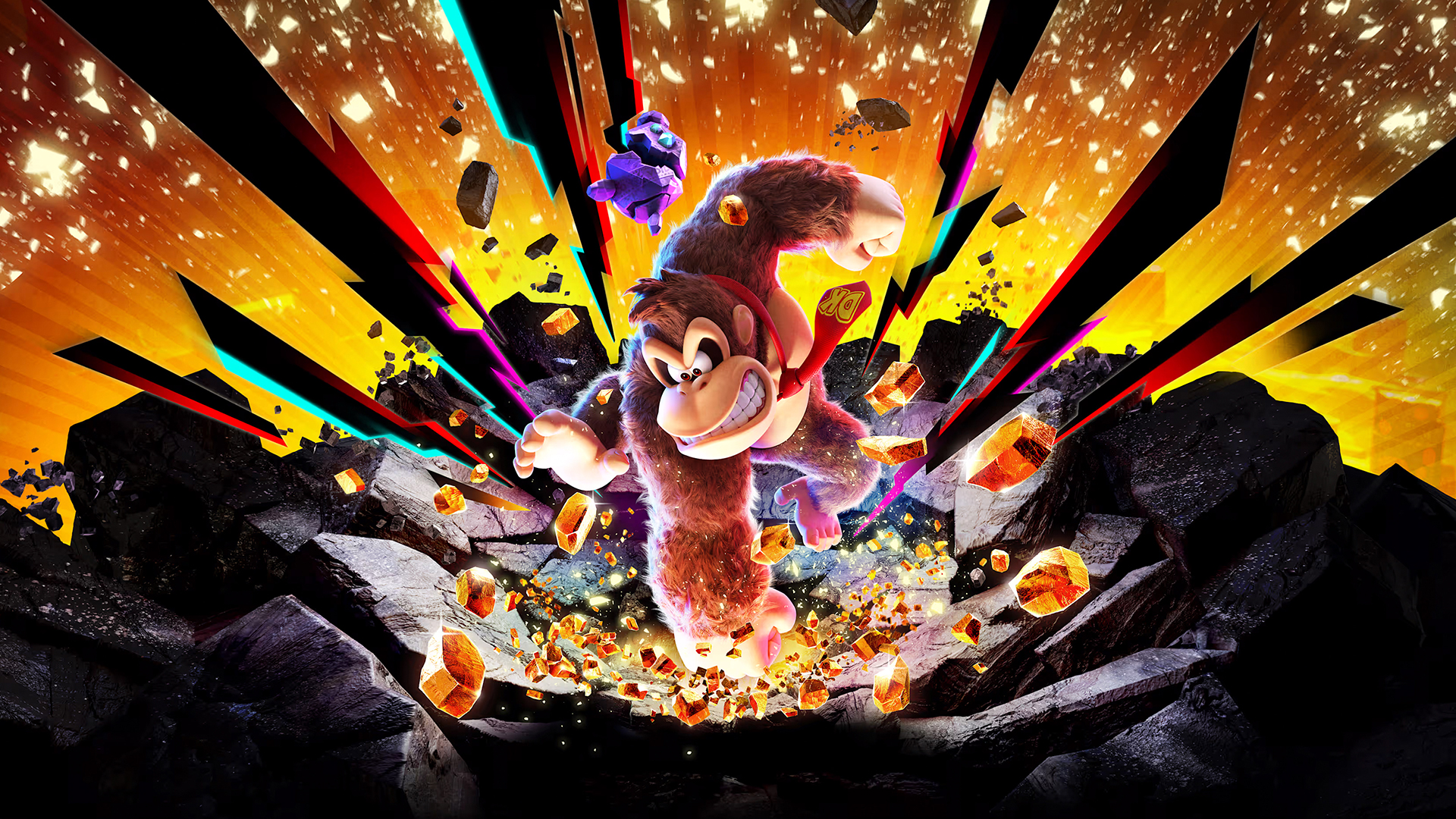
Nintendo’s Donkey Kong Bananza is drawing attention not just for its gameplay but for a deliberately crafted audio identity around the game’s signature Drumbeat transformation.
In a recent post on Nintendo’s recruitment website — translated and shared by SatsumaFS and Simon Griffin for Nintendo Everything — a Nintendo sound designer described the team’s process for creating the iconic transformation sounds used in the Nintendo Switch 2 title.
Designing a recognizable “overall sound”
According to the designer, their role extended beyond simple effects and dialogue recording to shaping an “overall sound” that sits comfortably alongside music and ambience.
They explained that early involvement in development allowed the sound team to influence mechanics and integrate audio closely with gameplay rather than leaving sound work until the end of production.
Refining the Drumbeat
The Drumbeat is a core gameplay moment in Donkey Kong Bananza: when Donkey Kong pounds his chest, the game transitions into a powered-up state.
The sound designer said the team initially tried a fixed kick-drum approach synchronized to the animation, but it lacked personality and excitement.
To make the effect feel iconic and unmistakably part of Donkey Kong Bananza, they reimagined the Drumbeat as an introduction to the partner character Pauline’s accompanying songs.
The designer described treating the beats like a DJ starting a track, adding record-scratch elements, building a crescendo of kick drums as chest beats increase, and layering vocal percussion to give the sound depth and comic character.
Audio that adapts to controls
A technical constraint shaped the final implementation: Drumbeat can be activated either by pressing L+R or by shaking the Joy-Con 2.
The sound team adjusted the audio so it would respond naturally to varying input speeds, splitting record-scratch and vocal-percussion elements and triggering them at timings that fit both button presses and motion input.
Iterative polish and studio culture
The designer emphasized extensive iteration — listening and tweaking the Drumbeat tens or hundreds of times — and praised Nintendo’s culture of experimentation and cross-department collaboration.
They noted that the sounds they created are now heard by players worldwide.
Donkey Kong Bananza is available on Nintendo Switch 2, and Nintendo’s recruitment post included a note that the game’s audio and systems wouldn’t have been possible on the original Nintendo Switch.
For the full developer write-up, see the translation on Nintendo Everything credited to SatsumaFS and Simon Griffin.